
The keyword term \”2026 All Mitsubishi Pajero\” functions as a noun phrase.
The core of this phrase is the proper noun \”Pajero,\” which is modified by the proper noun \”Mitsubishi\” (acting as an adjective), the adjective \”All\” (implying a completely new or comprehensive model), and the numerical adjective \”2026\” (indicating a model year).
This entire phrase collectively identifies a specific, anticipated future product, making it the central subject of discussion.
For example, this term refers to the highly anticipated future iteration of a renowned and rugged sport utility vehicle.
It signifies the potential return of an iconic off-road nameplate that has been absent from many global markets for several years.
The inclusion of a specific year and the word \”All\” suggests a ground-up redesign rather than a minor refresh of a previous generation, generating significant interest among automotive enthusiasts and loyal customers of the brand.
2026 All Mitsubishi Pajero
The potential revival of the Mitsubishi Pajero for the 2026 model year represents a significant moment for the Japanese automaker and the global SUV market.
For decades, the Pajero nameplate was synonymous with durability, off-road prowess, and victory in the grueling Dakar Rally, building a legendary reputation that still resonates with enthusiasts.
The discontinuation of the fourth-generation model left a void in Mitsubishi\’s lineup for a large, capable, and rugged SUV.
Therefore, the prospect of an all-new version brings with it high expectations for a vehicle that can honor its heritage while embracing modern technology and engineering.
Speculation surrounding the foundation of the 2026 Pajero points heavily towards the utilization of the Renault-Nissan-Mitsubishi Alliance\’s latest ladder-frame platform.
Youtube Video:
This is the same architecture that underpins the new-generation Mitsubishi Triton (L200) pickup and the Nissan Navara, known for its strength and versatility.
Sharing this platform would provide significant developmental and manufacturing cost efficiencies, making the project more viable.
Furthermore, this robust, body-on-frame construction would ensure the new Pajero possesses the fundamental toughness required to meet the expectations of off-road purists and those who require heavy-duty towing capabilities.
In terms of powertrain, the upcoming Pajero is widely expected to feature advanced options beyond traditional internal combustion engines.
A primary candidate is a plug-in hybrid (PHEV) system, leveraging Mitsubishi\’s established expertise in this area, as seen in the Outlander PHEV.
A Pajero PHEV could offer a compelling combination of silent, electric-only driving for urban commutes, substantial low-end torque for off-roading, and improved overall fuel economy.
Alongside a potential hybrid, a refined and powerful diesel engine, likely adapted from the new Triton, is also anticipated to be offered to cater to traditional markets that value towing power and long-range touring.
The exterior design of the 2026 Pajero is anticipated to be a bold evolution of Mitsubishi\’s \”Dynamic Shield\” design language.
It is expected to feature a commanding and upright front fascia, muscular wheel arches, and a boxy, utilitarian silhouette that pays homage to its predecessors while looking thoroughly modern.
Concept vehicles from Mitsubishi\’s past may provide clues to its styling, which will need to strike a delicate balance between rugged aesthetics and sophisticated, premium appeal.
The final design must communicate strength and capability, setting it apart from the more crossover-focused SUVs that dominate the current market.
Inside the cabin, the new Pajero is projected to undergo a complete transformation, moving far beyond the utilitarian interiors of its past.
To compete with modern rivals like the Ford Everest and Toyota Land Cruiser Prado, it will need to feature a state-of-the-art digital cockpit with large infotainment screens, seamless smartphone integration, and high-quality materials throughout.
A spacious three-row seating configuration will be essential for family buyers, with an emphasis on passenger comfort, practicality, and advanced connectivity features.
This focus on interior refinement will be crucial for positioning the Pajero as a versatile vehicle, equally adept at daily driving as it is at remote exploration.
Upholding the legendary off-road capability of its namesake will be the most critical task for the 2026 model.
It is almost certain that the new Pajero will be equipped with an advanced version of Mitsubishi\’s highly-regarded Super Select 4WD-II system.
This system provides drivers with multiple drive modes, including 2WD for efficiency and various 4WD settings for different terrains, all selectable on the move.
Combined with a sophisticated traction control system, ample ground clearance, and robust suspension, the new Pajero will be engineered to conquer challenging landscapes, ensuring its legacy as a true go-anywhere vehicle remains intact.
Upon its release, the 2026 Mitsubishi Pajero will enter a fiercely competitive market segment for large, body-on-frame SUVs.
Its primary competitors will include established players such as the Toyota Land Cruiser Prado, the Ford Everest, and the Isuzu MU-X.
To succeed, Mitsubishi will need to position the Pajero strategically, likely by highlighting a unique selling proposition such as its potential PHEV powertrain, its advanced 4WD system, or a competitive pricing structure.
The vehicle\’s success will depend on its ability to offer a compelling blend of modern technology, on-road comfort, and uncompromising off-road performance.
The global launch and availability of the new Pajero will be a key aspect of its strategy.
While markets like Australia, the Middle East, and Southeast Asia are almost certain to receive the vehicle, its potential return to other regions, including a possible reintroduction to North America as the Montero, remains a topic of speculation.
The 2026 timeline is an industry expectation, but official announcements from Mitsubishi will be required to confirm the exact development progress, reveal dates, and production schedules.
The rollout will likely be staggered, with key right-hand-drive markets receiving the first units following its official debut.
Key Considerations for the Upcoming Pajero
- Strategic Use of the Alliance Platform: The decision to build the 2026 Pajero on the same ladder-frame platform as the new Triton is a cornerstone of the project\’s feasibility. This approach of platform sharing within the Renault-Nissan-Mitsubishi Alliance drastically reduces research and development costs and streamlines the manufacturing process. By leveraging a proven, robust architecture, Mitsubishi can allocate more resources to other critical areas, such as powertrain development, interior technology, and unique design elements. This strategic move not only makes the Pajero\’s return economically viable but also ensures it is built on a foundation already engineered for toughness and reliability.
- The Significance of Electrification: The introduction of a Plug-in Hybrid (PHEV) option would be a game-changing move for the Pajero and the rugged SUV segment. A PHEV powertrain would allow the Pajero to stand out from its diesel-dominated competitors by offering superior fuel efficiency and lower emissions in urban environments. Critically, the instant torque from electric motors would also provide a significant advantage in technical off-road situations, offering precise control and power at low speeds. This forward-thinking strategy aligns with global automotive trends and could attract a new demographic of buyers who desire capability without compromising on environmental responsibility.
- Preserving the Off-Road Heritage: For the 2026 Pajero to be a true successor, it must unequivocally excel off-road. Its credibility rests on its ability to uphold the legendary status earned by its predecessors on rally stages and in remote corners of the world. This means that features like the Super Select 4WD-II system, rear differential lock, and excellent approach and departure angles are not just options but core requirements. Engineers face the challenge of integrating modern electronic aids without diluting the raw, mechanical capability that enthusiasts expect, ensuring the new model is more capable than ever before.
- Modernization of In-Cabin Technology: The modern SUV buyer expects a high level of technological sophistication, and the new Pajero must deliver on this front. The interior cannot feel like an afterthought to its rugged exterior; it must be a comfortable and connected space. This necessitates the inclusion of a large, responsive central touchscreen, a fully digital instrument cluster, and a comprehensive suite of advanced driver-assistance systems (ADAS). Features like a 360-degree camera system, adaptive cruise control, and blind-spot monitoring are now standard expectations in this price bracket and will be vital for the Pajero\’s success as a family vehicle.
- Global Brand and Market Rejuvenation: The return of the Pajero serves a purpose far greater than just filling a slot in the product lineup; it is an opportunity to rejuvenate the entire Mitsubishi brand on a global scale. As a flagship model, a successful and well-received Pajero would create a halo effect, elevating the perception of all other Mitsubishi vehicles. It would signal that the company is committed to innovation, quality, and its core identity of building tough, reliable vehicles. A strong launch could reinvigorate brand loyalty and attract new customers, providing a much-needed boost in key international markets.
Navigating the Anticipation and Information
- Monitor Official Mitsubishi Channels: For the most accurate and up-to-date information, it is essential to follow the official sources. This includes Mitsubishi Motors\’ global and regional corporate websites, official social media accounts, and press release portals. Speculation and rumors will be rampant, but only official announcements can confirm specifications, release dates, and pricing. Subscribing to newsletters from official dealers can also provide early access to information and expressions of interest when they become available.
- Analyze the New-Generation Triton/L200: The recently launched Mitsubishi Triton (or L200 in some markets) offers the most significant clues about the forthcoming Pajero. Since both vehicles are expected to share the same ladder-frame chassis, studying the Triton\’s specifications provides insight into potential engine options, suspension design, and interior architecture. Pay close attention to the Triton\’s cabin layout, infotainment system, and the performance of its bi-turbo diesel engine, as these elements are very likely to be carried over to the Pajero, albeit with more premium finishes.
- Consider the Future of Powertrains: Potential buyers should begin thinking about which powertrain would best suit their needs. A traditional diesel engine, likely an advanced version from the Triton, will probably offer the best towing capacity and long-distance touring range. On the other hand, a PHEV variant would be ideal for those with shorter daily commutes who could benefit from electric-only driving, while still needing the long-range and off-road capability for weekend adventures. Understanding the trade-offs between cost, performance, and running expenses will be key to making an informed decision once the options are officially confirmed.
- Evaluate the Competitive Landscape: As excitement builds for the Pajero, it is wise to stay informed about the developments from its key competitors. Models like the Toyota Land Cruiser Prado and Ford Everest are continually being updated with new technologies and features. By understanding what these established rivals offer, prospective buyers can better evaluate the Pajero\’s value proposition when its full feature list and pricing are revealed. This comparative analysis will help determine if the Pajero\’s blend of heritage, technology, and potential hybrid innovation truly sets it apart in a crowded field.
Exploring the Broader Context
The evolution of the Pajero nameplate is a story of adaptation and dominance.
Initially launched in 1982, it quickly established itself as a formidable force in the off-road world, most notably through its record-breaking 12 victories in the Paris-Dakar Rally.
This motorsport success cemented its reputation for toughness and reliability, which translated directly into commercial success.
Over four generations, the Pajero transitioned from a spartan utility vehicle into a more comfortable and family-friendly SUV, all while retaining its core off-road DNA.
The 2026 model represents the next chapter in this evolution, tasked with reinterpreting this legacy for a new, technologically advanced era.
The role of the Renault-Nissan-Mitsubishi Alliance cannot be overstated in the development of the new Pajero.
This strategic partnership provides member companies with access to a shared pool of platforms, technologies, and manufacturing facilities, enabling projects that might otherwise be financially unfeasible for a single company.
The new ladder-frame platform is a prime example of this synergy, allowing Mitsubishi to develop a world-class chassis without bearing the entire cost.
This collaborative approach allows Mitsubishi to focus its resources on brand-specific attributes like the Super Select 4WD system and its pioneering PHEV technology, ensuring the final product is both competitive and distinct.
Despite the automotive industry\’s shift towards unibody crossovers and electric vehicles, the global demand for rugged, body-on-frame SUVs remains remarkably strong.
This segment appeals to a dedicated customer base that requires genuine off-road capability, superior towing capacity, and long-term durability that unibody platforms often cannot match.
Markets in Australia, the Middle East, Africa, and parts of Asia continue to show a strong appetite for these vehicles for both commercial and recreational use.
The Pajero\’s return is perfectly timed to capitalize on this enduring demand for authentic, adventure-ready SUVs.
Potential design cues for the 2026 Pajero might be drawn from Mitsubishi\’s recent concept vehicles.
Concepts like the GC-PHEV (Grand Cruiser) from 2013 showcased a vision for a large, technologically advanced SUV with a bold design and a plug-in hybrid powertrain.
While concept cars are often exaggerated, they reveal the underlying design philosophy and future direction of a brand.
It is likely that the production Pajero will adopt some of these cues, such as the tall, imposing stance and sharp, futuristic lighting elements, blending them with practical considerations to create a vehicle that is both visually striking and highly functional.
A critical engineering challenge for the new Pajero will be balancing its rugged, off-road prowess with the on-road refinement expected of a modern family vehicle.
Historically, body-on-frame vehicles have often compromised on-road comfort and handling due to their heavy-duty construction.
However, advancements in chassis tuning, suspension technology (such as independent front and multi-link rear suspension), and sound-deadening materials now allow for a much better balance.
The 2026 Pajero must deliver a quiet, comfortable, and stable ride on pavement to compete effectively against rivals that have made significant strides in this area.
The development and final pricing of the 2026 Pajero will inevitably be influenced by global economic factors.
Fluctuating material costs, ongoing supply chain disruptions, and global inflation can all impact the final manufacturing cost and, consequently, the vehicle\’s sticker price.
Mitsubishi will need to navigate these challenges carefully to ensure the Pajero is priced competitively within its segment.
The strategic use of the Alliance platform helps mitigate some of these costs, but external economic pressures will play a significant role in determining the vehicle\’s final market position and accessibility to consumers.
The importance of a flagship model like the Pajero extends far beyond its direct sales figures. A flagship vehicle serves as the ultimate expression of a brand\’s capabilities, heritage, and future vision.
A successful and aspirational Pajero would not only attract buyers to its own showroom but also positively influence perceptions of other Mitsubishi models like the Outlander and ASX.
It acts as a \”brand ambassador,\” demonstrating the company\’s commitment to engineering excellence and reinforcing its identity in the minds of consumers, which is an invaluable asset in a competitive automotive landscape.
Building on the Pajero\’s historical reputation for durability will be paramount for its long-term success. Past generations were renowned for their mechanical robustness and ability to withstand harsh conditions with remarkable reliability.
The new model must be engineered to the same high standards, ensuring that its advanced electronics and hybrid systems are just as dependable as the rugged mechanical components.
Positive long-term ownership experiences, low maintenance costs, and high resale values are what build lasting brand loyalty, and the 2026 Pajero must deliver on this promise to truly honor its legacy.
Frequently Asked Questions
John asks: \”Will the 2026 Pajero be a true body-on-frame SUV like its predecessors, or will it move to a unibody platform like the Pajero Sport is based on the Triton?\”
Professional\’s Answer: That\’s an excellent question, John. All credible industry reports and analyses indicate that the 2026 Pajero will be a true body-on-frame SUV.
It is expected to be built on the new ladder-frame platform shared with the latest Mitsubishi Triton/L200.
This approach ensures it will have the structural rigidity, durability, and towing capacity that are hallmarks of the Pajero name and essential for serious off-road performance.
Top SUVs New 2024:
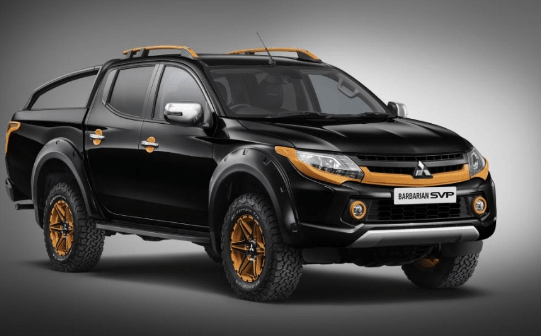 New 2026 Mitsubishi Triton Release Date