
In the automotive industry, a specific future model year combined with a manufacturer and a classic nameplate functions as a proper noun.
This term designates a highly anticipated, often speculative, vehicle that is rumored or expected to be released in a particular year.
It represents the revival or continuation of a legacy, blending nostalgic appeal with modern engineering and design.
For example, the term \”Ford Bronco\” before its official relaunch referred to a future vehicle concept, and \”GMC Hummer EV\” signaled the electric reincarnation of a discontinued brand.
This naming convention is a powerful marketing and communication tool, instantly creating a focal point for consumer interest, media speculation, and industry analysis.
The designation serves as a placeholder for a suite of expected features, design philosophies, and performance benchmarks, all anchored to a specific point in the future.
The entire phrase acts as a singular identifier for a product that, while not yet tangible, exists vividly in the public and corporate imagination, driving conversations and strategic planning long before its official debut.
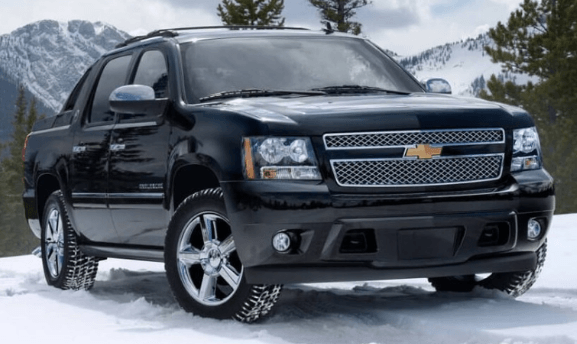
2026 Chevy Avalanche
Speculation surrounding the return of a beloved automotive nameplate has ignited significant interest among truck enthusiasts and industry analysts alike.
The potential reintroduction of a sport-utility truck from Chevrolet, slated for a future model year, taps into a deep well of nostalgia for the original\’s unique versatility.
The first-generation model, which debuted in the early 2000s, was celebrated for its innovative design that blurred the lines between an SUV and a pickup truck.
A modern iteration would be expected to honor this legacy while incorporating the latest advancements in automotive technology, safety, and performance that define the current market.
The cornerstone of the original model\’s appeal was its revolutionary \”midgate\” feature, a foldable bulkhead behind the rear seats that allowed the cargo bed to extend into the cabin.
Youtube Video:
This provided owners with unparalleled flexibility, enabling them to transport long items like lumber or kayaks while still enjoying the enclosed, comfortable cabin of an SUV.
For a 2026 Chevy Avalanche to be successful, a reimagined and potentially enhanced version of this midgate would be almost non-negotiable.
Engineers would likely focus on improving its ease of use, sealing, and integration with modern interior designs, making it a central pillar of the vehicle\’s identity.
Regarding its foundational architecture, a revived model would most certainly be built upon General Motors\’ contemporary T1 platform.
This is the same robust architecture that underpins the current Chevrolet Silverado, Tahoe, and Suburban, offering a proven foundation known for its strength, capability, and refined ride quality.
Leveraging this platform would provide significant manufacturing efficiencies and allow the new vehicle to share a range of powertrain components, suspension systems, and electronic architectures with its established siblings, ensuring it is both capable and reliable from the outset.
Under the hood, a diverse array of powertrain options would be anticipated to meet a wide spectrum of consumer demands.
Base models would likely feature one of GM\’s efficient yet powerful gasoline engines, such as the 2.7L TurboMax or the venerable 5.3L V8, providing a familiar and capable performance profile.
To align with evolving market trends and emissions standards, the inclusion of a hybrid powertrain, possibly a mild-hybrid or a full plug-in hybrid system, is also a strong possibility.
This would offer a compelling blend of enhanced fuel economy and instantaneous torque without sacrificing utility.
Furthermore, the industry\’s rapid shift toward electrification makes an all-electric variant a highly plausible, if not expected, addition to the lineup.
A theoretical \”Avalanche EV\” would likely utilize GM\’s Ultium battery and motor technology, the same platform powering the Silverado EV and Hummer EV.
This would position the vehicle as a forward-thinking lifestyle truck, offering silent operation, impressive acceleration, and the unique packaging advantages of an electric platform.
Such a move would allow Chevrolet to compete directly with other electric trucks while leveraging the Avalanche\’s distinct brand equity and versatile design.
The exterior design would aim to strike a delicate balance between honoring the classic silhouette and embracing Chevrolet\’s modern design language.
One can expect a bold front fascia reminiscent of the current Silverado or Tahoe, featuring slim LED lighting and a prominent grille.
The vehicle\’s signature sail panels, the angled pillars connecting the cab to the cargo box, would almost certainly return as a key design cue, immediately distinguishing it from any other truck on the road.
This blend of old and new would be crucial to attracting both loyal fans and a new generation of buyers.
Inside the cabin, the 2026 Chevy Avalanche would reflect the significant advancements in interior design and technology seen across the Chevrolet lineup.
A large, high-resolution touchscreen infotainment system running Google Built-in would serve as the cabin\’s centerpiece, complemented by a fully digital instrument cluster.
Premium materials, sophisticated trim options, and a focus on ergonomics and passenger comfort would create an upscale environment, positioning the vehicle as more than just a utility tool but as a comfortable daily driver and family hauler.
Advanced driver-assistance systems, including Super Cruise, would also be expected.
In the competitive landscape, a new Avalanche would carve out a unique niche.
It would not be a direct competitor to traditional crew cab pickups like the Ford F-150 or Ram 1500, nor would it be a compact unibody truck like the Hyundai Santa Cruz.
Instead, it would occupy a space as a full-size \”Sport Utility Truck\” (SUT), appealing to buyers who desire the open-bed utility of a truck but prefer the ride comfort, enclosed cabin, and family-friendly nature of a large SUV.
This unique positioning was the key to its original success and would be its greatest strength in a crowded market.
While official confirmation from General Motors remains pending, the persistent rumors and clear market demand for versatile, innovative vehicles make a compelling case for the model\’s return.
The \”2026\” designation suggests a development timeline that aligns with typical automotive production cycles, allowing for thorough engineering, testing, and market preparation.
Should it come to fruition, the 2026 Chevy Avalanche would represent not just the revival of a name, but the return of a clever concept, updated and re-engineered for a new era of automotive excellence.
Key Considerations for a Potential Revival
- The Modernized Midgate: The defining feature of any vehicle bearing this nameplate would be its innovative midgate system. A successful 2026 model would need to re-engineer this feature for the modern era, focusing on improved weather sealing, ease of operation (perhaps with power-actuated mechanisms), and seamless integration with the vehicle\’s premium interior. Its functionality is the primary differentiator that sets the vehicle apart from every other pickup and SUV on the market, making its execution critical to the model\’s entire value proposition.
- Platform and Powertrain Synergy: The vehicle\’s foundation on the GM T1 platform would be a significant advantage, allowing it to inherit the proven capabilities of the Silverado and Tahoe. This shared architecture ensures robust performance, a comfortable ride, and access to a mature range of powertrains. A potential 2026 Chevy Avalanche would likely offer choices from a small turbocharged engine to powerful V8s and even a forward-looking hybrid or fully electric Ultium-based option, providing a suitable configuration for every type of buyer.
- Distinct Design Identity: While sharing a platform, the new model must establish its own clear visual identity. The design would need to incorporate the iconic sail-panel C-pillars and a unified body appearance that made the original so distinctive. The challenge for designers will be to blend these nostalgic cues with Chevrolet\’s current aggressive and modern truck styling, creating a vehicle that is instantly recognizable as an Avalanche yet feels entirely contemporary and fresh.
- Target Market and Niche Positioning: The revived model would not be a mass-market pickup but a specialized lifestyle vehicle. Its target audience consists of consumers who need occasional open-bed utility for outdoor gear or home improvement projects but prioritize the daily comfort and passenger space of a full-size SUV. Properly marketing the vehicle\’s unique flexibility to this specific demographic, which values versatility above maximum payload or towing, will be essential for its commercial success.
- Advanced Technology Integration: To compete in the modern automotive landscape, a 2026 model must be equipped with the latest technology. This includes a state-of-the-art infotainment system, a comprehensive suite of advanced driver-assistance systems (ADAS), and connectivity features like Wi-Fi hotspots and over-the-air software updates. The inclusion of GM\’s Super Cruise hands-free driving technology would further elevate its status as a premium, tech-forward offering in the truck segment.
- The \”What If\” of an EV Variant: The possibility of an all-electric version presents an exciting opportunity to redefine the concept. An Avalanche EV could leverage the packaging benefits of the Ultium platform to offer even more innovative storage solutions, such as a front trunk (\”e-trunk\”) in addition to the flexible midgate and bed. This would position it as the ultimate versatile electric adventure vehicle, appealing to a new generation of environmentally conscious buyers who demand utility without compromise.
Navigating the Speculation
- Follow Official Manufacturer Channels
For the most accurate and reliable information, it is crucial to monitor official announcements from Chevrolet and General Motors.
While automotive news sites and forums are excellent for tracking rumors and expert predictions, the final specifications, design, and release confirmation will only come from the manufacturer.
Following their official press websites, social media accounts, and investor briefings is the best way to separate confirmed facts from speculation about the 2026 Chevy Avalanche.
- Analyze Chevrolet\’s Current Portfolio
Insight into the potential direction of a new model can be gained by closely examining Chevrolet\’s current and recently released vehicles.
Pay attention to the design language of the latest Silverado, Tahoe, and Equinox EV, as these will inform the future model\’s styling.
Likewise, the powertrain and technology offerings in these vehicles, such as the TurboMax engine, 10-speed transmissions, and Google Built-in infotainment, provide a strong indication of what would be included in a top-tier new product.
- Evaluate the Competitive Landscape
Understanding the market that a new Avalanche would enter is key to appreciating its potential role.
Research existing vehicles that offer unique utility, such as the Rivian R1T with its gear tunnel or the Silverado EV with its own Multi-Flex Midgate.
By seeing what competitors are doing, one can better anticipate the features and innovations Chevrolet would need to incorporate to make the 2026 Chevy Avalanche a compelling and competitive choice for consumers seeking ultimate versatility.
Broader Context and Market Dynamics
The history of the Sport Utility Truck (SUT) is one of innovation and niche appeal.
This vehicle class, which includes past models like the Ford Explorer Sport Trac and Cadillac Escalade EXT, sought to provide a perfect synthesis of two popular segments.
The SUT concept is built on the premise that many consumers want the security and passenger capacity of an SUV but require the open-air cargo flexibility of a pickup on an occasional basis.
The potential return of a 2026 Chevy Avalanche would signal a renewed industry interest in this hybrid-by-design segment, driven by modern consumer lifestyles that demand maximum versatility from a single vehicle.
The relentless march of electrification is fundamentally reshaping the American truck market, a segment long dominated by internal combustion engines.
The introduction of models like the Ford F-150 Lightning, Rivian R1T, and Chevrolet\’s own Silverado EV has proven that electric powertrains can deliver the immense torque and capability that truck owners expect.
An electric variant of a future Avalanche would fit perfectly within this trend, offering a unique form factor combined with the benefits of EV technology, such as silent operation, rapid acceleration, and potentially innovative features like vehicle-to-load power exporting.
Chevrolet\’s current strategy for its truck and SUV lines is focused on diversification and technological advancement. The brand offers a wide spectrum of products, from the compact Trax crossover to the heavy-duty Silverado 3500HD.
A new Avalanche would seamlessly slot into this strategy by filling a \”white space\” in the portfolio.
It would cater to a customer who finds a traditional Silverado too work-oriented and a Tahoe too restrictive in its cargo capacity, thereby capturing a new segment of buyers for the brand.
Nostalgia has become an incredibly potent force in modern automotive marketing and design.
Automakers have found great success in reviving iconic nameplates from their past, such as the Ford Bronco and Jeep Wagoneer, as these names come with pre-existing brand recognition and emotional connection.
The name \”Avalanche\” evokes strong positive associations for a generation of owners, and its revival would allow Chevrolet to tap into this goodwill, generating immediate excitement and media attention for a new product launch.
The flexibility of the General Motors T1 platform cannot be overstated as a key enabler for a potential 2026 Chevy Avalanche.
This modern body-on-frame architecture was engineered from the ground up to be modular, supporting a wide range of wheelbases, body styles, and powertrain types.
This inherent adaptability significantly reduces the development cost and timeline required to create a derivative model like the Avalanche, making the business case for its reintroduction far more viable than it would be if it required a bespoke platform.
It is insightful to compare the potential 2026 Chevy Avalanche with the already-unveiled Silverado EV.
The electric Silverado features its own version of a midgate, demonstrating that GM is already committed to the engineering and a \”pass-through\” concept.
A new Avalanche could be positioned as a more stylistically expressive and SUV-like interpretation of this idea, potentially with a more integrated body design and those signature sail panels, differentiating it from the more traditional-looking Silverado EV and appealing to a different aesthetic preference.
From a manufacturing standpoint, reintroducing the Avalanche would be a logical move for General Motors.
Since it would share its platform and many components with high-volume models built in North American plants, it could be integrated into existing assembly lines with relative ease.
This synergy would help optimize plant capacity and leverage the company\’s supply chain, making production efficient and profitable.
The vehicle would represent an incremental addition to the successful full-size truck and SUV program rather than an entirely new, high-risk venture.
Consumer trends continue to show a strong preference for vehicles that can support a diverse and active lifestyle.
The rise of \”overlanding,\” DIY home improvement, and family road trips has increased demand for vehicles that can do it allcommute comfortably during the week and transform into an adventure-ready hauler on the weekend.
The core concept of the Avalanche directly addresses this trend, offering a single-vehicle solution that eliminates the need for compromise, which is a powerful selling point in today\’s market.
Finally, the brand and financial implications of reviving the Avalanche are substantial.
A successful launch would not only generate significant revenue but also create a \”halo effect,\” enhancing Chevrolet\’s image as an innovative and forward-thinking brand that listens to its customers.
The buzz and positive press surrounding a beloved model\’s return can re-energize a brand\’s entire lineup, drawing new customers into showrooms who might then discover other vehicles in the portfolio.
It is a strategic move that pays dividends far beyond the sales numbers of the single model.
Frequently Asked Questions
John asks: \”With all the new technology and features being discussed, what would the estimated price range for a 2026 Chevy Avalanche be?
I\’m worried it might be priced out of reach for a lot of families who loved the original.\”
Professional\’s Answer: That\’s a very practical concern, John. While there is no official pricing, we can make an educated estimate based on Chevrolet\’s current lineup.
A new Avalanche would likely be positioned between the Tahoe SUV and the Silverado pickup.
Therefore, a starting price in the high-$50,000 to low-$60,000 range for a base model seems plausible, with well-equipped and specialized trims (like a Z71 off-road version or a High Country luxury model) extending into the $70,000s and beyond.
The final cost will depend heavily on the standard features and powertrain options Chevrolet decides to include.
Top SUVs New 2024:
 What We Know About 2023 Chevy Avalanche