
In the automotive industry, a specific model designation combined with a future year often represents a highly anticipated but unconfirmed vehicle.
This term functions as a proper noun, identifying a speculative product that generates significant discussion among enthusiasts, journalists, and market analysts.
For instance, before its official debut, the \”Ford Bronco\” revival was a speculative term for years, representing the concept of a modern off-road SUV from the manufacturer.
Similarly, the \”mid-engine Corvette\” was a long-standing industry rumor that defined the next generation of the iconic sports car well before its unveiling.
Such designations encapsulate a blend of brand history, market demand, and technological forecasting, creating a focal point for future product expectations and industry buzz.
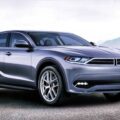
2026 Dodge Dart
The automotive landscape is rife with speculation, and few rumors have garnered as much attention as the potential revival of a compact sedan from Dodge.
The discussion surrounding a 2026 Dodge Dart points to the brand\’s possible re-entry into a segment it vacated years ago.
This renewed interest is fueled by the strategic shifts within its parent company, Stellantis, and the evolving demands of the consumer market for efficient yet engaging vehicles.
A new iteration of this nameplate would need to balance the legacy of its predecessors with the advanced technology and performance expectations of the modern era, creating a compelling product in a fiercely competitive field.
Should this vehicle come to fruition, it would almost certainly be built upon one of the versatile Stellantis platforms, such as the STLA Medium architecture.
This platform is designed to accommodate a variety of powertrain options, from traditional internal combustion engines to plug-in hybrids and fully electric variants.
Utilizing a shared, flexible platform allows for significant cost savings in development and manufacturing, making the business case for a new compact car more viable.
This architectural choice would also ensure the vehicle is equipped with modern structural integrity and the capability to integrate the latest in driver-assistance and safety systems from its inception.
Regarding performance, a future Dodge compact could offer a diverse range of powertrains to appeal to a wide audience.
Youtube Video:
Base models might feature an efficient turbocharged four-cylinder engine, while performance-oriented trims could potentially adopt a version of the new \”Hurricane\” inline-six engine, albeit in a detuned state suitable for a compact chassis.
Furthermore, a plug-in hybrid (PHEV) option, similar to the technology found in the Dodge Hornet, seems highly probable, offering a blend of electric-only driving for daily commutes and gasoline power for longer journeys.
An all-electric version would also align with Stellantis\’ long-term electrification goals, providing a direct competitor to other electric sedans.
The exterior design would be a critical factor in the vehicle\’s success, needing to project the aggressive, muscle-car-inspired ethos of the Dodge brand onto a smaller frame.
One could anticipate styling cues borrowed from the latest Charger and Hornet models, including a slim, full-width front grille, distinctive LED lighting signatures, and a sculpted, athletic stance.
The design would need to be both aerodynamic for efficiency and visually imposing to stand out against rivals like the Honda Civic Si or Hyundai Elantra N-Line.
This careful balance of aggression and sophistication would be essential to capturing the attention of both loyal brand followers and new, younger buyers.
Inside the cabin, a 2026 Dodge Dart would be expected to feature the latest in automotive technology, centered around the Uconnect infotainment system.
A large, responsive touchscreen display, a fully digital instrument cluster, and seamless smartphone integration via Apple CarPlay and Android Auto would be standard expectations.
The interior design would likely focus on a driver-centric layout, with high-quality materials and sporty accents to reinforce the brand\’s performance-oriented identity.
Comfort and practicality would not be overlooked, with designers aiming to maximize interior space and provide clever storage solutions to meet the needs of daily drivers.
Positioned in the compact sedan market, a new Dart would face a formidable roster of established competitors.
It would need to contend with perennial best-sellers like the Toyota Corolla, Honda Civic, and Hyundai Elantra, each of which offers a strong combination of reliability, efficiency, and value.
To carve out a niche, Dodge would likely emphasize performance, aggressive styling, and a more engaging driving experience as key differentiators.
By offering more powerful engine options and a distinct American muscle-inspired character, the vehicle could appeal to buyers who find the competition to be too conservative or uninspired.
The strategic rationale for Dodge to re-enter this segment is multifaceted, addressing a clear gap in its current product lineup.
With the discontinuation of the Charger and Challenger in their traditional forms, the brand needs accessible, volume-selling products to attract new customers and maintain dealership traffic.
A modern compact car could serve as an entry point to the Dodge brand, capturing younger buyers who may later graduate to larger, more expensive models.
A successful launch would not only boost overall sales figures but also demonstrate the brand\’s ability to adapt its core identity to new market realities and powertrain technologies.
Ultimately, while the 2026 Dodge Dart remains a speculative concept, the convergence of platform availability, powertrain advancements, and strategic necessity makes its revival a compelling possibility.
The project\’s realization would depend on Stellantis\’ confidence in the profitability of the compact sedan market and its ability to engineer a vehicle that is both true to the Dodge brand and competitive on a global scale.
Automotive enthusiasts and potential buyers will be watching closely for any official announcements, as the return of this nameplate could mark a significant new chapter for the American automaker, blending its storied past with a technologically advanced future.
Key Considerations for a Potential Revival
- Platform and Architecture Foundation
The foundation of any new vehicle is its platform, and a potential 2026 Dodge Dart would likely leverage one of Stellantis\’ global STLA architectures.
The STLA Medium platform, in particular, is a prime candidate, designed for C- and D-segment vehicles with a focus on flexibility for different powertrains, including all-electric and hybrid systems.
This strategic use of a common platform is crucial for managing development costs and accelerating the time to market.
It also ensures the vehicle would benefit from the latest advancements in chassis dynamics, safety engineering, and electronic architecture shared across the Stellantis brand portfolio.
- Diverse Powertrain Strategy
A successful compact car must appeal to a broad spectrum of buyers, making a diverse powertrain lineup essential.
Speculation suggests options could range from an economical turbocharged four-cylinder for entry-level models to a high-performance variant, potentially using a version of the Hurricane engine.
A plug-in hybrid (PHEV) model would be a critical offering, providing a competitive edge by appealing to environmentally conscious consumers and those seeking lower fuel costs without range anxiety.
This multi-pronged approach would allow the vehicle to compete on both efficiency and performance fronts.
- Adherence to Dodge\’s Design Language
To be recognized as a true Dodge, the vehicle\’s design must reflect the brand\’s \”Brotherhood of Muscle\” identity.
This means incorporating aggressive styling elements such as a menacing front fascia, a wide stance, and bold character lines.
Designers would be tasked with translating the muscular presence of the Charger and Hornet into a more compact form factor without losing impact.
The lighting design, both front and rear, would play a vital role in establishing a distinctive and recognizable signature on the road, immediately identifying it as part of the Dodge family.
- Strategic Re-entry into the Compact Segment
Dodge\’s absence from the compact segment has left a significant void in its lineup, making a return a logical strategic move.
This market, while competitive, still represents a substantial volume of sales and provides an accessible entry point for new customers to the brand.
A successful compact car could improve the brand\’s overall corporate average fuel economy (CAFE) ratings and attract a younger demographic.
It would be a pivotal product, bridging the gap between the compact Hornet SUV and the larger vehicles in the brand\’s future portfolio.
- Navigating a Competitive Landscape
The compact sedan market is dominated by well-entrenched and highly regarded models from Japanese and South Korean manufacturers. A new Dart would need a clear and compelling value proposition to succeed.
This means it must excel in key areas such as technology, with a best-in-class infotainment system, and offer a more engaging driving experience than its rivals.
Merely being competitive on price and features will not be enough; it must offer a unique character that resonates with buyers looking for an alternative to the mainstream options.
- Integration of Modern Technology
Today\’s car buyers expect a high level of technological integration, and a 2026 model would have to deliver on this front.
This includes a state-of-the-art infotainment system like Uconnect 5, a large and configurable digital instrument cluster, and a comprehensive suite of advanced driver-assistance systems (ADAS).
Features such as adaptive cruise control, lane-keeping assist, and automatic emergency braking would be essential for achieving top safety ratings.
The seamless integration of this technology is crucial for creating a modern and user-friendly cabin experience.
- Balancing Performance with Efficiency
While Dodge is known for performance, a compact car must also deliver strong fuel efficiency to be competitive.
The challenge for engineers would be to create a vehicle that offers the spirited driving dynamics expected from the brand while still meeting stringent emissions standards and consumer expectations for low running costs.
Advanced engine technologies, hybrid systems, and aerodynamic design would all play a critical role in achieving this delicate balance. This would allow the car to appeal to both enthusiasts and practical-minded daily commuters alike.
- Meeting Evolving Consumer Expectations
The expectations of consumers in the compact segment have evolved significantly. Buyers now demand a higher level of refinement, interior quality, and standard features than ever before.
A new Dart would need to offer a well-appointed interior with soft-touch materials, comfortable seating, and a quiet ride to compete effectively.
Practicality remains a key concern, so a spacious trunk and a thoughtfully designed cabin with ample storage would be necessary to win over buyers who use their vehicle for everything from commuting to family errands.
Following the Development of the Speculative Model
- Monitor Official Stellantis and Dodge Communications
For the most accurate and reliable information, it is crucial to follow official sources directly.
This includes press releases from Stellantis, announcements on the official Dodge brand website, and posts on their verified social media channels.
Automakers control the narrative around future products and will make formal announcements when they are ready to reveal details.
Relying on these channels helps to avoid misinformation and speculation that may be presented as fact by unofficial sources across the internet.
- Analyze Industry Trends and Auto Show Reveals
Pay close attention to broader trends within the automotive industry and new reveals from Stellantis at major auto shows like those in Detroit, Los Angeles, or the Consumer Electronics Show (CES).
An automaker\’s strategic direction is often telegraphed through its concept cars and the technologies it chooses to highlight.
If Stellantis reveals a new compact sedan concept or announces a significant investment in a platform suitable for such a vehicle, it could be a strong indicator of the direction they are heading, even if the Dart nameplate is not used initially.
- Critically Evaluate Unofficial Reports and Leaks
While exciting, rumors, \”spy shots,\” and insider leaks should be approached with a healthy dose of skepticism.
It is important to consider the source of the information and look for corroboration from multiple, independent reports before accepting it as credible.
Reputable automotive journalism outlets often have trusted sources within the industry, but even their information can be preliminary and subject to change.
Differentiating between well-sourced rumors and baseless online speculation is key to forming a realistic picture of the vehicle\’s potential development.
The history of the Dodge Dart nameplate is long and varied, dating back to its introduction in the 1960s.
Originally a full-size car, it was later downsized to a mid-size and eventually a compact, becoming known for its reliability and available V8 power, which made it a \”sleeper\” performance car.
This legacy of offering practicality with a potent performance option is a core part of the nameplate\’s identity.
Any modern revival would likely draw upon this heritage, aiming to provide a similar blend of everyday usability and a fun-to-drive character that made its ancestors memorable to a generation of drivers.
The most recent iteration of the Dodge Dart, produced from 2013 to 2016, serves as a more recent, and cautionary, point of reference.
While it was praised for its sharp styling and engaging handling based on an Alfa Romeo platform, it struggled to gain traction in the market.
The vehicle was criticized for its powertrain options, which some found underwhelming, and a perceived lack of interior refinement compared to its rivals.
Understanding the shortcomings of this version is crucial, as Stellantis would need to ensure a new model directly addresses these past issues to achieve the success that eluded its predecessor.
The North American compact car market has undergone a significant transformation, with many manufacturers ceding ground to the overwhelming popularity of crossover SUVs.
However, the segment remains a vital battleground for major players, representing millions of annual sales and serving as a crucial entry point for first-time new car buyers.
A resurgence in gasoline prices and a growing interest in more efficient vehicles could also reinvigorate the segment.
A new entrant from Dodge would need to be exceptionally compelling to capture market share from the well-established leaders who have continued to invest and innovate in their compact offerings.
Stellantis\’ global \”Dare Forward 2030\” strategy provides the overarching context for any new product, including a potential 2026 Dodge Dart. This plan emphasizes a rapid transition to electrification, with a goal of having 50% of U.S.
sales be battery-electric vehicles by the end of the decade.
Therefore, a new compact car would almost certainly need to be developed with electrification at its core, whether through hybrid, plug-in hybrid, or fully electric variants.
The vehicle would be a key piece in Stellantis\’ puzzle, helping to electrify its volume-selling segments and meet increasingly strict global emissions regulations.
The Dodge brand itself is at a crossroads, moving away from the large-displacement Hemi V8 engines that have defined its modern identity.
The introduction of the electric Charger Daytona and the Hurricane inline-six engine signals a new era of \”e-muscle\” and downsized, turbocharged performance.
A new compact car would fit perfectly into this evolving brand identity, demonstrating that Dodge\’s performance ethos can be applied to smaller, more efficient, and even electrified vehicles.
It would serve as tangible proof that the spirit of the brand can thrive beyond traditional muscle car platforms.
A key challenge in the modern compact segment is delivering a vehicle that is both fuel-efficient and exciting to drive.
Consumers in this space are often cross-shopping based on miles per gallon, but a brand like Dodge cannot afford to release a vehicle that feels mundane.
The use of lightweight materials, advanced suspension tuning, and responsive powertrains would be paramount.
Engineers would be tasked with infusing the car with a sense of driver engagement that is often missing in a category focused on practicality, making it a true driver\’s car in an economy-minded segment.
Attracting a younger demographic is a universal goal for nearly every automaker, and a stylish, tech-forward, and affordable compact car is a proven method for achieving it.
A new Dodge Dart could be positioned to appeal directly to Millennial and Gen Z buyers who may be entering the new car market for the first time.
By offering bold styling, a connected and modern interior, and an engaging driving experience at an accessible price point, Dodge could cultivate a new generation of loyal customers.
This would be vital for the long-term health and relevance of the brand.
Finally, the impact of a successful compact sedan on Dodge dealerships cannot be overstated.
A high-volume, entry-level vehicle brings consistent traffic into showrooms, creating sales opportunities not only for that model but for the entire brand lineup.
It provides a more approachable entry point than a larger SUV or performance car, broadening the brand\’s appeal to a wider range of household incomes and needs.
This increased foot traffic and the potential for high-volume sales would be a welcome addition for the dealer network, strengthening the brand\’s overall market presence.
Frequently Asked Questions
John asked: \”What kind of engine would a new 2026 Dodge Dart likely have? I\’m hoping for something with a bit of power.\”
Professional\’s Answer: That\’s a great question, John. While nothing is confirmed, industry analysis suggests a new Dart would likely feature a range of options based on Stellantis\’ current powertrain lineup.
Base models could use a fuel-efficient turbocharged four-cylinder engine, similar to what\’s found in other vehicles from the company.
For those seeking more performance, it\’s plausible that a detuned version of the new 3.0-liter \”Hurricane\” inline-six could be offered in a sport-oriented trim, and a plug-in hybrid (PHEV) variant, like the one in the Dodge Hornet, is also a strong possibility to balance power with efficiency.
Sarah asked: \”With car prices so high, what would the estimated price range be for a vehicle like this?\”
Professional\’s Answer: Understanding the potential cost is very important, Sarah. To be competitive, a 2026 Dodge Dart would need to be priced in line with its key rivals in the compact sedan segment.
As of today, that would place a hypothetical base model in the low-to-mid $20,000s.
Higher-level trims with more features and more powerful engines, such as a performance or hybrid model, would likely extend into the low-to-mid $30,000s.
This positioning would be crucial for it to be a viable alternative to established models like the Honda Civic and Toyota Corolla.
Ali asked: \”Would a new Dodge Dart be available with all-wheel drive? That would be a huge selling point for me.\”
Professional\’s Answer: That\’s an excellent point, Ali, as all-wheel drive (AWD) has become a popular feature in this class.
If the vehicle is built on one of the modern STLA platforms, then the architectural capability for AWD would almost certainly be there.
Offering AWD would give it a significant competitive advantage over some rivals and align it with others that do, like the Subaru Impreza or Mazda3.
It would be a logical feature to include, especially on mid-to-upper-level trims, to enhance its all-weather capability and appeal to buyers in regions with inclement weather.
Maria asked: \”So, is it officially confirmed that Dodge is making a new Dart for 2026?\”
Professional\’s Answer: Maria, thank you for asking that question, as it\’s important to have clarity.
As of right now, the 2026 Dodge Dart is purely speculative and has not been officially confirmed by Dodge or its parent company, Stellantis.
The discussion is based on industry rumors, market analysis, and the brand\’s strategic needs.
The best course of action is to keep an eye on official announcements from Dodge\’s media website and major auto shows, as that is where the first definitive news will be released.
Top SUVs New 2024:
 New 2026 Dodge Journey Redesign