
The keyword phrase in question functions as a proper noun. It designates a specific, unique entityin this case, a hypothetical future model of a performance-oriented compact vehicle from a well-known American automaker.
This classification is critical because it treats the subject not as a general concept, but as a distinct product with its own potential set of features, market position, and legacy.
For example, the \”Dodge Neon SRT-4\” was a real-world vehicle that established a benchmark for accessible, high-performance compact cars in the early 2000s.
A more modern counterpart would be the \”Hyundai Elantra N,\” which currently occupies a similar niche in the automotive market, offering spirited driving dynamics in a practical sedan package.
Understanding the term as a proper noun is essential for framing any discussion around it, as it shifts the focus from abstract ideas to concrete speculation about a particular nameplate.
This approach allows for a detailed exploration of its potential engineering, design, and place within the competitive landscape, all tied to the history and brand identity implied by its specific name.
Such a vehicle would represent a direct continuation of a specific performance lineage, carrying with it expectations set by its predecessors.
Therefore, any analysis must be grounded in the context of what this name has historically represented to consumers and enthusiasts.
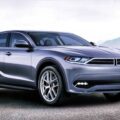
2026 Dodge Dart Srt4
The revival of a high-performance compact sedan under the Dodge brand is a topic of considerable speculation among automotive enthusiasts.
A future model, hypothetically designated for the 2026 model year, would represent the brand\’s re-entry into a segment it once dominated with raw, unapologetic power.
This vehicle would need to blend the historical ethos of the Street & Racing Technology (SRT) division with the modern demands of technology, efficiency, and platform sharing within the larger Stellantis automotive group.
The very concept hinges on leveraging a legacy of affordable performance while navigating the complexities of a rapidly evolving industry that is increasingly focused on electrification and crossover vehicles.
At the core of any SRT-branded vehicle lies its powertrain, and a 2026 iteration would be no exception.
It is highly probable that such a car would utilize a version of the Stellantis Hurricane engine family, specifically a high-output 2.0-liter turbocharged four-cylinder.
To remain competitive, this engine would likely be tuned to produce well over 300 horsepower, potentially incorporating a mild-hybrid system to enhance torque and improve emissions compliance.
Youtube Video:
This approach would provide the explosive performance expected from the badge while acknowledging the modern necessity for sophisticated and efficient engine technology, moving beyond the purely mechanical focus of its ancestors.
Translating that power to the road effectively would require a sophisticated chassis and drivetrain.
A modern performance compact would almost certainly feature an all-wheel-drive system, a significant departure from the front-wheel-drive layout of the original Neon SRT-4.
This system would likely be performance-biased, capable of distributing torque to the wheels with the most grip and potentially offering a \”drift mode\” or similar feature to appeal to driving purists.
Paired with adaptive dampers, a multi-mode drive selector, and large, high-performance brakes, the chassis would be engineered to provide both thrilling track capability and acceptable daily-driving comfort.
The exterior design would need to be both aggressive and contemporary, clearly signaling its performance intentions.
Expect a design language that incorporates signature Dodge styling cues, such as a sculpted hood with functional heat extractors, a wide and low stance, and distinctive LED lighting signatures.
An aerodynamic body kit, including a prominent front splitter, sculpted side sills, and a functional rear spoiler, would not only enhance its visual appeal but also contribute to high-speed stability.
The overall look would need to be assertive enough to honor the SRT heritage without appearing dated in a market full of sleek, modern competitors.
Inside the cabin, the focus would be on a driver-centric layout that blends performance-oriented features with modern technology.
Deeply bolstered sport seats, a flat-bottomed steering wheel with paddle shifters, and unique SRT-branded instrumentation would be standard.
The dashboard would be dominated by the latest Uconnect infotainment system, offering performance-oriented displays, data logging, and seamless smartphone integration.
While the emphasis would be on performance, the vehicle would still need to offer the practicality of a compact sedan, with reasonable rear-seat room and cargo space to broaden its appeal beyond hardcore enthusiasts.
Positioning this vehicle in the market would be a critical challenge. It would enter a competitive field against established players like the Subaru WRX, Hyundai Elantra N, and Volkswagen Golf R.
To succeed, it would need to offer a compelling value proposition, likely by delivering superior horsepower and a more aggressive character at a competitive price point.
Dodge would need to leverage its brand identity, marketing the car as an authentic, American-made alternative that offers a more visceral driving experience than its more refined rivals, thus carving out a unique niche for itself.
The legacy of the SRT-4 name carries immense weight, creating high expectations from a loyal fanbase.
The original cars were celebrated for their raw, tuneable nature and rebellious spirit, qualities that a new version would need to embody in a modern context.
This means striking a delicate balance between incorporating advanced driver aids and technologies without sanitizing the raw, engaging driving experience that defined its predecessors.
Success would depend on capturing that original spirit of accessible, unpretentious speed and translating it into a package that meets the standards of a new generation of buyers.
Ultimately, the existence of a 2026 Dodge Dart Srt4 remains speculative, contingent on strategic decisions within Stellantis. The business case must justify developing a niche performance sedan in an automotive landscape dominated by SUVs and trucks.
However, such a vehicle could serve as a powerful \”halo\” car, generating excitement for the Dodge brand and demonstrating its continued commitment to performance in the modern era.
Its realization would signal that even as the industry shifts, there is still a place for cars built with the singular purpose of thrilling the driver.
Key Considerations for a Modern Performance Compact
- Powertrain and Electrification: The heart of a new performance model would likely be a high-performance internal combustion engine, but it could not ignore the industry\’s shift toward electrification. A probable solution would involve a turbocharged four-cylinder engine augmented by a 48-volt mild-hybrid system. This setup would provide instant torque fill for improved acceleration, enhance overall fuel efficiency, and help the vehicle meet increasingly stringent global emissions standards. This hybrid integration would represent a crucial evolution from the purely gasoline-powered SRT models of the past, making it relevant for the future.
- Advanced Drivetrain Technology: To effectively manage the projected horsepower and compete with modern rivals, an advanced all-wheel-drive (AWD) system would be almost mandatory. This would be a significant upgrade from the front-wheel-drive platforms of its predecessors, offering superior traction and all-weather capability. A performance-tuned AWD system with torque vectoring would allow for exceptional handling dynamics, enabling the car to feel agile and responsive on both winding roads and racetracks. This technology is a key differentiator in the contemporary performance sedan market.
- Platform and Global Architecture: The vehicle would almost certainly be built on one of Stellantis\’s modern, flexible global platforms, such as the STLA Medium architecture. Using a shared platform is essential for managing development costs and ensuring access to the latest technologies in safety and connectivity. This approach allows the manufacturer to create a niche vehicle without the prohibitive expense of a bespoke chassis, making the business case more viable. The platform\’s inherent stiffness and advanced suspension mounting points would provide a solid foundation for SRT engineers to work their magic.
- Driver-Focused Interior and Technology: While performance is paramount, a modern vehicle must also deliver a compelling in-cabin experience. The interior would need to feature heavily bolstered sport seats, a digital instrument cluster with customizable performance gauges, and the latest Uconnect infotainment system. This system would likely include SRT-exclusive Performance Pages, allowing drivers to monitor real-time vehicle data, record lap times, and adjust vehicle settings. Balancing these high-tech features with durable, quality materials would be key to justifying its price point against premium competitors.
- Aggressive but Functional Design: The exterior design must be unmistakably a performance Dodge, carrying an aggressive and muscular aesthetic. This would involve more than just cosmetic additions; it would require functional aerodynamic elements like a real front splitter, a rear diffuser, and a properly designed wing to generate downforce at speed. Functional hood vents for heat extraction would also be a nod to its SRT heritage. The design must communicate the car\’s capabilities visually while also contributing tangibly to its performance envelope.
- Competitive Market Positioning: Launching into the competitive sport compact segment requires a clear and strategic market position. The vehicle would need to be priced aggressively to challenge established models from Subaru, Hyundai, and Honda. Dodge would likely position it as the horsepower king of its class, emphasizing raw power and a visceral driving experience as its key selling points. This strategy would appeal directly to the brand\’s core audience and differentiate it from competitors that may focus more on refinement or track-day precision.
- Honoring the SRT Legacy: A new model bearing the SRT-4 name must respect and build upon its heritage. This means it cannot be a \”soft\” or overly refined vehicle; it must retain a certain raw, untamed character that defined the originals. The exhaust note must be aggressive, the suspension firm, and the overall driving experience engaging and memorable. Successfully capturing this spirit in a modern, technologically advanced package would be the ultimate measure of its success and its worthiness of the legendary badge.
Tips for Enthusiasts and Potential Buyers
- Monitor Official Stellantis and Dodge Announcements
For the most accurate information regarding any potential future models, it is crucial to follow the official sources.
Pay close attention to press releases from Stellantis, news on the Dodge brand website, and presentations at major auto shows like the North American International Auto Show in Detroit or the LA Auto Show.
These are the primary venues where official confirmations, concept reveals, or strategic plans are announced. Subscribing to official brand newsletters can also provide direct updates, separating factual information from widespread speculation.
- Analyze Competitor Movements in the Segment
The viability of a new performance compact often depends on the health and activity of its market segment.
Keep an eye on what competitors like Subaru, Honda, Hyundai, and Volkswagen are doing with their performance models (WRX, Civic Si/Type R, Elantra N, Golf GTI/R).
If these brands are introducing new generations or seeing strong sales, it signals a healthy market that could encourage Dodge to re-enter.
Conversely, if competitors begin discontinuing models, it might suggest that the business case for a new entrant is weakening.
- Engage with Reputable Automotive Journalism
Established automotive publications and news outlets are invaluable sources for industry insights, rumors, and spy shots.
Journalists often have sources within the industry and can provide context on platform strategies, engine development, and future product roadmaps. Following reputable outlets can help you discern credible rumors from baseless fan speculation.
Look for reports that cite specific sources or align with Stellantis\’s publicly stated goals, such as its \”Dare Forward 2030\” electrification strategy.
- Understand the Role of Platform Sharing
To realistically anticipate what a future Dodge performance car might look like, it is important to understand Stellantis\’s platform strategy.
Future vehicles will be built on one of four new \”STLA\” platforms (Small, Medium, Large, Frame).
A compact sedan would likely use the STLA Medium platform, which dictates certain parameters like potential drivetrain configurations (FWD/AWD) and battery sizes for electrified variants.
Knowing the capabilities and limitations of the underlying architecture provides a much clearer picture of what is realistically possible from an engineering standpoint.
Broader Context and Industry Implications
The legacy of the Street & Racing Technology (SRT) division is a cornerstone of the Dodge brand\’s modern identity.
Originally a small, passionate team, SRT grew into a powerhouse responsible for some of the most memorable American performance cars, from the Viper to the Hellcat-powered Chargers and Challengers.
The SRT-4 models, based on the Neon and later the Caliber, were particularly significant because they brought this high-performance ethos to an accessible, compact platform.
A revival of this nameplate would be a direct appeal to this rich history, aiming to recapture the loyalty of enthusiasts who value raw power and a distinct American character.
The previous Dodge Dart, produced from 2013 to 2016, serves as a cautionary tale.
Despite being based on a competent Alfa Romeo platform, it struggled to gain traction in the highly competitive compact sedan market due to powertrain choices and a market identity that never fully resonated with consumers.
A new performance variant would need to learn from these past shortcomings, ensuring it delivers not just on paper but in the actual driving experience.
It must have a clear, compelling identity from the outset, defined by class-leading performance and a design that is unequivocally Dodge.
The global sport compact market has evolved significantly since the last SRT-4 was sold. Today\’s competitors offer a high degree of sophistication, with features like adaptive suspensions, advanced all-wheel-drive systems, and refined interiors.
This means a new Dodge entry could not simply rely on brute force; it would need to be a well-rounded performance machine.
It must deliver the thrilling acceleration the brand is known for while also providing the handling precision, braking performance, and technological integration that modern buyers expect in this segment.
Electrification is the single most transformative force in the modern automotive industry, and it will inevitably shape any future performance vehicle.
For a 2026 model, this could manifest as a powerful hybrid system, as seen in many modern performance cars, or even a fully electric powertrain under the brand\’s new eMuscle philosophy.
An electric SRT model would offer staggering acceleration and a completely different driving dynamic, presenting both a challenge and an opportunity to redefine what an American performance compact can be for a new era of enthusiasts.
Stellantis\’s \”Dare Forward 2030\” strategic plan outlines a clear roadmap toward electrification and software-defined vehicles. Any new product, including a performance model, must align with this vision.
This means a hypothetical Dart Srt4 would need to be built on one of the new STLA electric-native platforms and incorporate the next generation of software and connectivity.
This strategic alignment is non-negotiable, meaning the car\’s development would be intrinsically linked to the parent company\’s broader technological and environmental goals.
Enthusiast vehicles, even if they sell in relatively low volumes, play a crucial role as \”halo cars\” for an automotive brand. They generate excitement, build brand loyalty, and create a passionate community of followers.
A new performance compact would serve this purpose for Dodge, attracting younger buyers to showrooms and reinforcing the brand\’s image as the purveyor of American muscle and performance.
This marketing and brand-building value is a key part of the justification for investing in such a niche product.
The success of any performance car is also heavily dependent on the strength of its aftermarket support community.
The original Neon SRT-4 became a legend in tuning circles, with owners modifying every aspect of the car to extract more power and performance.
A new model would need to be \”tuner-friendly,\” with a robust engine and drivetrain that can handle modifications.
Fostering a positive relationship with the aftermarket community would be essential for building a loyal following and ensuring the car\’s long-term legacy among enthusiasts.
Modern safety standards and regulations add a significant layer of complexity and cost to vehicle development.
A new performance car would need to incorporate a full suite of advanced driver-assistance systems (ADAS), such as automatic emergency braking, lane-keeping assist, and adaptive cruise control.
Integrating these systems without detracting from the raw, engaging driving experience that is central to the SRT identity would be a key engineering challenge.
It requires a careful calibration to ensure safety without sanitizing the car\’s character.
While Dodge is a quintessentially American brand, Stellantis is a global company.
A new compact performance car developed on a global platform could potentially be engineered for sale in other markets, such as Europe or Australia.
This global potential could strengthen the business case for the vehicle, spreading development costs across a larger sales volume.
However, it would also require the car to meet diverse international regulations and appeal to the differing tastes of a global audience.
Ultimately, the return of a performance compact to the Dodge lineup would symbolize a commitment to the brand\’s core values in a changing world.
It would be a statement that even as the industry moves towards electric, autonomous, and utility-focused vehicles, there is still a place for cars designed for the sheer joy of driving.
It would connect a new generation of automotive technology with a legacy of accessible performance, proving that the spirit of SRT can adapt and thrive in the future.
Frequently Asked Questions
John asks:
\”I owned an original Neon SRT-4, and it was raw, loud, and an absolute blast.
If Dodge brings this name back, will it just be another refined, boring car, or will it have the same soul as the original?\”
Professional\’s Answer: That\’s an excellent question, John, and it gets to the heart of what would make this car special.
While any new vehicle must meet modern standards for safety and emissions, which naturally adds a layer of refinement, we believe Dodge understands that the \”soul\” of the SRT-4 is non-negotiable.
Expect engineers to focus heavily on tactile feedback, a powerful engine note, and a direct, engaging driving experience.
The goal would be to use modern technology not to numb the experience, but to enhance itfor example, using an active exhaust to deliver a classic aggressive sound while still being compliant, and a sophisticated AWD system to make the power more usable and thrilling.
It would be a modern interpretation, but the rebellious spirit would have to be its guiding principle.
Sarah asks:
\”With all the new cars coming out, I\’m really interested in the technology. What kind of infotainment and driver-assist features could we expect from a 2026 performance model?\”
Professional\’s Answer: Hi Sarah, that\’s a very relevant point for any modern buyer. A 2026 model would undoubtedly feature the latest version of the Uconnect infotainment system on a large, high-resolution touchscreen.
Beyond standard Apple CarPlay and Android Auto, it would almost certainly include the SRT-exclusive Performance Pages, allowing you to monitor real-time data like G-forces, 0-60 times, and engine outputs.
In terms of driver aids, you could expect a comprehensive suite of features, including adaptive cruise control, blind-spot monitoring, and lane-keeping assist, calibrated to be helpful in daily driving without being intrusive during spirited driving.
Ali asks:
\”I love the idea of a performance car, but with gas prices being what they are, I have to think about fuel economy. Would a new SRT-4 be a total gas guzzler?\”
Professional\’s Answer: That\’s a very practical concern, Ali. While a high-performance vehicle will naturally consume more fuel than an economy car, a modern 2.0L turbocharged engine is significantly more efficient than the larger, older engines.
Furthermore, if the powertrain incorporates a mild-hybrid system, as is widely speculated, it could provide notable efficiency benefits, especially in city driving and under light loads.
While its primary focus would be performance, you could expect its fuel economy to be competitive with other vehicles in its class, like the Subaru WRX or Hyundai Elantra N, making it a much more feasible daily driver than its predecessors.
Mike asks:
\”Would this be a real track-capable car out of the box? I\’m talking about brakes that don\’t fade, proper cooling, and a chassis that can handle abuse.\”
Professional\’s Answer: Mike, you\’re asking the right questions for a true enthusiast. Given the SRT heritage, track capability would have to be a core engineering pillar.
We would expect it to come equipped with large, multi-piston brakes from a reputable supplier like Brembo, along with extensive cooling for the engine, transmission, and oil.
The chassis, based on a modern, stiff platform, would be paired with adaptive dampers designed to handle the high loads of track use.
The goal of an SRT vehicle has always been to deliver sustained performance, not just quick straight-line speed, so robust, track-ready components would be essential to its credibility.
Emily asks:
\”Realistically, what are the chances Dodge actually builds this? It seems like every company is focused on SUVs and electric vehicles, not small, gas-powered performance sedans.\”
Professional\’s Answer: That\’s the key question, Emily, and the answer is complex. While the market has undeniably shifted, there is still a dedicated and passionate audience for performance compacts.
Such a car would serve as a powerful \”halo\” vehicle to build brand excitement and could share a platform with other future Stellantis products to make it financially viable.
The decision will ultimately rest on whether Stellantis believes the investment will pay off in terms of brand image and attracting new customers, even if sales volumes are lower than a mainstream SUV.
Its chances increase if it can be smartly integrated into the company\’s long-term electrification and platform strategies.
Top SUVs New 2024:
 New 2026 Dodge Journey Redesign