
The concept of a premium, light-duty pickup truck engineered with capabilities that approach the heavy-duty class represents a specialized automotive category.
This vehicle type is designed for consumers who require greater towing and payload capacity than a standard half-ton truck can offer, yet do not need the full scale or industrial strength of a three-quarter-ton or one-ton model.
Essentially, it serves as a bridge, blending the daily drivability and refined comfort of a high-end light-duty truck with a reinforced chassis, suspension, and powertrain for more demanding tasks.
Such a vehicle provides a unique solution by enhancing a familiar platform to handle more rigorous work without compromising on luxury or advanced technology.
A historical example of this concept is the \”Heavy Half-Ton\” classification, which featured models with upgraded axles, springs, and cooling systems to boost their gross vehicle weight rating (GVWR).
A more contemporary example is the Nissan Titan XD, which was explicitly marketed to fill the space between traditional half-ton and three-quarter-ton trucks, offering a Cummins diesel engine and a more robust frame than its standard Titan counterpart.
These examples illustrate the industry\’s attempts to cater to a niche market seeking enhanced capability in a more manageable package than a full heavy-duty truck.
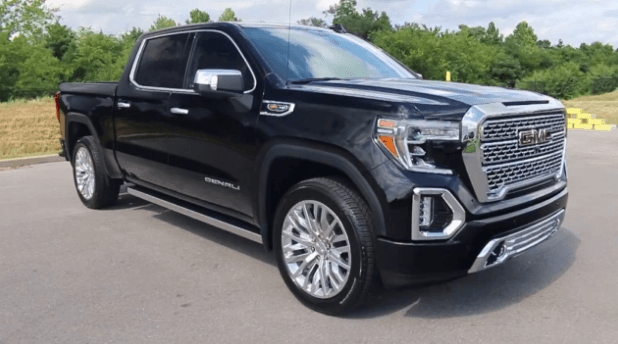
2026 Gmc Sierra Denali 1500 Hd
The conceptual 2026 GMC Sierra Denali 1500 HD represents a forward-thinking evolution in the premium truck market, aiming to merge two distinct product lines into one cohesive vehicle.
This model is envisioned as a \”super half-ton,\” integrating the luxurious appointments and sophisticated technology of the Denali trim with the enhanced structural integrity and capability suggested by the \”HD\” moniker.
It would be positioned to attract buyers who find a standard Sierra 1500 insufficient for their towing or hauling needs but consider a Sierra 2500 HD excessive for daily use.
The development of such a truck would signify a strategic move by GMC to create a new niche, directly addressing the growing demand for highly capable yet comfortable and technologically advanced pickups.
Projections for the powertrain of a Sierra Denali 1500 HD would center on high-output options engineered for torque and durability.
A likely candidate would be an enhanced version of the 6.2L V8 engine, specially tuned for higher towing ratings and featuring advanced cooling systems.
Alternatively, GMC could introduce a high-performance light-duty diesel engine or even a powerful hybrid system that combines electric torque with a gasoline engine for exceptional pulling power and potentially improved fuel efficiency under load.
This powertrain would be paired with a robust 10-speed automatic transmission and a strengthened drivetrain to reliably manage the increased stress of heavy-duty use.
From a design perspective, the 2026 Sierra Denali 1500 HD would need to communicate its unique capabilities visually.
Youtube Video:
The exterior would likely feature the signature Denali chrome grille and premium lighting but with more aggressive and functional elements borrowed from the HD line.
This could include a taller hood profile, larger and more robust tow mirrors, and distinct wheel designs fitted with higher-ply, load-rated tires.
Subtle yet clear \”1500 HD\” badging would differentiate it from other models, signaling its enhanced status and creating an exclusive aesthetic that is both luxurious and formidable.
Inside the cabin, the vehicle would embody the pinnacle of Denali luxury, leaving no doubt about its premium standing.
Expect exclusive materials such as full-grain leather, authentic open-pore wood, and brushed aluminum accents throughout the interior.
The technological suite would be state-of-the-art, likely featuring a large, panoramic screen integrating the driver\’s display and central infotainment system, along with an advanced head-up display.
Features like 16-way power-adjustable massaging front seats and a premium Bose audio system would ensure that its rugged capability does not come at the expense of supreme comfort and refinement.
The foundation of the \”HD\” designation would be a significantly reinforced chassis and suspension system.
This model would likely utilize a stronger, fully boxed frame derived from light-duty architecture but with added cross-members and thicker-gauge steel in critical areas.
The suspension would be uniquely tuned, possibly incorporating adaptive ride control technology to balance ride comfort during daily driving with the stiffness required for heavy payloads and towing.
Furthermore, it would feature larger brakes, a heavy-duty rear axle, and an integrated trailer brake controller as standard equipment to ensure safe and confident handling under demanding conditions.
Advanced technology would extend beyond the cabin to include a comprehensive suite of trailering and driver-assistance features.
A future version of GMC\’s Super Cruise hands-free driving technology, specifically calibrated for trailering, would be a key selling point.
The camera system would offer up to 15 or more unique views, including a \”transparent trailer\” view, to eliminate blind spots and simplify maneuvering.
Sophisticated software would help with trailer setup, monitor trailer tire pressure, and provide security alerts, making the entire towing experience safer and more intuitive for users of all skill levels.
In the competitive landscape, the 2026 Sierra Denali 1500 HD would carve out its own territory.
It would challenge top-tier light-duty trucks like the Ford F-150 Platinum with the Heavy-Duty Payload Package and the Ram 1500 Limited, but with a more explicit focus on near-heavy-duty capability.
Its unique selling proposition would be its ability to offer a significant step up in towing and hauling without the ride-quality compromises and larger footprint of a traditional 2500 HD.
This positioning would appeal to affluent buyers who tow heavy recreational vehicles like large boats or travel trailers but still desire a truck that is polished enough for executive daily commuting.
Ultimately, the value proposition of such a model would hinge on its ability to perfectly balance capability, luxury, and usability.
While its price point would undoubtedly be at the upper end of the half-ton market, potentially nearing that of a base-model 2500 HD, the investment would be justified for the right customer.
This vehicle would not be for everyone; it is a specialized tool for a discerning owner who demands the best of both worlds.
It represents the logical conclusion of market trends where trucks are increasingly expected to be do-it-all vehicles, serving as workhorses, family haulers, and luxury cruisers simultaneously.
Key Considerations for a Premium Heavy-Capability Light-Duty Truck
- A Strategic Market Position
Such a vehicle would be strategically positioned to bridge the significant gap between the light-duty 1500 series and the heavy-duty 2500 series.
This addresses a specific consumer need for more capability without committing to the size, fuel consumption, and typically harsher ride of a three-quarter-ton truck.
It creates a new sub-segment for those who regularly tow or haul loads that push the limits of a standard half-ton.
This niche targeting allows the manufacturer to capture a market segment that might otherwise feel underserved by existing product lineups.
- Advanced Powertrain Engineering
The powertrain for a 1500 HD model would require more than just a powerful engine; it would need a holistic system designed for durability and sustained performance under load.
This includes enhanced cooling for the engine and transmission, a more robust driveline, and specific tuning to optimize torque delivery for towing.
The integration of hybrid technology could offer a significant advantage, providing instant electric torque for smoother launches while also potentially improving overall fuel economy, a key concern for truck owners.
- Uncompromised Denali Luxury
Despite its enhanced ruggedness, the \”Denali\” name promises an uncompromised level of luxury and refinement. The interior would need to be a sanctuary of comfort and high-end materials, completely isolated from the hardworking chassis beneath.
Features like noise-cancellation technology, premium leather seating with heating and ventilation, and a top-tier infotainment system are not just options but expectations.
This dual personalitya tough workhorse with a first-class cabinis the core appeal of the Denali brand applied to a more capable platform.
- A Purpose-Built Chassis
The \”HD\” designation would be meaningless without a fundamentally stronger foundation. A purpose-built chassis, likely a heavily modified version of the 1500 frame, is crucial for safely managing higher payload and towing ratings.
This involves using high-strength steel, additional reinforcements, and a suspension system with higher-capacity springs and dampers.
These structural enhancements are what truly separate a \”1500 HD\” from a standard 1500 equipped with a simple trailering package, ensuring long-term durability and stability.
- Next-Generation Technology Suite
A flagship model projected for 2026 would serve as a showcase for the manufacturer\’s latest technological advancements.
This includes a highly advanced driver-assistance system, such as a trailering-capable version of Super Cruise, which would be a major differentiator in the market.
Furthermore, comprehensive camera systems, integrated trailering apps, and a highly intuitive digital cockpit would be essential to simplify complex tasks and enhance the overall user experience, reinforcing the truck\’s premium and modern identity.
- Distinct and Functional Design
The exterior design must be both aesthetically pleasing and functional, clearly communicating the vehicle\’s unique capabilities.
While it would retain the sophisticated look of the Denali line, elements like a more prominent grille for better airflow, functional fender vents, and specially designed wheels would signal its enhanced performance.
This careful balance ensures the truck looks at home in an upscale urban setting while also appearing completely capable and ready for demanding work on a job site or rural property.
- A Well-Defined Target Audience
The ideal customer for a Sierra Denali 1500 HD is a discerning individual with significant hauling needs who also values premium comfort and technology.
This could be a business owner who tows equipment during the week, a family that pulls a large travel trailer on weekends, or an equestrian who transports horses.
They have the financial means for a high-end vehicle and are willing to pay a premium for a single truck that can flawlessly perform multiple roles without compromise, replacing the need for a separate work truck and luxury vehicle.
- Premium Pricing and Value Proposition
The pricing for this model would reflect its unique position as a top-tier, specialized vehicle. It would command a significant premium over a standard 1500 Denali, placing it in the territory of lower-trim 2500 HD models.
The value proposition is not in being the cheapest option but in being the perfect option for a specific set of needs.
For the right buyer, the blend of enhanced capability, manageable size, and luxurious comfort offers a value that cannot be matched by any other single vehicle in the lineup.
Tips for Prospective Buyers of High-Capability Trucks
- Honestly Evaluate Your Towing and Payload Needs
Before considering a specialized model like a \”1500 HD,\” it is crucial to have a clear and realistic understanding of your typical and maximum loads.
Calculate the fully loaded weight of your trailer, including water, gear, and passengers, to determine the required towing capacity. Similarly, assess your payload needs by considering everything from passengers to cargo in the bed.
This analysis will help you decide if a highly capable half-ton is sufficient or if the superior stability and higher gross vehicle weight rating of a true three-quarter-ton truck are necessary for safety and performance.
- Test Drive for Daily Drivability
A key advantage of a \”super half-ton\” is its promise of better daily drivability compared to a traditional heavy-duty truck.
When evaluating options, schedule test drives that mimic your daily routine, including navigating parking lots, merging onto highways, and driving on local roads. Pay close attention to ride quality, maneuverability, and overall comfort.
A vehicle that is perfect for towing on the weekend may feel overly stiff or cumbersome during the weekday commute, so finding the right balance is essential for long-term satisfaction.
- Factor in the Total Cost of Ownership
A premium, high-capability truck comes with costs that extend beyond the initial purchase price.
A more powerful engine will likely consume more fuel, and specialized components like reinforced suspension and load-rated tires may be more expensive to maintain and replace.
Research insurance rates, projected fuel economy, and potential maintenance costs to build a comprehensive budget.
Understanding the total cost of ownership will provide a more accurate picture of the vehicle\’s long-term financial impact and help you make a more informed decision.
- Deeply Explore the Technology and Trailering Aids
Modern trucks are packed with technology designed to make towing easier and safer, and these features are a primary selling point for premium models.
During a demonstration, ask to see how the multi-camera trailering system works, how to set up a trailer profile in the infotainment system, and how features like an integrated trailer brake controller function.
Understanding these systems and determining which are most valuable to you can significantly influence your purchase decision and enhance your confidence when towing heavy loads.
Exploring the Evolution of the Modern Premium Truck
The concept of a \”heavy half-ton\” is not new, but its modern interpretation has been reshaped by consumer expectations.
In the past, these trucks were often spartan work vehicles, defined solely by their upgraded springs and axles.
Today, the market demands a vehicle that can perform demanding tasks while simultaneously providing a level of comfort and technological sophistication once reserved for luxury sedans.
This evolution reflects a broader shift in how pickup trucks are used, moving from purely utilitarian tools to versatile, multi-purpose family vehicles that must excel in every aspect of their performance.
The GMC Denali sub-brand itself is a testament to the market\’s appetite for luxury in a practical package.
What began as a premium trim level on the 1999 Yukon has transformed into a powerful brand-within-a-brand, signifying the highest level of craftsmanship, technology, and design GMC has to offer.
Extending the Denali ethos to a more capable 1500 HD platform would be a logical next step, combining the brand\’s established reputation for luxury with a new promise of superior, accessible capability.
This move would further solidify Denali\’s status as a leader in the premium utility vehicle space.
Technological innovation is a key battleground in the modern truck segment. Features that were once considered revolutionary, such as backup cameras, are now standard, and the focus has shifted to advanced driver-assistance systems (ADAS).
The integration of hands-free driving technology like Super Cruise, especially versions adapted for trailering, represents a monumental leap forward.
These systems not only enhance convenience on long journeys but also reduce driver fatigue and improve safety, making them highly desirable features for those who spend significant time on the road with a trailer in tow.
The future of truck powertrains is becoming increasingly diverse. While powerful V8 gasoline engines and high-torque diesels remain popular, the industry is rapidly moving toward electrification.
A hypothetical 2026 model would likely exist at a crossroads, potentially offering a sophisticated hybrid system as a bridge to full electrification.
Such a hybrid powertrain could deliver the best of both worlds: the instant torque and low-end pulling power of an electric motor combined with the range and proven reliability of an internal combustion engine, creating a compelling option for towing applications.
As trucks become more capable, the importance of advanced trailering systems cannot be overstated. Manufacturers are investing heavily in technologies that simplify the often-intimidating process of towing a heavy load.
Integrated systems that check trailer lights, monitor tire pressure, and provide customized braking effort are becoming commonplace.
The most advanced platforms use an array of cameras and sensors to provide unparalleled visibility around the truck and trailer, effectively eliminating blind spots and making it easier to navigate tight spaces with confidence.
The materials used in truck construction play a critical role in balancing strength, weight, and efficiency.
The strategic use of high-strength steel in the frame provides rigidity and durability, while lightweight aluminum alloys for body panels can reduce overall weight, improving fuel economy and payload capacity.
Some manufacturers are even incorporating advanced materials like carbon fiber composites into components like the truck bed to offer best-in-class scratch and dent resistance.
This multi-material approach is essential for engineering a modern truck that is both strong and efficient.
The competitive environment in the premium full-size truck market is incredibly fierce, with each major brand offering a suite of luxurious, high-feature models.
Ford\’s F-150 King Ranch and Platinum trims and Ram\’s 1500 Limited and Tungsten models offer stiff competition, each with its own unique approach to luxury and technology.
For a Sierra Denali 1500 HD to succeed, it would need to offer a clear and compelling advantage, with its enhanced capability being the primary differentiator that sets it apart from these already excellent competitors.
One of the greatest engineering challenges in modern truck design is achieving the perfect balance between capability and ride comfort.
A suspension that is stiff enough to handle a heavy payload can often result in a harsh, bumpy ride when the truck is empty.
Automakers are increasingly turning to sophisticated solutions like adaptive air suspension or advanced magnetic dampers.
These systems can adjust the suspension\’s firmness in real-time based on road conditions and vehicle load, providing a smooth, comfortable ride without compromising the truck\’s ability to perform serious work when needed.
The increasing complexity of vehicle technology necessitates a user-friendly interface. A massive, high-resolution touchscreen may look impressive, but it must be intuitive and easy to use, especially when driving.
The best systems combine touchscreen functionality with physical buttons and knobs for critical controls like volume and climate, allowing for quick adjustments without taking eyes off the road.
Voice commands are also becoming more sophisticated, enabling drivers to control navigation, entertainment, and vehicle settings with natural language, further enhancing safety and convenience.
The introduction of a vehicle like the Sierra 1500 HD could potentially create a new, formal market segment.
If successful, it would likely prompt competitors to develop and launch their own \”super half-ton\” models, leading to more choice and innovation for consumers.
This new category would cater specifically to the customer who is \”over-served\” by a traditional HD truck but \”under-served\” by a standard light-duty model.
It represents a maturation of the truck market, where manufacturers are moving beyond one-size-fits-all solutions to offer more specialized products tailored to specific lifestyles and use cases.
Frequently Asked Questions
John asks:
\”How would a hypothetical \’1500 HD\’ really differ from a standard Sierra 1500 with the max trailering package? It seems like they would be very similar.\”
Professional\’s Answer: That\’s an excellent question, John.
While a max trailering package on a standard 1500 adds features like an integrated brake controller and enhanced cooling, a true \’1500 HD\’ model would be fundamentally different in its core structure.
It would be built on a significantly reinforced frame and feature a heavy-duty suspension, stronger axles, and higher-rated tires from the ground up.
This results in a much higher Gross Vehicle Weight Rating (GVWR) and payload capacity, providing greater stability and durability for sustained heavy use, which is a step beyond what a trailering package alone can offer.
Sarah asks:
\”With \’HD\’ in the name, I worry that a truck like this would be too rough for my family\’s daily needs. Would it be comfortable enough to be our primary vehicle?\”
Professional\’s Answer: It\’s completely understandable to have that concern, Sarah. The primary engineering goal for a model like the Sierra Denali 1500 HD would be to solve that exact problem.
By using advanced suspension technology, such as adaptive dampers or air ride systems, it would be designed to offer a smooth, composed ride when unloaded, very similar to a standard luxury SUV.
The \’HD\’ capability would be there when you need it for towing your camper, but it would not compromise the comfort and refinement you expect for daily errands and family road trips.
Ali asks:
\”What kind of fuel economy could be realistically expected from a more powerful, heavier truck like this? I\’m concerned about the cost at the pump.\”
Professional\’s Answer: Ali, that\’s a very practical question. A vehicle with enhanced capability and a more powerful engine would naturally have a higher fuel consumption than a standard Sierra 1500. However, manufacturers are focused on efficiency.
Projections for a 2026 model would likely include technologies like Dynamic Fuel Management and potentially a mild-hybrid system to optimize fuel use.
While official figures wouldn\’t be available, one could expect its fuel economy to fall somewhere between that of a high-end 1500 and a 2500 HD, making it a crucial factor to weigh against its increased capabilities.
Maria asks:
\”I\’ve seen this \’2026 GMC Sierra Denali 1500 HD\’ mentioned online. Is this a confirmed model that GMC is planning to release?\”
Professional\’s Answer: Thank you for asking for that clarification, Maria.
As of now, the \’2026 GMC Sierra Denali 1500 HD\’ is a conceptual model based on industry analysis and trends; it has not been officially confirmed by General Motors.
The term describes a potential future vehicle that would logically fill a gap in the current market.
It\’s important to follow official announcements from GMC for any confirmation on future product plans, as speculation can often run ahead of actual production schedules.
David asks:
\”How would the price of a Sierra 1500 HD Denali compare to the other Denali trucks? I\’m trying to figure out where it would fit in my budget.\”
Professional\’s Answer: That\’s a great question for financial planning, David. A hypothetical Sierra Denali 1500 HD would be positioned as a premium, specialized product.
Its price would almost certainly be higher than that of the standard Sierra 1500 Denali due to its enhanced frame, suspension, and powertrain.
It would likely be priced to fit between the top-tier 1500 Denali and the entry-to-mid-level Sierra 2500 HD Denali, offering a unique value proposition for customers who need its specific blend of features.
Chen asks:
\”I prefer diesel for towing. Would a model like this offer a diesel engine option, similar to the larger 2500 HD trucks?\”
Professional\’s Answer: Chen, your preference for diesel when towing is shared by many. Given the focus on high torque for a \’1500 HD\’ model, a diesel powertrain would be a very logical option.
It could potentially feature an uprated version of the 3.0L Duramax found in the current 1500, or a new, more powerful light-duty diesel engine altogether.
Offering a diesel would strongly appeal to the target market for this truck, so it is a highly plausible feature that would likely be considered in its development.
Top SUVs New 2024:
 New 2026 GMC 1500 Sierra Denali Redesign