
In automotive discourse, a specific model year and name followed by a conjunction often signifies a deeper analysis of the vehicle in relation to a broader context.
This grammatical structure frames the subject not as an isolated entity, but as a focal point connected to consequential themes such as technological evolution, market competition, or consumer trends.
It elevates the discussion from a simple product review to an exploration of the product\’s significance and its interaction with external forces.
This approach allows for a comprehensive examination of how a particular model reflects and influences its surrounding environment.
For instance, the term \”Ford F-150 Lightning and Electrification\” positions the vehicle as a case study for the entire industry\’s shift towards electric power, examining its impact on infrastructure, consumer adoption, and traditional truck markets.
Similarly, \”Toyota Tacoma and Off-Road Dominance\” uses the specific model to explore the growing consumer appetite for rugged, adventure-ready vehicles and the engineering required to meet that demand.
In both cases, the vehicle is the subject, but the conjunction introduces a crucial, connected theme that defines its relevance in a larger conversation.
2026 Honda Ridgelineand
The anticipation surrounding the next-generation Honda Ridgeline, projected for the 2026 model year, represents a pivotal moment for the unique unibody pickup truck.
Industry analysis suggests a comprehensive redesign that will address both its longstanding strengths and its perceived weaknesses in a rapidly evolving market.
This future model is expected to be more than a simple refresh; it is poised to be a reassertion of Honda\’s vision for a modern utility vehicle.
The development will likely focus on enhancing its core attributes of comfort and practicality while adopting a more assertive identity to appeal to a broader range of truck buyers.
A significant area of evolution for the 2026 Ridgeline is expected to be its exterior styling.
While the current generation adopted a more traditional truck-like front fascia, the next iteration may push this philosophy further with a more muscular and rugged aesthetic.
Youtube Video:
Speculation points towards a bolder grille, more pronounced fender flares, and an overall stance that communicates greater capability and durability.
This design shift would be a strategic move to challenge the visual dominance of body-on-frame competitors and capture the attention of buyers who may have previously overlooked the Ridgeline due to its softer, more SUV-like appearance.
Underneath the new bodywork, the powertrain is anticipated to see its most substantial update yet. In alignment with Honda\’s global electrification strategy, a hybrid powertrain is a strong possibility for the 2026 Ridgeline.
This would likely be a version of the two-motor hybrid system found in other Honda models, retuned to provide the robust torque necessary for truck applications.
The introduction of a hybrid would not only offer significant improvements in fuel efficiency but also deliver instant electric torque for better acceleration and potentially enhanced towing performance, setting a new benchmark in the mid-size truck segment.
While advancing its powertrain, Honda is expected to double down on the unibody platform that has always set the Ridgeline apart.
The 2026 model will likely feature a next-generation frame that increases rigidity and strength without compromising the vehicle\’s acclaimed ride comfort and handling precision.
Engineers will aim to improve payload and towing capacities to be more competitive with the segment leaders, demonstrating that a unibody design can offer both car-like civility and true truck utility.
This refined platform would continue to be the foundation for the Ridgeline\’s superior on-road manners and its innovative packaging solutions.
Inside the cabin, the 2026 Honda Ridgeline is projected to receive a complete technological overhaul inspired by the latest generation of Honda vehicles like the Pilot and Accord.
This would include a larger, more responsive central touchscreen infotainment system, a fully digital instrument cluster, and a cleaner, more ergonomic dashboard layout.
The integration of wireless Apple CarPlay and Android Auto, along with an increased number of USB-C ports and a potential wireless charging pad, would bring the truck\’s connectivity up to modern standards.
The focus will be on creating an intuitive and premium user experience that complements the vehicle\’s practical nature.
The \”and\” of the Ridgeline\’s identity has always been its unique blend of utility and innovation, a theme the 2026 model is expected to expand upon.
The signature in-bed trunk and the dual-action tailgate are almost certain to return, perhaps with enhancements such as improved weather sealing or integrated power outlets.
Honda may also introduce new clever features, such as a more versatile bed extender system, enhanced in-bed lighting, or new modular storage solutions.
These features are critical differentiators that provide practical benefits not found in any of its competitors, reinforcing its image as the most versatile truck in its class.
Further diversification of the trim lineup is also a strong possibility, with an emphasis on specialized models.
The Trailsport trim, which has been introduced across the Honda lineup, could see a more significant application on the 2026 Ridgeline, featuring a factory-installed lift, all-terrain tires, and robust underbody protection.
Conversely, a new top-tier trim could push the Ridgeline further into the premium territory, with exclusive interior materials, advanced audio systems, and comfort features like ventilated front seats.
This strategy would allow the Ridgeline to compete more effectively across a wider spectrum of the market, from adventure enthusiasts to buyers seeking a comfortable daily driver.
In the context of the competitive landscape, the 2026 Ridgeline\’s redesign is crucial.
It will enter a market that includes not only traditional rivals like the Toyota Tacoma and Chevrolet Colorado but also other unibody trucks like the Ford Maverick and Hyundai Santa Cruz.
By potentially offering a standard or optional hybrid powertrain, Honda could carve out a unique position, appealing to efficiency-minded buyers.
The vehicle\’s success will depend on its ability to clearly communicate its value proposition: a truck that offers superior comfort and clever features without the compromises of traditional body-on-frame construction.
Sustainability is another factor that will likely influence the design and manufacturing of the 2026 model.
Honda has been increasing its use of sustainable and recycled materials in vehicle interiors, and this trend is expected to continue with the new Ridgeline.
Beyond the materials themselves, the manufacturing process for the vehicle and its components, particularly a hybrid powertrain, will be scrutinized for its environmental impact.
This focus on sustainability aligns with the expectations of a growing segment of consumers who prioritize eco-friendliness in their purchasing decisions.
Ultimately, the 2026 Honda Ridgeline represents a forward-looking vision for the pickup truck, one where efficiency, comfort, and innovative design are not mutually exclusive with utility and toughness.
The forthcoming model is more than just a vehicle; it is a statement about the future of personal transportation and the evolving needs of the modern truck owner.
As official details emerge, the industry and consumers alike will be watching closely to see how Honda redefines its unique position in the market and sets a new standard for the mid-size pickup segment.
Key Areas of Anticipated Advancement
- Powertrain Diversification and Hybridization
The most critical advancement expected for the 2026 Ridgeline is the introduction of a hybrid powertrain.
This move is not merely about improving fuel economy; it is a strategic decision to align the truck with modern performance expectations and environmental regulations.
A hybrid system would provide superior low-end torque for a more responsive driving feel and could potentially increase the vehicle\’s towing capabilities through electric motor assistance.
This would position the Ridgeline as a technologically advanced option in a segment that has been slower to adopt electrification, appealing to a new demographic of tech-savvy and efficiency-conscious buyers.
- A Decisive Shift in Design Philosophy
For the 2026 model, a more assertive and rugged exterior design is paramount to expanding its market appeal.
While appreciated for its functionality, the Ridgeline has often faced criticism for a design perceived as too soft for the truck segment.
A bolder, more traditional truck aesthetic would help it compete visually with body-on-frame rivals and shed any lingering \”SUV-with-a-bed\” comparisons.
This redesign would need to be carefully executed to maintain the vehicle\’s aerodynamic efficiency and sophisticated character while projecting an image of strength and capability that resonates with a wider audience.
- Comprehensive Technological Integration in the Cabin
The interior of the 2026 Ridgeline must feature a state-of-the-art technological suite to remain competitive.
This involves more than just a larger screen; it requires a seamless and intuitive user experience, with a fast interface, clear graphics, and standard wireless smartphone integration.
Furthermore, an updated version of the Honda Sensing suite of safety and driver-assistive technologies is essential.
Features like more advanced adaptive cruise control, lane-keeping assist, and blind-spot monitoring will be key selling points for families and safety-conscious consumers who use their truck as a daily vehicle.
- Enhancing the Unibody Platform\’s Strengths
Honda\’s challenge and opportunity lie in further developing the Ridgeline\’s unibody platform to underscore its advantages while mitigating its perceived limitations.
The 2026 model must continue to offer a superior ride quality and more precise handling than its body-on-frame competitors, which are primary reasons current owners choose the truck.
Simultaneously, engineering advancements must focus on increasing payload and towing capacities to near the top of the mid-size class.
Successfully balancing these attributes will prove that a unibody construction is not a compromise but a deliberate choice for a more modern and civilized pickup truck.
- Strategic Adaptation to a Transformed Market
The mid-size truck market of 2026 will be vastly different from that of previous years, with new entrants and a greater emphasis on electrification and lifestyle versatility.
The 2026 Ridgeline must adapt by clearly defining its place within this new landscape.
This requires a marketing strategy that highlights its unique features, such as the in-bed trunk and hybrid efficiency, while also demonstrating its competence in traditional truck duties.
Its success will depend on its ability to be seen as the intelligent choice for a buyer who needs genuine utility but refuses to sacrifice daily comfort and modern technology.
Navigating the Release of the 2026 Honda Ridgeline
- Monitor Official Honda Channels and Reputable Automotive News
To get the most accurate and up-to-date information, it is best to follow official sources. Honda\’s corporate newsroom and social media channels will be the first to release official images, specifications, and release dates.
Additionally, established automotive publications often receive embargoed information and provide detailed analysis as soon as announcements are made.
Relying on these sources helps to filter out unsubstantiated rumors and provides a clearer picture of what to expect from the final production model.
- Analyze Trends from Recent Honda Redesigns
Honda often shares design language, technology, and powertrain components across its vehicle lineup. To gain insight into the 2026 Ridgeline, one should examine the newest versions of the Honda Pilot, CR-V, and Accord.
The interior layout, infotainment system, and the implementation of the Trailsport trim on the new Pilot, for example, offer strong clues about the direction Honda will likely take with its upcoming truck.
This analysis can help set realistic expectations for the Ridgeline\’s features and overall design philosophy.
- Consider the Long-Term Value and Total Cost of Ownership
When considering a future purchase, it is wise to look beyond the initial sticker price.
If the 2026 Ridgeline offers a hybrid variant, prospective buyers should calculate the potential long-term savings in fuel costs compared to its gasoline-only competitors.
Furthermore, Honda vehicles are well-known for their high resale value and reliability, which contribute to a lower total cost of ownership over the vehicle\’s lifespan.
These financial factors are an important part of the overall value proposition that the new Ridgeline will present.
- Evaluate How Unique Features Fit Your Lifestyle
The Honda Ridgeline\’s defining characteristics are its unique utility features, and the 2026 model is expected to continue this tradition.
Prospective buyers should carefully consider how features like the lockable in-bed trunk and the dual-action tailgate would fit into their daily activities and recreational pursuits.
For those who frequently need secure, weatherproof storage or easier access to the truck bed, these features can be significant advantages over any other truck on the market.
Understanding their practical benefits is key to determining if the Ridgeline is the right choice for one\’s specific needs.
Broader Context and Market Dynamics
The Honda Ridgeline has occupied a unique niche since its inception, championing a unibody construction in a segment dominated by traditional body-on-frame designs.
This approach has granted it superior on-road comfort and handling, characteristics more akin to an SUV than a conventional pickup.
Throughout its history, the Ridgeline has appealed to a specific type of buyer who values practicality and refinement over raw, off-road prowess or maximum towing figures.
The 2026 model\’s challenge is to retain this loyal base while broadening its appeal to those who have traditionally opted for more rugged-seeming alternatives.
The emergence and success of compact unibody trucks like the Ford Maverick and Hyundai Santa Cruz have fundamentally validated Honda\’s long-held philosophy.
These vehicles have proven a significant market exists for trucks that prioritize fuel efficiency, affordability, and daily usability.
This market shift provides a favorable environment for the redesigned 2026 Ridgeline, as consumers are now more open to the concept of a non-traditional pickup.
The Ridgeline can position itself as a more premium and capable step-up from these compact offerings.
Honda\’s global commitment to electrification is a powerful force shaping its future product portfolio, and the Ridgeline is no exception.
The company has set ambitious goals for reducing its carbon footprint, and introducing hybrid technology into its truck line is a logical and necessary step.
This transition is not only driven by environmental concerns but also by evolving government regulations and consumer demand for more efficient vehicles.
A hybrid Ridgeline would serve as a powerful symbol of Honda\’s engineering prowess and its dedication to a more sustainable future.
The \”Trailsport\” badge represents Honda\’s focused effort to cater to the growing demand for off-road capable and adventure-oriented vehicles.
While early Trailsport models were largely aesthetic packages, newer iterations on vehicles like the Pilot feature tangible hardware upgrades such as all-terrain tires and increased ground clearance.
Applying a more robust Trailsport treatment to the 2026 Ridgeline could significantly boost its credibility among outdoor enthusiasts and help it compete more directly with off-road variants like the Toyota Tacoma TRD and Chevrolet Colorado Z71.
In the modern automotive market, advanced driver-assistance systems (ADAS) have become a critical factor in purchasing decisions. Consumers now expect a high level of standard safety technology, and the pickup truck segment is no exception.
The next-generation Honda Sensing suite that will likely feature in the 2026 Ridgeline will offer more refined and capable features, such as smoother adaptive cruise control and more accurate lane centering.
These technologies not only enhance safety but also reduce driver fatigue, making the truck a more comfortable companion for long journeys and daily commutes.
The cabin of a modern vehicle is increasingly defined by its infotainment and connectivity features. A responsive, user-friendly system is no longer a luxury but a fundamental expectation.
The 2026 Ridgeline must deliver a compelling in-cab experience with a large, high-resolution display, seamless smartphone integration, and potentially even over-the-air update capabilities.
This focus on the digital experience is crucial for attracting younger buyers and those who use their vehicle as a mobile office or entertainment hub.
One of the core engineering challenges for any truck, especially one with a unibody platform, is balancing capability with efficiency.
Consumers expect their trucks to be able to tow and haul significant loads, but they also desire good fuel economy in daily driving.
The potential hybrid powertrain in the 2026 Ridgeline offers a promising solution to this dilemma, as the electric motor can provide the necessary torque for heavy tasks while the system optimizes for fuel efficiency during lighter-load conditions.
This balance is key to the Ridgeline\’s appeal as a multi-purpose vehicle.
The concept of the \”lifestyle\” vehicle has gained immense traction, describing vehicles that are designed to support a wide range of personal and recreational activities.
The Honda Ridgeline has always been an archetypal lifestyle truck, perfectly suited for weekend trips, hauling sports equipment, or tackling home improvement projects.
The 2026 model will likely lean further into this identity, with features and marketing that emphasize its versatility and its role as an enabler of an active and multifaceted lifestyle, distinguishing it from more work-focused competitors.
Finally, the development and launch of any new vehicle are subject to global economic factors, including supply chain stability and manufacturing logistics.
The automotive industry has faced significant disruptions in recent years, affecting everything from semiconductor availability to raw material costs.
Honda\’s ability to navigate these challenges will be crucial in ensuring the 2026 Ridgeline can be produced in sufficient quantities and launched on schedule, meeting the anticipated consumer demand for this innovative next-generation truck.
Frequently Asked Questions
John asks:
\”Will the 2026 Ridgeline finally get a more powerful engine option, like a turbo V6, to compete with other trucks?\”
Professional\’s Answer: While a turbo V6 is unlikely given Honda\’s current engine strategy, the expectation is for a significant improvement in performance, likely through hybridization.
The next-generation two-motor hybrid system would pair the V6 engine with electric motors, delivering substantial instant torque.
This would result in quicker acceleration from a standstill and more responsive power for merging and passing, providing a \’more powerful\’ feel than the current gasoline-only engine, all while improving overall fuel efficiency.
Sarah asks:
\”I\’ve heard rumors that the next Ridgeline might be a fully electric truck. Is that true?\”
Professional\’s Answer: Based on industry timelines and Honda\’s announced strategy, a fully electric Ridgeline by the 2026 model year is highly improbable.
The more realistic and widely anticipated step is the introduction of a gasoline-electric hybrid model.
Honda is partnering with GM on its next-generation EVs, like the Prologue, but a ground-up electric truck on a dedicated platform would likely arrive later in the decade.
For 2026, the focus will almost certainly be on a sophisticated hybrid system.
Ali asks:
\”How will the new design really differ from the current model? Will it look like a real truck?\”
Professional\’s Answer: All signs point to a more aggressive and traditionally rugged design for the 2026 Ridgeline.
We anticipate a design that moves further away from its SUV origins with a more upright grille, a higher and flatter hood, and more defined body lines.
The goal will be to create a stronger visual presence that communicates capability and toughness, directly addressing past criticisms while still retaining a modern and sophisticated Honda aesthetic.
It is expected to look much more like a \”real truck\” to a broader audience.
Maria asks:
\”I love the in-bed trunk on my current Ridgeline. Will that feature be kept in the 2026 model?\”
Professional\’s Answer: It is virtually certain that the in-bed trunk will be a key feature of the 2026 Ridgeline.
This is a signature element that provides a unique, lockable, and weatherproof storage solution no other truck in its class offers. It\’s a major competitive advantage and a beloved feature among owners.
Honda will likely retain it and may even enhance it with new features like improved drainage, interior lighting, or integrated power outlets.
David asks:
\”What kind of new technology can we expect to see inside the cabin?\”
Professional\’s Answer: The cabin technology is expected to be a major leap forward.
You can anticipate a fully digital instrument cluster, a much larger and faster central touchscreen (likely 12.3 inches, similar to the new Accord), and standard wireless Apple CarPlay and Android Auto.
We also expect an updated Honda Sensing suite with more advanced safety and driver-assist features, such as Traffic Jam Assist and more natural-feeling adaptive cruise control, making the new Ridgeline both smarter and safer.
Chen asks:
\”This all sounds great, but when can we expect Honda to make an official announcement with real pictures and details?\”
Professional\’s Answer: Typically, automakers reveal a new or fully redesigned model about 6 to 12 months before it goes on sale.
For a 2026 model year vehicle, which would likely arrive in dealerships in the fall of 2025, we can expect an official debut sometime in the first or second quarter of 2025.
Keep an eye out for major auto shows or dedicated Honda press events during that timeframe for the first official look.
Top SUVs New 2024:
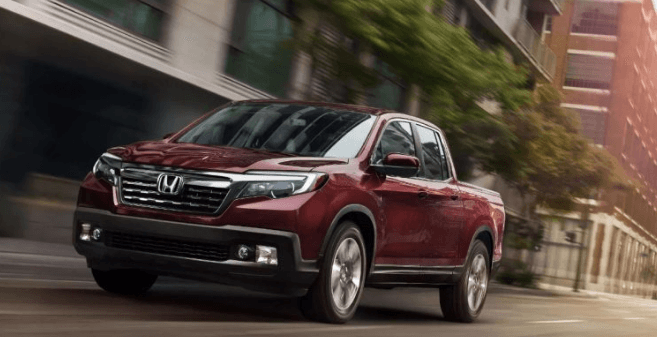 What We Know About 2026 Honda Ridgeline Hybrid
 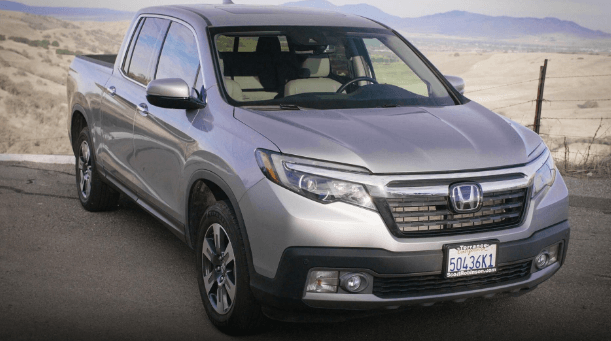 2026 Honda Ridgeline Specs and Release Date