
A future model year designation for a full-size pickup truck produced by a specific Japanese automotive manufacturer functions as a proper noun.
This term precisely identifies a hypothetical vehicle, combining the brand, model name, and a projected year of release to create a unique identifier within automotive discourse.
Such designations are crucial for discussing, planning, and speculating about the evolution of a vehicle lineup, even before official confirmation exists.
For instance, referring to a \”2027 Chevrolet Silverado\” or a \”2026 Ram 1500\” allows consumers, journalists, and industry analysts to conceptualize and debate potential future developments in the competitive truck market.
This nomenclature provides a clear framework for anticipating changes in design, technology, and performance for a particular product line in a specific future timeframe, serving as a placeholder for upcoming innovation and market strategy.
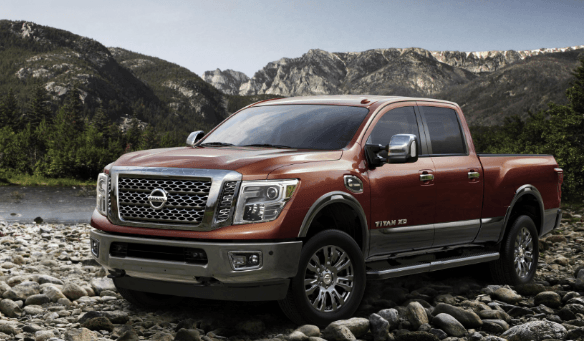
2026 Nissan Titan
The conversation surrounding a potential 2026 Nissan Titan is rooted in the context of the model\’s announced discontinuation after the 2024 model year.
This decision marked a significant turning point for the automaker in the highly competitive North American full-size truck segment, a market long dominated by domestic manufacturers.
The Titan, despite its robust V8 engine and commendable warranty, struggled to capture significant market share against entrenched rivals.
Therefore, any discussion about a 2026 iteration is inherently speculative, centering on whether Nissan might re-evaluate its strategy and engineer a comeback with a vehicle better aligned with current and future market demands.
Should a revival occur, the powertrain of a 2026 Nissan Titan would almost certainly represent a radical departure from its V8-powered predecessor.
The automotive industry\’s rapid shift towards electrification and stricter emissions standards would necessitate an advanced powertrain strategy.
Options could range from a twin-turbocharged V6 engine, similar to those found in competitors, to a sophisticated hybrid system designed to balance power with fuel efficiency.
Youtube Video:
A fully electric variant would also be a logical consideration, allowing Nissan to compete with the growing number of EV trucks and leverage its experience from models like the Ariya crossover.
A hypothetical 2026 Nissan Titan would require a complete exterior and interior redesign to be competitive.
Drawing inspiration from Nissan\’s current design language, the truck would likely feature a more aggressive and modern aesthetic, incorporating sleek LED lighting and bold grille designs.
Inside, the cabin would need a technological overhaul, moving beyond the functional but dated interior of its predecessor.
This would involve integrating a large, high-resolution infotainment screen, a fully digital instrument cluster, and premium materials to create an environment that rivals the luxurious and tech-forward cabins of modern competitors.
The platform underpinning a future Titan would be a critical element of its potential success. Utilizing a thoroughly modern, flexible architecture would be essential for accommodating diverse powertrain options, including hybrid and all-electric systems.
Such a platform would also need to provide superior ride quality, handling dynamics, and structural rigidity compared to the previous generation.
Furthermore, engineering a new frame would allow for advancements in safety, payload, and towing capabilities, which are fundamental purchase drivers in the full-size truck segment.
Advanced driver-assistance systems (ADAS) would be a non-negotiable feature for a 2026 Nissan Titan.
The truck would need to be equipped with the latest version of Nissan\’s ProPILOT Assist technology, offering semi-autonomous driving capabilities such as adaptive cruise control with lane centering.
A comprehensive suite of safety features, including a 360-degree camera system, blind-spot monitoring with trailer coverage, automatic emergency braking with pedestrian detection, and rear cross-traffic alert, would be standard to meet consumer expectations and achieve high safety ratings.
Market positioning would be a formidable challenge for a resurrected Titan. To avoid the pitfalls of the past, Nissan would need a clear and compelling value proposition.
Instead of attempting to compete head-on with every configuration of the market leaders, a new Titan could focus on a specific niche, such as off-road performance with a specialized PRO-4X model or urban utility with a highly efficient hybrid.
A focused marketing strategy emphasizing unique strengths, such as a superior standard warranty or innovative cargo management features, would be crucial for carving out a sustainable market share.
The global automotive landscape could also influence the form a new Titan takes.
Nissan might explore developing a single, global truck platform that could be adapted for different markets, potentially leading to a vehicle slightly smaller than the outgoing Titan but larger than the Frontier.
This approach could reduce development costs and streamline manufacturing, making the business case for a new truck more viable.
Such a vehicle would need to balance the ruggedness required for North America with the efficiency and size constraints of other international markets.
Connectivity and in-cabin technology are now primary differentiators in the truck market.
A 2026 Nissan Titan would have to offer a seamless and intuitive user experience, including wireless Apple CarPlay and Android Auto, an onboard Wi-Fi hotspot, and over-the-air (OTA) software update capabilities.
Additional features like a premium sound system, multiple USB-C charging ports, a wireless charging pad, and integrated smart-home connectivity would be necessary to appeal to modern buyers who use their trucks as mobile offices and family vehicles.
Ultimately, the prospect of a 2026 Nissan Titan hinges on a complex business decision for the automaker.
It would require a massive investment in research, development, and manufacturing at a time when resources are being heavily allocated to the global transition to electric vehicles.
Nissan would have to be confident that a new truck could not only compete effectively but also deliver significant profitability.
The decision will depend on a thorough analysis of market trends, technological advancements, and the company\’s long-term strategic priorities in North America and beyond.
Key Considerations for a Future Nissan Truck
- Powertrain Diversification: A future truck from Nissan cannot rely solely on a traditional internal combustion engine. To be relevant and compliant with future regulations, the powertrain lineup must be diversified, with a strong emphasis on electrification. This would likely involve offering a powerful and efficient hybrid variant as a volume seller and a fully electric version to compete with emerging EV trucks. The development of such systems would require significant investment but is essential for long-term viability in a market rapidly moving away from large-displacement V8s.
- Competitive Technology Suite: The modern truck buyer expects a high level of technology for infotainment, connectivity, and safety. A potential 2026 Nissan Titan would need a state-of-the-art infotainment system with a large, responsive touchscreen and seamless smartphone integration. Furthermore, a comprehensive suite of advanced driver-assistance systems, including a sophisticated semi-autonomous driving feature, would be a mandatory inclusion to meet the standards set by competitors and ensure top safety ratings from regulatory bodies.
- Strategic Market Positioning: Re-entering the full-size truck market would require a more focused strategy than before. Instead of trying to be a direct competitor to every trim level of the Ford F-150 or Ram 1500, Nissan could find success by targeting specific niches with excellence. This might mean creating the most capable standard off-road truck, the most fuel-efficient hybrid, or the truck with the most innovative cargo and utility features, thereby creating a distinct identity and a compelling reason for buyers to switch brands.
- Platform Modernization: The foundation of any new truck must be a modern and flexible platform. This new architecture would need to be lighter, stronger, and more versatile than the previous generation\’s, capable of supporting different cab and bed lengths as well as multiple powertrain types, including battery packs for an EV model. A modern platform is also the key to unlocking superior ride comfort, handling precision, and the ability to integrate the latest safety and chassis control technologies effectively.
- Interior Design and Quality: Truck cabins have evolved from spartan work spaces to luxurious, tech-filled command centers. A new Nissan truck would need an interior that reflects this evolution, using high-quality materials, thoughtful ergonomics, and clever storage solutions. Creating a premium and comfortable environment is crucial, as many buyers use their trucks as daily drivers and family haulers, making interior comfort and features just as important as towing capacity for their purchase decision.
- Supply Chain and Manufacturing Viability: Launching a new vehicle, especially one as complex as a full-size truck, presents immense logistical challenges. Nissan would have to secure a robust and cost-effective supply chain for all components, particularly for batteries and electric motors if it pursues electrification. The manufacturing facility, likely the Canton, Mississippi plant, would require significant retooling and investment to build a new-generation vehicle efficiently and at a high level of quality, all while managing global supply chain uncertainties.
- Brand and Image Rebuilding: After discontinuing the Titan, Nissan would face the task of rebuilding credibility in the full-size truck segment. A new model would need a strong launch campaign to convince loyal truck buyers to consider a Nissan product again. This involves not just an excellent vehicle but also a marketing message that highlights genuine innovation, reliability, and a clear understanding of the needs of modern truck owners, backed by a strong warranty and dealer support.
- Profitability and Business Case: The most critical factor is whether a new Titan can be profitable. The full-size truck market is a high-margin segment, but it also requires enormous upfront investment. Nissan\’s leadership would need to be convinced that the projected sales volume and pricing strategy could generate a strong return on that investment, especially when compared to allocating those same resources to other growing segments like electric crossovers and SUVs where the company is already building momentum.
- Focus on Utility and Innovation: To stand out, a new truck must innovate in the core areas of truck utility. This could include a multi-function tailgate, an integrated onboard power system more advanced than competitors, a unique bed-divider and storage system, or clever solutions for towing and hauling. Practical, well-executed features that make a truck owner\’s life easier can create powerful word-of-mouth marketing and provide a tangible reason to choose a Nissan over more established nameplates.
Analyzing Future Truck Developments
- Monitor Official Automaker Announcements: The most reliable information regarding any potential future vehicle will always come directly from the manufacturer. It is advisable to regularly check the official Nissan newsroom website and its corporate social media channels for press releases or statements. Major decisions, such as re-entering a significant market segment, are typically announced with formal fanfare and detailed information, providing the only truly confirmed details about product strategy and timelines.
- Follow Major International Auto Shows: Global auto shows, such as those in Detroit, New York, and Tokyo, remain key venues for automakers to reveal concept cars and future production models. Nissan could use such an event to gauge public reaction to a new truck concept before committing to a full production plan. Paying attention to the concepts an automaker displays can provide significant clues about future design language, technological direction, and potential new models in the pipeline.
- Read Reputable Automotive News Outlets: Established automotive journalism publications and websites are valuable sources for industry analysis, insider reports, and speculative renderings. Experienced journalists often have sources within car companies and can provide context on industry trends, patent filings, and corporate strategies that may hint at future products. While rumors should be treated with caution, credible reports can often foreshadow official announcements long before they are made public.
- Analyze Competitor Moves and Market Trends: The actions of competing manufacturers provide strong indicators of where the market is headed. Observing the success of features like hybrid powertrains, massive infotainment screens, or multi-function tailgates on competitor trucks can help predict the features a new Nissan truck would need to include. If the entire segment moves decisively toward electrification, it becomes highly probable that any new entrant would have to follow suit to be considered a serious contender.
The history of the Nissan Titan provides important context for its potential future. First introduced in 2003, the Titan was a bold attempt by a Japanese automaker to penetrate a segment dominated by American brands.
The first generation was praised for its powerful V8 engine and innovative features like the Utili-track cargo system.
However, it was slow to be updated, allowing competitors to surpass it in terms of technology, refinement, and powertrain options, a lesson that would heavily inform the development of any future model.
The broader full-size truck market has undergone a dramatic transformation over the past decade. What was once a segment focused purely on utility and capability has now become a battleground for technology, luxury, and efficiency.
Modern trucks serve as family vehicles, mobile offices, and status symbols, leading to the rise of opulent high-end trims with features rivaling luxury sedans.
This evolution means that a new truck must be a \”do-it-all\” vehicle, excelling in toughness while also providing exceptional comfort and connectivity.
The emergence of the all-electric pickup truck has permanently altered the strategic landscape.
Models like the Ford F-150 Lightning, Rivian R1T, and Tesla Cybertruck have proven that there is a significant market for electric utility vehicles.
Any automaker considering a new truck entry must have a clear EV strategy, as a purely gasoline-powered lineup would appear dated and would miss out on a rapidly growing customer base.
The performance and technology offered by EV trucks have set new benchmarks that a hypothetical 2026 Nissan Titan would be forced to meet or exceed.
Beyond individual consumers, the commercial and fleet market is a crucial component of truck sales and profitability. These buyers prioritize total cost of ownership, reliability, and durability above all else.
A successful new truck would need to offer dedicated work-truck trims that are affordable, easy to maintain, and highly configurable.
An electric or highly efficient hybrid version could be particularly appealing to fleet managers looking to reduce fuel and maintenance costs over the life of their vehicles.
Nissan\’s corporate \”Ambition 2030\” plan outlines a massive investment in electrification, with a goal of launching numerous new EV models by the end of the decade.
Any new truck project would need to align with this overarching strategy. The development of solid-state batteries and new e-powertrain technologies for vehicles like the Ariya could potentially be adapted for a truck platform.
This synergy would be essential to making the development of an electric truck financially feasible and technologically competitive.
The principle of platform sharing is a cornerstone of the modern automotive industry, used to reduce costs and development time. Nissan could leverage its alliance with Mitsubishi and Renault to co-develop a global truck platform.
This collaboration could distribute the financial burden and combine engineering expertise, potentially resulting in a more robust and globally competitive product.
Such a strategy has been used effectively by competitors and would be a logical path for Nissan to consider for a cost-effective re-entry into the truck market.
Consumer preferences for truck interiors have shifted dramatically towards greater space, comfort, and versatile storage. Features like a completely flat rear floor, lockable under-seat storage, and configurable center consoles have become major selling points.
A successful 2026 Nissan Titan would need to excel in interior packaging, offering creative solutions that maximize passenger comfort and secure cargo space within the cabin, catering to the dual-use nature of modern pickups.
Finally, tightening global emissions regulations and corporate average fuel economy (CAFE) standards are powerful forces shaping truck design. These regulations make it increasingly difficult and expensive to rely on large, naturally aspirated engines.
Automakers are forced to adopt technologies like turbocharging, hybridization, and full electrification to meet these mandates.
Any future truck program would be engineered from the ground up with these regulatory hurdles in mind, making advanced, efficient powertrains an absolute necessity rather than an option.
Frequently Asked Questions
John asked: \”Is Nissan actually confirmed to be releasing a Titan model in 2026?\”
Professional\’s Answer: As of now, there has been no official confirmation from Nissan regarding a 2026 Nissan Titan. The company has announced that the Titan will be discontinued in North America after the 2024 model year.
While the automotive industry is always subject to change and future product plans can be revised, any discussion about a 2026 model is purely speculative and based on industry analysis rather than a formal statement from the manufacturer.
Top SUVs New 2024:
 What We Know About 2026 Nissan Titan XD