
In the automotive industry, a specific alphanumeric designation is used to identify a particular version of a vehicle.
This naming convention acts as a precise identifier, communicating the model year, the manufacturer\’s brand, the specific model line, and the equipment or feature level, often referred to as the trim.
For instance, a \”2025 Honda CR-V EX-L\” or a \”2024 Kia Telluride SX\” immediately informs a potential buyer about the vehicle\’s age, make, model, and its place within the model\’s hierarchy of features and pricing.
Understanding this structure is fundamental for consumers and industry professionals to accurately compare and evaluate different automotive offerings in the market.
This system provides a standardized framework that clarifies a vehicle\’s specifications, from its powertrain to its interior appointments, before one even sees the car itself.
2026 Ford Flex S
The potential reintroduction of a beloved nameplate is generating considerable discussion within the automotive community, centered on a hypothetical future model.
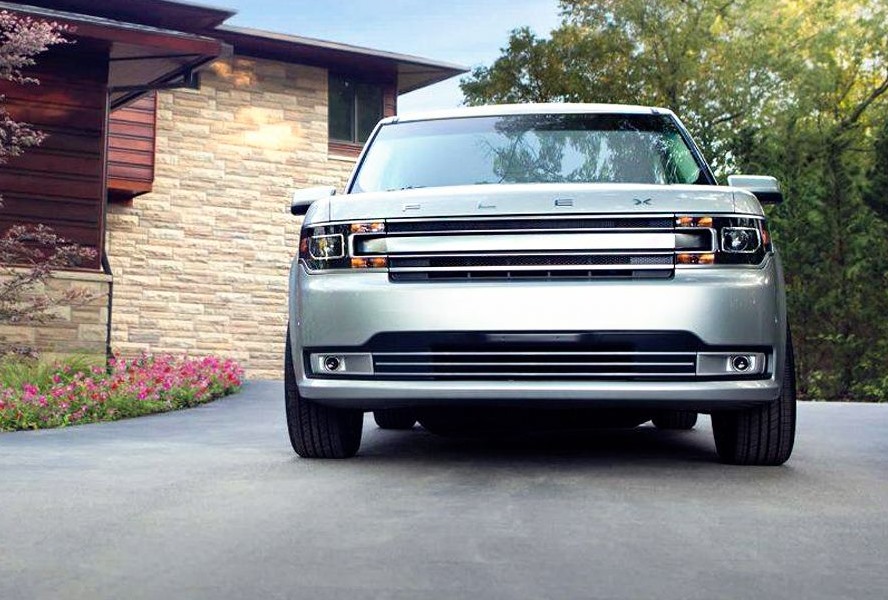
The 2026 Ford Flex S is envisioned as a modern interpretation of the distinctive crossover that was known for its unique, boxy design and exceptional interior space.
This revival would not be a simple reissue of the past model but a complete reimagining, designed to compete in the highly contested three-row SUV segment.
It would leverage Ford\’s latest technological advancements, platform architectures, and powertrain strategies to appeal to a new generation of families.
The vehicle is anticipated to fill a niche for buyers seeking practicality and standout styling, moving beyond the more conventional designs of its stablemates.
Regarding its exterior, the 2026 Ford Flex S would likely retain the iconic, rectilinear silhouette that defined its predecessor, but with a thoroughly modern execution.
Designers are expected to incorporate contemporary Ford styling cues, such as a coast-to-coast LED light bar at the front and rear, similar to those seen on the Mustang Mach-E and F-150 Lightning.
The signature horizontal grooves on the side panels could make a return, providing a direct visual link to the original\’s heritage.
Youtube Video:
The \”S\” trim, likely representing a standard or sport-oriented base model, would probably feature refined yet understated details, such as 18-inch alloy wheels and body-colored door handles, to establish a clean and sophisticated foundation for the model line.
Inside, the primary focus would be on maximizing space, versatility, and comfort, echoing the original\’s greatest strengths.
The 2026 Ford Flex S would offer three rows of seating, comfortably accommodating up to seven passengers with ample legroom and headroom, a direct benefit of its boxy architecture.
Materials would see a significant upgrade, with the \”S\” trim featuring durable, high-quality cloth upholstery and soft-touch surfaces throughout the cabin to create a premium feel even at the entry level.
The interior design would emphasize a clean, horizontal layout, enhancing the sense of width and openness, while clever storage solutions and flexible seating configurations would underscore its role as a highly practical family vehicle.
Under the hood, the powertrain lineup for the 2026 Ford Flex S is expected to align with the manufacturer\’s broader shift towards electrification.
The standard engine would most likely be a hybrid system, possibly based on a 2.5-liter four-cylinder engine, designed to deliver a compelling balance of performance and fuel efficiency.
This approach would make the vehicle competitive against other hybrid three-row SUVs and appeal to environmentally conscious consumers.
An optional powertrain could include a more powerful EcoBoost V6 engine for those desiring greater towing capacity and acceleration, ensuring the model caters to a wide range of customer needs and preferences.
Technology and infotainment would be central to the cabin experience, bringing the nameplate firmly into the modern era.
The 2026 Ford Flex S is anticipated to come standard with a large central touchscreen, perhaps 12 inches or larger, running the latest version of Ford\’s SYNC infotainment system.
This system would offer seamless wireless integration for Apple CarPlay and Android Auto, along with a comprehensive suite of connected services.
A standard digital instrument cluster would further enhance the driver\’s interface, providing customizable displays for navigation, vehicle status, and driver-assistance features, creating a cohesive and user-friendly digital environment.
Safety remains a paramount concern for family vehicles, and the 2026 Ford Flex S would be equipped accordingly.
It is expected to feature the Ford Co-Pilot360 suite as standard equipment across all trims, including the \”S\” model.
This package typically includes essential active safety features such as Pre-Collision Assist with Automatic Emergency Braking, a Blind Spot Information System with Cross-Traffic Alert, and a Lane-Keeping System.
More advanced semi-autonomous driving capabilities, like BlueCruise hands-free highway driving, could be available on higher trims, positioning the vehicle as a leader in safety technology within its class.
The vehicle\’s underlying architecture would be a critical component of its revival, likely utilizing one of Ford\’s modern, modular platforms.
This would provide significant improvements in ride quality, handling, and structural rigidity compared to its predecessor.
A sophisticated independent suspension system at all four corners would ensure a comfortable and composed ride, absorbing road imperfections with ease.
Furthermore, the availability of an intelligent all-wheel-drive system would enhance its all-weather capability and driving confidence, making it a versatile choice for families in diverse climates.
In terms of market positioning, the 2026 Ford Flex S would strategically fit into Ford\’s lineup as a stylish and practical alternative to more traditional SUVs like the Explorer.
It would directly compete with popular three-row crossovers such as the Kia Telluride, Hyundai Palisade, and Toyota Grand Highlander, which have found success by offering a combination of bold design, spacious interiors, and strong value.
The Flex\’s distinctive character would be its key differentiator, appealing to buyers who want to stand out from the crowd without sacrificing the functionality required for daily family life.
The \”S\” designation in the 2026 Ford Flex S name would likely define its role as the entry point to the lineup, but one that avoids feeling sparse or basic.
This trim would be carefully curated to offer a robust set of standard features that modern buyers expect, including the advanced infotainment system, a full suite of safety technologies, and the efficient hybrid powertrain.
By providing a high level of value from the base model upwards, Ford could attract a broad customer base and establish a strong foundation for the model\’s success.
This strategy focuses on delivering core functionalities and modern conveniences without forcing buyers into more expensive trim levels.
Key Considerations for the 2026 Ford Flex S
- Reimagined Iconic Design: The vehicle\’s success would hinge on its ability to blend nostalgic design cues with modern aesthetics. The 2026 Ford Flex S is expected to maintain the classic boxy shape that made the original a cult favorite, but with updated elements like full-width LED lighting and an aerodynamic profile. This approach aims to capture the attention of both previous owners and a new generation of buyers seeking a vehicle with a unique personality. The challenge lies in evolving the design enough to feel fresh without losing the core identity that made it distinct in the first place.
- Standard Hybrid Powertrain: A crucial element for market relevance would be the inclusion of a standard hybrid powertrain. This move aligns with industry-wide trends toward electrification and addresses consumer demand for improved fuel economy in larger vehicles. For the 2026 Ford Flex S, a standard hybrid would provide a significant competitive advantage, offering lower running costs and a reduced environmental footprint. It would position the vehicle as a forward-thinking choice within the crowded three-row SUV segment.
- Spacious and Versatile Three-Row Interior: The hallmark of the Flex has always been its cavernous and highly configurable interior. The 2026 model would need to build upon this legacy, offering exceptional passenger and cargo space that rivals or exceeds class leaders. Features like a flat-folding third row, adjustable second-row seats, and numerous storage compartments would be essential. The \”S\” trim would need to deliver this practicality with durable, high-quality materials to underscore its value proposition as an ideal family hauler.
- Advanced Technology Suite: To compete effectively, the 2026 Ford Flex S must be equipped with the latest in-car technology. A large, intuitive touchscreen powered by the newest SYNC system, a fully digital instrument panel, and comprehensive connectivity options like wireless Apple CarPlay and Android Auto would be standard. This focus on a seamless digital experience is no longer a luxury but a core expectation for new vehicle buyers. The integration of these features even in the base \”S\” trim would be a powerful selling point.
- Comprehensive Safety Features: Family-oriented vehicles demand the highest standards of safety, making a robust suite of driver-assistance systems non-negotiable. The 2026 Ford Flex S is anticipated to come standard with Ford Co-Pilot360, which includes automatic emergency braking, blind-spot monitoring, and lane-keeping assist. The structural integrity of the vehicle, built on a modern platform, would also be critical for achieving top safety ratings from organizations like the IIHS and NHTSA, providing peace of mind for all occupants.
- Distinct Market Positioning: The vehicle would need to carve out a unique space in a saturated market. Unlike the more rugged Explorer or the larger Expedition, the 2026 Ford Flex S would be positioned as a stylish, comfortable, and highly practical \”on-road\” crossover. Its appeal would be to those who prioritize interior space and distinctive design over off-road capability. This clear differentiation would help prevent sales cannibalization within Ford\’s own lineup and attract buyers from competitor brands.
- Potential All-Electric Variant: While a hybrid is expected to be standard, the platform chosen for the 2026 Flex would likely be capable of supporting a fully electric version in the future. An all-electric Flex could leverage Ford\’s advancements in EV technology, offering substantial range, impressive performance, and the unique packaging advantages of an electric powertrain. The introduction of a Flex EV would be a logical next step in expanding Ford\’s electric portfolio and appealing to the growing segment of EV buyers.
- The \”S\” Trim as a Value Leader: The \”S\” trim level would play a critical role in the model\’s overall strategy. It would need to be perceived not as a stripped-down base model but as a high-value proposition offering all the essential modern features. By equipping the 2026 Ford Flex S with a strong standard feature set, Ford could attract budget-conscious families who do not want to compromise on safety, technology, or efficiency. This approach helps build a strong reputation for the model from the ground up.
- Leveraging Brand Nostalgia: The return of the Flex nameplate carries with it a significant amount of brand nostalgia and goodwill from its previous run. Ford would need to carefully manage this legacy, ensuring the new model honors the spirit of the original while being a thoroughly modern vehicle. Marketing campaigns could highlight the connection to the past, appealing to the loyalty of former owners while demonstrating the new model\’s vast improvements. This emotional connection can be a powerful tool in a market often driven by pragmatic choices.
Practical Advice for Prospective Buyers
- Assess Your Powertrain Needs: Before considering a purchase, it is essential to evaluate which powertrain best suits your typical driving habits. While the expected standard hybrid engine in the 2026 Ford Flex S would be ideal for most families, offering excellent fuel efficiency for city and suburban commuting, those who frequently tow a boat or trailer might find an available upgraded engine, such as an EcoBoost V6, to be a more suitable choice. Consider your long-term needs, including potential vacation travel and hauling requirements, to make an informed decision that balances efficiency with capability.
- Compare Interior Configurations: The interior versatility is a cornerstone of this vehicle\’s appeal, so take the time to physically interact with the space. When visiting a dealership, test the mechanisms for folding the second and third-row seats to see how intuitive and easy they are to operate. Consider whether a second-row bench seat, offering maximum passenger capacity, or available captain\’s chairs, providing easier third-row access and more comfort, would better serve your family\’s needs. Ensure the cargo area, with all seats in place and folded down, meets your expectations for hauling everything from groceries to sports equipment.
- Evaluate the Standard Feature Set: The \”S\” trim is designed to be the value-oriented model, but it is crucial to confirm that its standard features align with your expectations. Carefully review the list of included equipment, paying close attention to the infotainment system size, the specific safety features included in the standard Co-Pilot360 package, and comfort amenities like climate control zones. Sometimes, a small step up to the next trim level can provide a significant number of desirable features for a relatively modest price increase, representing better overall value in the long run.
- Plan for a Test Drive: No amount of research can replace the experience of driving the vehicle. During a test drive of the 2026 Ford Flex S, pay attention to more than just acceleration. Assess the vehicle\’s visibility from the driver\’s seat, the quietness of the cabin at highway speeds, and the responsiveness of the steering and brakes. Maneuver it in a parking lot to get a feel for its size and turning radius, as this will be important for daily usability. A comprehensive test drive should simulate your typical driving conditions to ensure the vehicle feels right for you.
Broader Context and Industry Trends
The evolution of the three-row crossover segment has been one of the most significant automotive trends of the past decade.
What was once a niche market has expanded into a mainstream battleground where nearly every major automaker competes.
Consumers have increasingly shifted away from traditional minivans and sedans in favor of these versatile vehicles that offer a commanding driving position, available all-wheel drive, and flexible interiors.
The success of models like the Kia Telluride has demonstrated that buyers in this segment are not just looking for practicality; they also desire bold styling, premium features, and advanced technology, raising the bar for all new entrants.
Ford\’s corporate strategy is heavily focused on a transition towards electrification, with massive investments in battery production and the development of new electric vehicle platforms.
This strategic pivot influences every new model introduced, including the hypothetical 2026 Ford Flex S.
By making a hybrid powertrain standard, the company can effectively bridge the gap for consumers not yet ready for a full EV while still making progress on its goals for emissions reduction and fuel efficiency.
This approach allows Ford to offer electrified options across its portfolio, from trucks to family crossovers, catering to a wider audience.
The role of nostalgia in modern automotive design has become a powerful marketing and design tool.
Automakers are increasingly reviving iconic nameplates from their past, such as the Ford Bronco and the Hummer EV, to tap into a pre-existing emotional connection with consumers.
This strategy can instantly generate buzz and interest in a new model, giving it a significant advantage in a crowded marketplace.
For a revived Flex, leveraging its unique heritage and cult following would be essential to differentiate it from a sea of look-alike competitors and create a compelling narrative around its return.
In today\’s market, the infotainment system and overall digital experience are often as important to a purchase decision as the powertrain or handling.
Consumers expect seamless smartphone integration, intuitive user interfaces, and large, responsive screens as standard features.
Automakers are in a constant race to offer the latest software, over-the-air update capabilities, and connected services that enhance convenience and safety.
A vehicle like the 2026 Ford Flex S would need to feature a state-of-the-art system to be considered a modern and competitive option for tech-savvy families.
The rapid advancement of driver-assistance technologies is fundamentally changing the experience of driving.
Systems that were once exclusive to high-end luxury vehicles, such as adaptive cruise control, lane-centering assist, and automatic emergency braking, are now becoming standard on mainstream family cars.
The push towards greater levels of automation, including hands-free highway driving systems like Ford\’s BlueCruise, is a key competitive differentiator.
For a family hauler, these safety and convenience features provide tangible benefits, reducing driver fatigue and enhancing overall safety.
Platform sharing is a cornerstone of the modern automotive industry, allowing manufacturers to develop a wide variety of vehicles more efficiently and cost-effectively.
By using a flexible, modular architecture, a company can build everything from a mid-size sedan to a three-row crossover on the same basic set of components.
This approach enables faster development times, improved quality control, and the ability to easily integrate new technologies like hybrid and all-electric powertrains.
A new Flex would almost certainly be built on such a shared platform, benefiting from the engineering and refinement of other successful Ford models.
The definition of the ideal \”family vehicle\” continues to evolve with changing lifestyles and priorities.
While space and safety remain paramount, modern families also demand advanced technology, excellent fuel economy, and a design that reflects their personal style.
The decline of the traditional sedan and the specialization of the SUV market show that a one-size-fits-all approach no longer works.
The potential success of a revived Flex lies in its ability to meet these multifaceted demands, offering a unique blend of form and function that resonates with contemporary family life.
Global supply chain disruptions have had a profound impact on the automotive industry, affecting everything from production timelines to the availability of certain features.
Automakers are now designing vehicles with more resilient and flexible supply chains in mind, sometimes simplifying option packages or sourcing components from multiple suppliers.
Any new vehicle launch, including a hypothetical 2026 model, must navigate this complex landscape. These challenges can influence final vehicle specifications, pricing, and delivery dates, making adaptability a key factor for success.
The competitive landscape for mid-size, three-row SUVs is fiercely intense, with numerous highly polished and well-regarded models vying for consumer attention.
To succeed, a new entrant cannot simply be good; it must be exceptional in several key areas.
Whether through standout design, a superior standard powertrain, a more spacious interior, or a more compelling value proposition, a new vehicle must establish a clear reason for buyers to choose it over established leaders.
The 2026 Ford Flex S would face this challenge directly, requiring it to leverage its unique heritage and modern features to make a convincing case to prospective customers.
Frequently Asked Questions
John asks: \”I owned an original Flex and loved its space. Will the 2026 version actually be as roomy, especially in the third row?\”
Professional\’s Answer: That\’s an excellent question, John. The original Flex set a high bar for interior space, and it\’s anticipated that a 2026 model would make this a top priority.
By utilizing a modern platform and the vehicle\’s characteristic boxy design, engineers can optimize interior packaging.
It is expected that the new version would offer comparable, if not slightly improved, headroom and legroom across all three rows.
The third row, in particular, would be designed for adult-friendly comfort on shorter trips, aiming to be one of the most accommodating in its class, directly addressing one of the original\’s most celebrated attributes.
Top SUVs New 2024:
 2023 Ford Flex Redesign, Specs