
The main subject of this article is a proper noun, which designates a specific entity. This type of noun refers to a unique item, differentiating it from a general class of objects.
For instance, \”mid-size SUV\” is a common noun describing a category of vehicles, while the specific nameplate for a future model year, such as the \”2025 Kia Telluride,\” is a proper noun that identifies a particular product.
Similarly, a designation for an anticipated iteration of a well-known family-oriented sport utility vehicle from a prominent South Korean manufacturer serves as a distinct identifier.
This specific naming convention is crucial in the automotive industry, as it allows consumers, journalists, and analysts to pinpoint a vehicle\’s exact generation, features, and market position.
The model year is a key component of this proper noun, signaling whether the vehicle is a carryover, features a mid-cycle refresh with minor updates, or represents a complete redesign from the ground up.
Understanding this distinction is fundamental to evaluating its place within a competitive and rapidly evolving market segment.
2026 Hyundai Santa Fe
The automotive landscape anticipates the arrival of future models with great interest, and the 2026 Hyundai Santa Fe is poised to be a significant topic of discussion.
Following the radical, boxy redesign introduced for the 2024 model year, the 2026 iteration is expected to function as a mid-cycle refresh. This industry-standard practice involves refining an existing design rather than starting from a clean slate.
Therefore, projections for this vehicle center on subtle enhancements, technological upgrades, and powertrain optimizations that build upon the foundation established by its immediate predecessor, aiming to maintain its competitive edge in the crowded mid-size SUV market.
In terms of exterior design, the 2026 Hyundai Santa Fe will likely retain the bold, upright silhouette that marked a dramatic departure from previous generations.
However, a mid-cycle refresh typically introduces nuanced changes to key areas to keep the vehicle looking fresh.
These updates could include a revised front grille pattern, new internal graphics for the distinctive H-shaped LED headlights and taillights, and a selection of new alloy wheel designs.
Additionally, Hyundai may introduce new exterior color palettes, providing consumers with more personalization options to further distinguish the updated model.
Inside the cabin, the focus will likely be on technological refinement and enhanced user experience. The 2024 model\’s expansive panoramic curved display, which integrates the digital instrument cluster and infotainment screen, will almost certainly carry over.
For the 2026 version, enhancements could come in the form of updated software with a more intuitive interface, faster processing speeds, and expanded connectivity options, including more robust wireless Apple CarPlay and Android Auto integration.
Youtube Video:
Material quality may also see subtle improvements, with new interior color schemes or trim accents offered on higher-end models to elevate the sense of luxury.
Powertrain offerings for the 2026 Hyundai Santa Fe are projected to be an evolution of the existing lineup.
The standard turbocharged gasoline engine and the efficient hybrid variant will continue to be the core options, but with potential for refinement.
Engineers will likely focus on improving fuel economy, reducing emissions, and enhancing the smoothness of power delivery, particularly in the hybrid system.
There remains continued speculation about the reintroduction of a Plug-in Hybrid (PHEV) variant to the lineup, offering a significant all-electric range to appeal to an increasingly eco-conscious consumer base.
Building on its reputation as a family-friendly vehicle, the 2026 model is expected to feature the next generation of Hyundai\’s SmartSense suite of safety and driver-assistance technologies.
This could include more advanced versions of Highway Driving Assist, potentially offering automated lane change capabilities and more sophisticated adaptive cruise control that better anticipates traffic flow.
Furthermore, enhancements to the forward collision-avoidance system might include improved detection of cyclists and pedestrians in complex urban intersections, reinforcing the vehicle\’s commitment to occupant and public safety.
The exceptional practicality introduced with the 2024 redesign will remain a cornerstone of the 2026 Hyundai Santa Fe\’s appeal.
The longer wheelbase and boxy shape created a genuinely spacious third row and class-leading cargo capacity, particularly behind the rearmost seats.
The 2026 model will continue to leverage this architectural advantage, offering families a versatile interior that can easily switch between carrying passengers and hauling large items.
Features like the expansive liftgate opening, designed to resemble a terrace, will continue to be a key selling point for those with active lifestyles.
The driving dynamics of the 2026 model may receive subtle tuning to improve the overall experience.
While the 2024 version was praised for its comfortable and quiet ride, engineers might make small adjustments to the suspension and steering systems for the mid-cycle refresh.
These changes could aim to provide a slightly more connected feel for the driver without sacrificing the serene ride quality that families expect from a three-row SUV.
The available HTRAC All-Wheel Drive system will also continue to be a key feature, providing confident handling in various weather conditions.
In the competitive marketplace, the 2026 Hyundai Santa Fe will be positioned against a formidable roster of rivals, including the Toyota Highlander, Honda Pilot, Kia Telluride, and Ford Explorer.
Its success will depend on its ability to offer a compelling blend of distinctive style, advanced technology, practical space, and strong value.
The expected refinements in design, technology, and efficiency will be crucial in ensuring the Santa Fe not only attracts new buyers but also retains the loyalty of current owners looking to upgrade within the brand.
Key Projections for the 2026 Model Year
- Evolutionary Design Refinements
Instead of a complete overhaul, the 2026 model is expected to feature an evolutionary update to its exterior and interior styling.
This approach is common for a mid-cycle refresh, where the goal is to modernize a successful design without alienating its established audience.
Expect subtle changes to the front and rear fascias, such as new lighting signatures or grille textures, alongside new wheel options and paint colors.
Inside, new trim materials and color combinations will likely be introduced to enhance the cabin\’s ambiance and perceived quality.
- Next-Generation Infotainment and Connectivity
Technology is a key battleground in the modern automotive market, and the 2026 Santa Fe will likely feature significant software and hardware upgrades.
The infotainment system is anticipated to run on a newer, faster platform, enabling quicker response times and over-the-air (OTA) update capabilities for maps and vehicle functions.
Enhanced digital services, such as a more advanced digital key and expanded remote features through the Bluelink app, will further integrate the vehicle into the owner\’s digital ecosystem, providing greater convenience and control.
- Focus on Powertrain Efficiency
With tightening emissions standards and high consumer demand for fuel efficiency, Hyundai will likely place a strong emphasis on optimizing the Santa Fe\’s powertrains.
The hybrid model, in particular, may receive updates to its battery management and electric motor systems to deliver more miles per gallon and a smoother transition between gas and electric power.
While the standard turbocharged engine will remain, it could undergo minor tuning to balance performance with improved fuel economy, ensuring the model remains competitive in running costs.
- Advancements in Driver-Assistance Systems
Safety technology continues to advance at a rapid pace, and the 2026 model is expected to incorporate the latest developments from Hyundai\’s SmartSense suite.
This could include a more sophisticated version of Highway Driving Assist, offering a higher degree of semi-autonomous capability in specific conditions.
Additionally, new features like an advanced rear-occupant alert system or enhanced blind-spot monitoring that provides steering assistance could be introduced, further solidifying the Santa Fe\’s position as a safe and secure family vehicle.
- Strategic Market Positioning and Trim Structure
Hyundai will strategically adjust the trim levels and feature packaging for the 2026 Santa Fe to better align with market trends and competitor offerings.
This may involve making certain popular features, such as the large digital dashboard or specific safety systems, standard on lower trim levels to enhance the vehicle\’s overall value proposition.
By carefully curating its feature set across the lineup, Hyundai will aim to appeal to a broad range of buyers, from budget-conscious families to those seeking near-luxury levels of comfort and technology.
Considerations for Prospective Buyers
- Monitor Official Hyundai Channels for Announcements
For the most accurate and up-to-date information, prospective buyers should regularly check Hyundai\’s official newsroom and consumer websites.
As the 2026 model year approaches, the manufacturer will release official details regarding specifications, features, pricing, and release dates.
Subscribing to brand newsletters or following their social media can provide timely alerts, ensuring that interested parties do not miss crucial announcements and can make informed decisions based on confirmed facts rather than speculation.
- Evaluate the Current Model for Immediate Needs
While awaiting the 2026 refresh, it is worthwhile to thoroughly evaluate the current-generation Santa Fe.
The changes in a mid-cycle refresh are often incremental, meaning the existing model already offers the core design, space, and technology that will define the 2026 version.
If the current vehicle meets all necessary requirements, purchasing one may be a practical choice, especially if attractive incentives are offered as dealerships make room for the updated inventory.
- Assess Powertrain Options Based on Driving Habits
Potential owners should carefully consider which powertrain best suits their typical driving patterns.
The hybrid variant is an excellent choice for those who do a significant amount of city or stop-and-go driving, where its electric motor can maximize fuel efficiency.
Conversely, the standard turbocharged gasoline engine may be more suitable for drivers who primarily travel on highways or require stronger towing capabilities, offering robust performance for various demands.
- Plan for a Potential Price Adjustment
It is standard for new model years, especially those receiving a refresh, to come with a modest price increase. This adjustment reflects the cost of new features, technological upgrades, and general inflation.
Prospective buyers should budget accordingly, anticipating that the 2026 Hyundai Santa Fe will likely have a slightly higher starting Manufacturer\’s Suggested Retail Price (MSRP) across all trim levels compared to the preceding year\’s model.
Broader Context and Industry Trends
The Hyundai Santa Fe has a rich history, evolving from a budget-friendly compact SUV in its first generation to the sophisticated and stylish three-row competitor it is today.
This journey reflects Hyundai\’s broader transformation as a brand, moving from a value-oriented manufacturer to a leader in design, technology, and alternative powertrains.
The radical redesign of 2024 and the subsequent 2026 refresh are the latest chapters in this story, demonstrating a brand that is unafraid to take bold risks to capture consumer attention and redefine expectations within a mainstream segment.
The shift toward electrification is the single most significant trend shaping the modern automotive industry, and the mid-size SUV segment is no exception.
While the 2026 Santa Fe will heavily feature its hybrid powertrain, the market is increasingly looking toward plug-in hybrid (PHEV) and fully electric (EV) solutions.
The architecture of the current Santa Fe platform was designed with electrification in mind, paving the way for more advanced electrified variants in the future as battery technology improves and charging infrastructure expands, meeting both regulatory pressures and consumer demand.
Hyundai\’s design philosophy, often described as \”Sensuous Sportiness,\” has been successfully applied across its lineup, but the recent boxy, rugged aesthetic of the Santa Fe marks a deliberate and strategic pivot.
This design language taps into a growing consumer preference for vehicles that project an image of adventure and capability, even if they are primarily used for daily family duties.
This balance between utilitarian form and sophisticated detailing is a difficult one to strike, and the 2026 model\’s refinements will be a test of Hyundai\’s ability to polish this new identity.
Connectivity is no longer a luxury but a fundamental expectation in new vehicles.
The integration of over-the-air (OTA) updates in models like the Santa Fe is a game-changer, allowing manufacturers to improve vehicle software, add new features, and fix bugs remotely without requiring a visit to the dealership.
This capability keeps the vehicle feeling modern long after it has been purchased and deepens the relationship between the owner and the brand, turning the car into an evolving digital platform.
Sustainability extends beyond the powertrain and is becoming a crucial aspect of interior vehicle design. Automakers are increasingly utilizing recycled and eco-friendly materials for upholstery, headliners, and carpets.
For the 2026 Santa Fe, it is expected that Hyundai will continue or expand its use of materials such as recycled plastics and ecologically processed leather.
This focus not only reduces the vehicle\’s environmental footprint but also appeals to a growing demographic of consumers who prioritize sustainability in their purchasing decisions.
The modern family SUV must serve a dual purpose: it needs to be a comfortable, quiet, and safe daily driver while also offering the versatility and perceived toughness for weekend adventures.
The 2026 Santa Fe\’s design and engineering aim to master this balance.
Its long wheelbase and refined suspension provide a smooth on-road experience, while its available all-wheel-drive system, higher ground clearance, and rugged styling cues provide the confidence and capability for light off-road excursions or navigating challenging weather conditions.
Advanced Driver-Assistance Systems (ADAS) are a critical component of modern vehicle safety and a stepping stone toward fully autonomous driving.
The suite of features in the 2026 Santa Fe, from lane-keeping assist to adaptive cruise control, works to reduce driver fatigue and mitigate the risk of common accidents.
As these systems become more sophisticated, they can handle a greater range of driving scenarios, making long journeys safer and more relaxing for everyone in the vehicle.
The three-row SUV segment remains one of the most competitive in the automotive market, as these vehicles have become the de facto choice for modern families.
Their combination of passenger space, cargo flexibility, and all-weather capability makes them ideal for a wide range of needs.
The 2026 Santa Fe\’s success hinges on its ability to stand out through its unique design, advanced technology, and a compelling value proposition that convinces families to choose it over its many well-established and highly regarded competitors.
Finally, the user experience within the cabin is a key differentiator. Features that may seem small, such as the UV-C sterilization compartment, dual wireless charging pads, and cleverly designed storage solutions, collectively enhance daily usability.
For the 2026 model, Hyundai will likely continue to innovate in this area, finding new ways to make the interior more comfortable, convenient, and intuitive for all passengers, reinforcing the vehicle\’s role as a thoughtfully designed family hub.
Frequently Asked Questions
John asks: \”With the big redesign being so recent, will the 2026 Hyundai Santa Fe look completely different again?\”
Professional\’s Answer: That\’s a great question, John. It\’s highly unlikely that the 2026 model will have another complete redesign. The automotive industry typically operates on a five-to-seven-year cycle for each vehicle generation.
The 2024 model marked the beginning of a new generation, so the 2026 version is expected to be a \”mid-cycle refresh.\” This means it will retain the same fundamental body shape and interior layout but will feature noticeable updates to the front and rear styling, new wheel designs, and potentially new technology inside to keep it fresh and competitive.
Top SUVs New 2024:
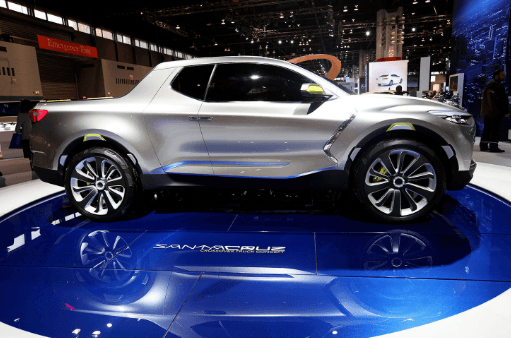 2026 Hyundai Santa Cruz Changes, Specs
 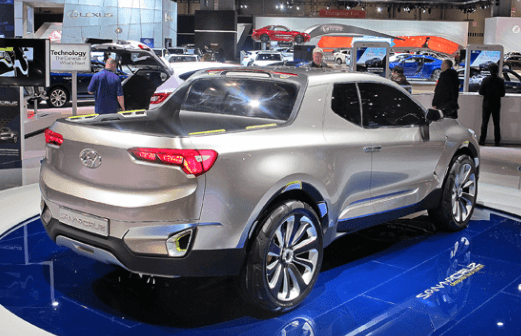 New 2026 Hyundai Santa Cruz Price, Release Date