
In automotive discourse, a model year combined with a specific nameplate functions as a proper noun, designating a potential or speculative future product.
This term acts as a unique identifier for a vehicle that is the subject of industry rumors, consumer anticipation, and forward-looking analysis based on market trends and manufacturer strategy.
For instance, phrases like \”the rumored 2027 Toyota MR2\” or \”the anticipated all-electric Chevrolet Corvette\” refer to specific, unconfirmed vehicles that exist in the realm of strategic possibility and public discussion.
The use of such a designation is crucial for discussing the potential evolution of a brand\’s lineup and understanding how past models might be re-envisioned with new technology and design philosophies.
It allows analysts, enthusiasts, and potential consumers to conceptualize a product\’s place in a future market, even long before an official announcement or confirmation from the manufacturer.
This forward-looking terminology helps frame conversations around product development cycles, competitive positioning, and the integration of next-generation features.
Consequently, these proper nouns become focal points for detailed speculation about everything from powertrain options to interior ergonomics and advanced safety systems.
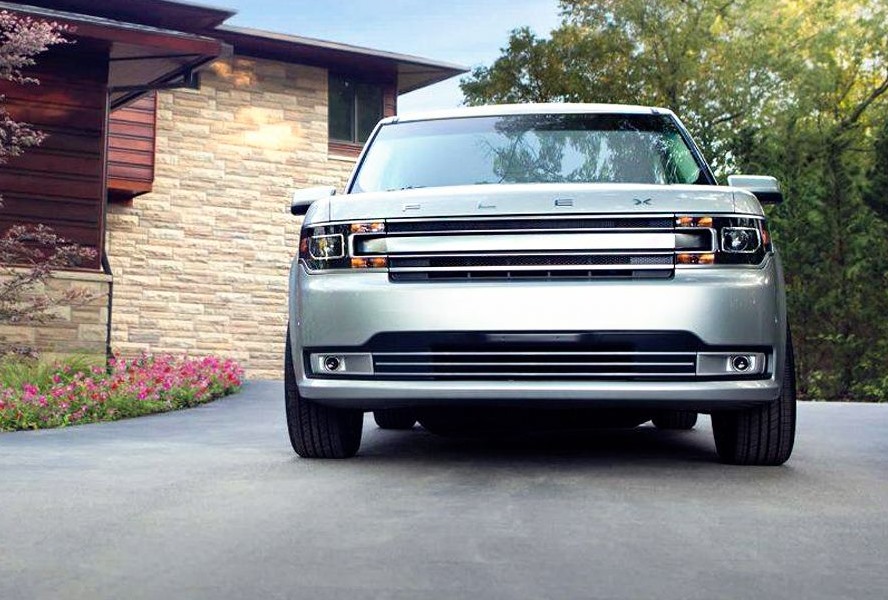
2026 Ford Flex
The potential reintroduction of a beloved nameplate, such as the 2026 Ford Flex, represents a significant point of discussion within the automotive industry.
The original Flex, known for its distinctive, boxy styling and spacious three-row interior, carved out a unique niche that blended the attributes of an SUV, a wagon, and a minivan.
A modern iteration would enter a vastly different market, one that is heavily focused on electrification, advanced connectivity, and sophisticated driver-assistance technologies.
Therefore, any analysis of a potential revival must consider how the vehicles core identity would be adapted to meet contemporary consumer expectations and regulatory standards.
A primary consideration for a new model would be its design philosophy.
The original\’s appeal was its unapologetically linear and retro-futuristic aesthetic, which stood in stark contrast to the more organically styled crossovers of its time.
A 2026 Ford Flex would likely retain this core characteristic but reinterpret it through a modern lens, potentially incorporating elements from Ford\’s current design language, such as coast-to-coast light bars and a cleaner, more minimalist surface treatment.
Youtube Video:
The challenge for designers would be to evoke nostalgia for the original while ensuring the new vehicle looks forward-thinking and contemporary, avoiding a purely retro execution that could feel dated.
Powertrain options would be central to the vehicle\’s market positioning.
Given Ford\’s significant investment in electrification, a 2026 Ford Flex would almost certainly feature a range of hybrid and plug-in hybrid (PHEV) options, aligning with offerings in vehicles like the Explorer and Escape.
A fully electric variant would also be a logical and compelling possibility, potentially utilizing a dedicated EV platform to maximize interior space and offer competitive range.
Such a move would position the vehicle directly against emerging three-row electric SUVs and appeal to a growing segment of environmentally conscious family buyers.
Inside, the cabin would need to represent a major leap forward in technology and material quality.
The expectation would be for a highly digital cockpit, centered around a large touchscreen running the latest version of Ford\’s SYNC infotainment system.
This would be complemented by a digital instrument cluster, extensive connectivity features, and the integration of advanced driver-assistance systems, including the potential for hands-free highway driving with Ford BlueCruise.
The interior design would likely emphasize spaciousness and versatility, key attributes of the original, but with a more premium and modern execution using sustainable materials.
The platform underpinning a 2026 Ford Flex is a subject of significant speculation.
It could be based on a modified version of the platform used for the current Explorer and Lincoln Aviator, which would support both rear-wheel and all-wheel-drive configurations as well as hybrid powertrains.
Alternatively, if a fully electric version is prioritized, it could be built on a next-generation EV-specific architecture, which would offer distinct advantages in packaging, such as a completely flat floor and a more spacious cabin.
The choice of platform would fundamentally influence the vehicle\’s driving dynamics, interior volume, and overall capabilities.
In terms of market positioning, a new Flex would be strategically placed to capture buyers seeking a stylish and highly practical three-row crossover without the rugged, off-road pretense of many traditional SUVs.
It would appeal to families who value distinctive design and a comfortable, car-like ride over trail-rated capability.
This positioning would place it in competition with popular models like the Kia Telluride, Hyundai Palisade, and Honda Pilot, but its unique styling would be its primary differentiator.
The vehicle would serve as a fashionable and functional alternative in a crowded and often stylistically conservative segment.
The target audience for a 2026 Ford Flex would likely be a combination of previous Flex owners and a new generation of buyers.
Loyalists of the original model would be drawn to the nostalgia and the return of a practical, uniquely styled vehicle.
Meanwhile, new customers, particularly younger families in urban and suburban environments, would be attracted to its modern technology, potential electrified powertrains, and standout design.
The vehicle\’s marketing would need to carefully balance these two groups, highlighting its heritage while emphasizing its forward-looking features and capabilities.
The competitive landscape for three-row crossovers has become intensely crowded since the original Flex was discontinued. To succeed, a 2026 Ford Flex would need to offer more than just unique styling.
It would need to be competitive on price, standard features, fuel efficiency, and interior space.
Its success would hinge on Ford\’s ability to package these attributes in a way that feels both premium and accessible, creating a strong value proposition.
The inclusion of an all-electric option could give it a significant edge over competitors that have been slower to electrify their three-row offerings.
The role of legacy and nostalgia cannot be overstated in the potential revival of this nameplate.
The original Flex developed a dedicated following, and its discontinuation was lamented by many owners who appreciated its unique blend of style and utility.
Tapping into this positive sentiment would provide an initial boost in interest and media coverage.
Ford would need to demonstrate a genuine understanding of what made the original special while clearly communicating how the new model has evolved to meet the demands of the modern era.
Finally, any discussion of a 2026 Ford Flex must consider the potential production and release timeline.
Given typical automotive development cycles, an official announcement would likely need to occur at least 18 to 24 months before its target model year. This would place a potential reveal sometime in 2024 or early 2025.
However, this remains purely speculative, as Ford has not officially confirmed any plans for the model\’s return.
The final decision would depend on internal market analysis, platform availability, and its strategic fit within Ford\’s long-term product portfolio.
Key Considerations for a Modern Revival
- Design Philosophy Evolution
The core identity of a new Flex would be rooted in its design, requiring a delicate balance between honoring the original\’s iconic, linear shape and integrating modern automotive styling cues.
Designers would face the task of creating a vehicle that is instantly recognizable as a successor while appearing fresh and contemporary.
This could involve retaining the signature floating roof design and horizontal grooves on the side panels but refining them with sleeker lines and advanced LED lighting.
The success of this design would be crucial in differentiating the vehicle in a sea of homogenous crossover shapes and capturing the attention of both former enthusiasts and new buyers.
- Powertrain Diversification
A 2026 model would necessitate a modern and diverse range of powertrain options to remain competitive and meet global emissions standards.
The most logical approach would include a standard hybrid system for efficiency, a powerful plug-in hybrid (PHEV) for enhanced electric range, and a potential flagship all-electric (BEV) version.
This strategy would not only appeal to a broad spectrum of consumer preferences but also future-proof the model against tightening regulations.
The performance characteristics of each powertrain would need to be carefully tuned to deliver a smooth, comfortable, and confident driving experience befitting a family-oriented vehicle.
- Advanced Technology Integration
To compete effectively, a new Flex must be a showcase of Ford\’s latest technological advancements. This includes a state-of-the-art infotainment system with a large, responsive touchscreen, seamless smartphone integration, and over-the-air (OTA) update capability.
Furthermore, a comprehensive suite of advanced driver-assistance systems (ADAS) would be essential, with features like adaptive cruise control, lane-centering assist, and automated emergency braking as standard.
The inclusion of Ford\’s BlueCruise hands-free driving technology would be a significant selling point, positioning the vehicle as a leader in convenience and safety.
- Interior Space and Versatility
One of the original Flex\’s greatest strengths was its cavernous and highly configurable interior, and a successor would need to build upon this legacy.
It must offer comfortable seating for seven or eight passengers with ample legroom in all three rows, a feature often compromised in competitors.
Clever packaging, potentially enabled by an electric platform, could lead to a flat floor, increasing passenger comfort and storage options.
Features like a one-touch second-row tilt-and-slide function for easy third-row access and a power-folding third row would be critical for family-focused utility.
- Market Niche and Competitive Positioning
The 2026 Ford Flex would need to be carefully positioned to avoid cannibalizing sales from other Ford SUVs like the Explorer and Expedition while carving out its own distinct market space.
Its unique selling proposition would be its design-forward, wagon-like aesthetic combined with SUV practicality.
It would be marketed not as an off-roader but as the ultimate stylish and comfortable vehicle for road trips, daily commuting, and family hauling.
This clear positioning would help it attract buyers who are tired of conventional SUV designs and are seeking something with more personality.
- Platform and Structural Foundation
The choice of an underlying platform is a fundamental decision that would dictate many of the vehicle\’s attributes, from its driving dynamics to its interior dimensions.
Utilizing an existing architecture, such as a modified version of the CD6 platform (Explorer/Aviator), would be a cost-effective solution allowing for various powertrain types.
However, a dedicated EV platform would be a more forward-thinking choice, unlocking superior interior packaging and potentially better performance and efficiency for an all-electric variant.
This decision would reflect Ford\’s long-term commitment to electrification and its vision for the future of its family vehicles.
- Safety as a Top Priority
For any modern family vehicle, safety is non-negotiable, and a 2026 Ford Flex would need to achieve top safety ratings from organizations like the IIHS and NHTSA.
This would require a robust body structure designed to protect occupants in a variety of crash scenarios, along with an extensive array of both passive and active safety features.
Beyond standard airbags and stability control, it would need advanced systems like blind-spot monitoring, rear cross-traffic alert, and pre-collision assist with pedestrian detection. These features would be central to its appeal for safety-conscious family buyers.
- Material Quality and Perceived Value
Modern consumers expect a high level of refinement, even in non-luxury brands, so the interior of a new Flex would need to feature high-quality materials and excellent fit and finish.
The use of soft-touch surfaces, authentic materials like brushed aluminum or open-pore wood trim, and durable yet comfortable upholstery would be key to creating a premium ambiance.
This focus on material quality would directly contribute to the vehicle\’s perceived value, helping to justify its price point against an array of well-appointed competitors.
It would need to feel substantial and well-crafted from the moment a potential buyer opens the door.
- Customization and Personalization
A key aspect of the original Flex\’s charm was its array of customization options, such as the contrasting roof colors.
A new model should expand upon this concept, offering a wide range of exterior colors, wheel designs, and interior trim packages.
This would allow buyers to personalize their vehicle to reflect their individual style, enhancing the emotional connection to the product.
Offering distinct appearance packages, such as a sporty ST-Line or a more luxurious Platinum or Titanium trim, would broaden its appeal across different customer demographics.
- Brand Heritage and Marketing Strategy
The marketing campaign for a revived Flex would need to skillfully leverage the nostalgia associated with the original while clearly articulating its modern advancements.
It should celebrate the vehicle\’s heritage as a design icon while highlighting its new technology, efficiency, and safety.
The campaign would need to tell a story about a vehicle that understands the needs of modern families but refuses to be boring.
Successfully connecting the past with the future would be essential for generating excitement and driving initial sales momentum upon its launch.
Tips for Prospective Buyers and Enthusiasts
- Monitor Reputable Automotive News Sources
For those eagerly anticipating the potential return of this vehicle, staying informed through credible channels is paramount. Follow established automotive publications, industry news sites, and official Ford Motor Company press releases for any announcements.
Be wary of unsubstantiated rumors or speculative digital renderings that are not based on credible insider information.
Official concept car reveals at major auto shows or dedicated corporate events are often the first concrete sign that a speculative model is moving toward production, so these are key events to watch.
- Evaluate Future Powertrain Needs
If a 2026 Ford Flex does come to market, it will likely offer a variety of powertrains, so potential buyers should start considering their future needs now.
Assess your typical driving habits, including daily commute distance and frequency of long road trips, to determine if a hybrid, plug-in hybrid, or fully electric version would be the best fit.
A PHEV could offer the perfect balance for many, providing emission-free local driving and gasoline-powered convenience for longer journeys.
Understanding your priorities in terms of fuel economy, performance, and environmental impact will help you make a well-informed decision when the time comes.
- Consider the Total Cost of Ownership
Beyond the initial purchase price, it is wise to think about the long-term total cost of ownership.
Electrified powertrains, while potentially having a higher upfront cost, can offer significant savings on fuel and maintenance over the vehicle\’s lifespan.
Research potential insurance rates for modern vehicles equipped with advanced safety features, as these can sometimes lead to discounts.
Also, consider the resale value, as vehicles with unique designs and a dedicated following, like the original Flex, can sometimes hold their value better than more mainstream competitors.
- Analyze Interior Space Against Your Lifestyle
The primary appeal of a vehicle like the Flex is its exceptional interior space and versatility, so prospective buyers should carefully analyze how it would fit their specific lifestyle.
Consider the needs of your family, including the number of passengers you typically carry and the ease of installing child safety seats.
Think about your cargo-hauling requirements, from weekly grocery runs to luggage for family vacations or sports equipment.
A vehicle that excels in these practical, everyday scenarios is often the most satisfying to own in the long run.
The potential for a performance-oriented variant, perhaps an ST or ST-Line model, adds an exciting dimension to the speculation surrounding a 2026 Ford Flex.
Such a version would likely feature a more powerful hybrid or turbocharged powertrain, a sport-tuned suspension, and more aggressive styling cues, including unique wheels and a bespoke front fascia.
This would appeal to drivers who need the practicality of a three-row vehicle but still desire an engaging and spirited driving experience.
A Flex ST could carve out a unique niche as a \”performance wagon,\” directly challenging sportier versions of European and Asian crossovers while reinforcing the model\’s distinctive character.
Third-row accessibility and comfort are critical factors in the three-row crossover segment and would be a major focus for a new Flex.
Engineers would need to design a second-row seating mechanism that is intuitive and easy to operate, allowing children and adults to access the rearmost seats without difficulty.
Furthermore, the third row itself must be more than just an emergency space; it should offer adequate headroom and legroom for adults on shorter trips, along with amenities like USB charging ports and dedicated air vents.
Excelling in this area would be a significant competitive advantage over rivals that often treat the third row as an afterthought.
In line with broader industry trends, the use of advanced and sustainable materials would be a key feature of a modern Flex\’s interior.
The cabin could incorporate recycled plastics, plant-based textiles, and other eco-conscious materials without sacrificing a premium look and feel.
This approach would not only reduce the vehicle\’s environmental footprint but also resonate strongly with a growing number of consumers who prioritize sustainability in their purchasing decisions.
Highlighting the use of these innovative materials in marketing would further position the vehicle as a forward-thinking and responsible choice for modern families.
While primarily designed for the North American market, a 2026 Ford Flex with its unique styling and available electrified powertrains could have potential in other global markets.
In regions like Europe or Australia, where station wagons and large crossovers are popular, a stylish and efficient three-row vehicle could find a receptive audience.
The availability of a right-hand-drive configuration and powertrains compliant with international emissions standards would be necessary for such an expansion.
A successful global presence would increase production volume and further solidify the model\’s importance within Ford\’s international portfolio.
Connectivity will extend beyond the infotainment screen, becoming deeply integrated into the ownership experience. A 2026 Ford Flex would almost certainly feature a comprehensive suite of connected services accessible via a smartphone app.
This would allow owners to remotely start the vehicle, lock and unlock the doors, check the fuel level or battery charge, and even precondition the cabin temperature.
These features, combined with an in-vehicle Wi-Fi hotspot and seamless integration with smart home devices, transform the vehicle from a simple mode of transportation into a connected digital hub.
The evolution of safety technology would mean a new Flex could offer features that provide proactive protection.
This includes intersection-assist systems that can help prevent collisions when making a left turn, and advanced reverse brake-assist that can automatically stop the vehicle if an obstacle is detected while backing up.
Furthermore, the integration of vehicle-to-everything (V2X) communication technology could allow the vehicle to \”talk\” to other cars and infrastructure, providing warnings about potential hazards long before they are visible to the driver.
These innovations would represent a significant leap forward in occupant protection.
Customization options would likely play a significant role in the vehicle\’s appeal, much like they did for the original.
Beyond the popular two-tone roof, Ford could offer a variety of appearance packages that alter the vehicle\’s character.
A \”blackout\” package with dark trim and wheels would cater to a modern aesthetic, while a luxury-oriented package might add chrome accents and a more opulent interior.
Providing these factory-backed options for personalization allows buyers to create a vehicle that feels unique to them, enhancing pride of ownership and making the vehicle stand out even more.
Ultimately, the return of the Flex nameplate would have a notable impact on Ford\’s overall brand image.
It would signal a willingness to take design risks and cater to a segment of the market that values style and individuality over conformity.
Reintroducing a model that is fondly remembered as a \”cool\” family car could generate significant positive buzz and draw new customers into Ford showrooms.
It would reinforce the idea that Ford is a company that listens to its enthusiast base and is capable of producing vehicles that are not only practical and technologically advanced but also full of character.
Frequently Asked Questions
John asked: \”As a father of three, my main concern is practicality. The original Flex was great for space.
If they bring it back as a 2026 model, will it still be as family-friendly and spacious, especially in the third row?\”
Professional\’s Answer: \”That\’s an excellent and very important question, John.
The original\’s exceptional space and practicality were its hallmarks, and it\’s highly probable that Ford\’s designers and engineers would make that a top priority for any modern successor.
We anticipate that a 2026 Ford Flex would leverage a modern platform to potentially offer even more interior volume and a more thoughtfully designed third row with improved access and comfort.
Expect to see enhanced versatility features, such as easier-to-fold seats and more clever storage solutions, all designed specifically to meet the demands of a busy family like yours.\”
Top SUVs New 2024:
 2023 Ford Flex Redesign, Specs