
In the automotive industry, a specific model year designation for a forthcoming vehicle functions as a proper noun.
This term pinpoints a precise product in a manufacturer\’s future lineup, distinguishing it from past, current, or other future models.
It serves as a focal point for speculation, analysis, and consumer anticipation regarding technological advancements, design evolution, and performance upgrades.
For instance, referring to a \”2027 Audi Q8\” or a \”2025 BMW X7\” immediately frames the discussion around the next generation or significant update of those specific luxury sport utility vehicles.
This type of keyword is crucial because it represents a tangible future product, encapsulating a brand\’s strategic direction and engineering prowess for a particular market segment.
Analysts use these designations to track industry trends, while potential buyers use them to plan future purchases and gauge the pace of innovation.
The specificity of the name allows for detailed discussions about anticipated features, from powertrain options to infotainment systems, long before the vehicle is officially revealed.
Ultimately, it is a placeholder for a future standard of luxury, performance, and technology within its class.
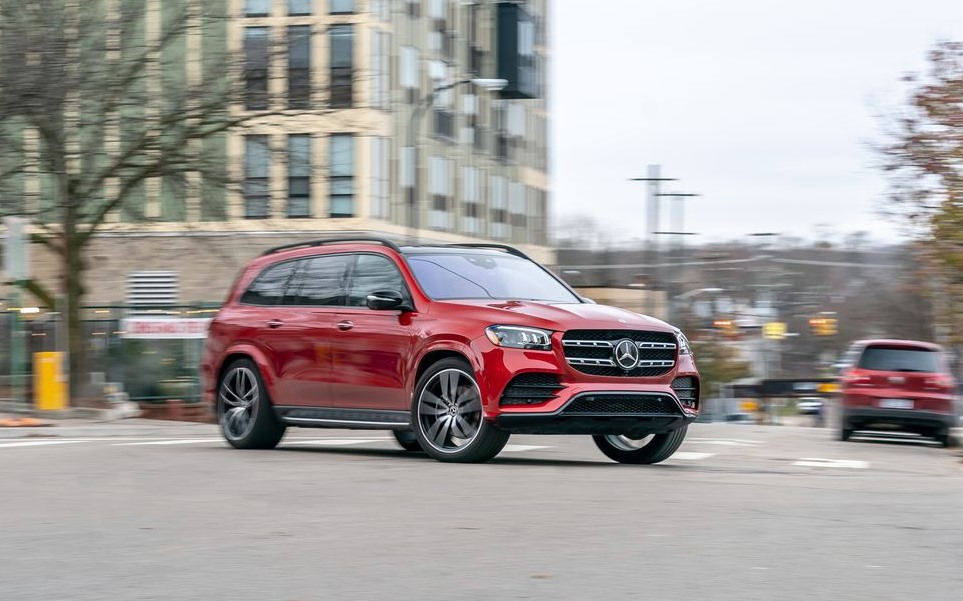
2026 Mercedes GLS
The anticipation surrounding the next-generation full-size luxury SUV from Mercedes-Benz is a testament to the model\’s established position as a leader in comfort, technology, and prestige.
As the flagship SUV, it is expected to introduce a suite of innovations that will eventually permeate the rest of the brand\’s lineup.
The forthcoming iteration represents more than a simple refresh; it is projected to be a comprehensive redesign that addresses the rapidly evolving demands of the premium automotive market.
Youtube Video:
This includes a significant push towards electrification, a more advanced user experience, and a design that reflects the next chapter of the manufacturer\’s aesthetic philosophy.
A significant evolution in exterior design is widely expected for this future model.
Drawing inspiration from recent concept vehicles and the brand\’s electric EQ line, the new SUV will likely feature a more streamlined and aerodynamically efficient silhouette.
The front fascia may see a reimagined grille, potentially a closed-off panel on electrified variants, flanked by more sophisticated digital light headlamps capable of projecting information onto the road.
The overall bodywork is anticipated to be smoother, with flush door handles and cleaner lines to reduce wind resistance, which is crucial for improving both fuel economy and electric range.
Inside the cabin, the vehicle is poised to set a new benchmark for digital luxury and passenger comfort.
The integration of the next-generation MBUX (Mercedes-Benz User Experience) infotainment system is a certainty, possibly featuring an even more expansive and intuitive screen layout than the current Hyperscreen.
This system will likely leverage artificial intelligence to provide more predictive and personalized assistance to the driver and passengers.
Furthermore, the use of sustainable yet opulent materials, such as ethically sourced leathers and woods or advanced recycled textiles, will underscore the brand\’s commitment to modern luxury.
Powertrain options will be a central focus of the vehicle\’s development, reflecting the industry-wide shift towards electrification.
It is highly probable that all internal combustion engines will feature some form of hybrid assistance, from advanced 48-volt mild-hybrid systems to more robust plug-in hybrid (PHEV) variants.
A PHEV model could offer a substantial all-electric range, making it suitable for daily emission-free commuting.
There is also strong speculation about the debut of a fully electric version, potentially built on a dedicated EV platform to maximize interior space and performance without the compromises of a shared chassis.
Improvements in driving dynamics and ride comfort will continue to be a hallmark of the flagship SUV.
The renowned AIRMATIC air suspension system is expected to be further refined for an even smoother and more adaptive ride.
The sophisticated E-ACTIVE BODY CONTROL system, which can individually control spring and damping forces at each wheel, will likely see upgrades to better counteract roll, pitch, and dive.
The inclusion of enhanced rear-axle steering will make the large SUV surprisingly agile at low speeds and more stable during high-speed maneuvers, improving both maneuverability and safety.
For the ultimate in luxury and performance, the high-tier variants will push boundaries even further.
The Mercedes-Maybach version will offer an unparalleled level of opulence, with exclusive design elements, expansive rear-seat accommodations, and bespoke material choices that cater to the most discerning clients.
On the performance end of the spectrum, the Mercedes-AMG model will likely pair a formidable engine, possibly a hybridized V8, with an aggressive chassis tune and distinctive styling.
This variant will continue to challenge the notion that a three-row SUV cannot deliver the thrilling driving experience of a dedicated sports car.
The integration of advanced safety and driver-assistance systems will be another critical area of innovation.
The vehicle is a prime candidate to debut the brand\’s next level of autonomous driving capabilities, potentially achieving Level 3 conditional autonomy in certain markets and conditions.
This would allow the driver to safely disengage from the task of driving on approved highways, with the vehicle managing all steering, acceleration, and braking.
An expanded sensor suite, including more advanced LiDAR, radar, and cameras, will provide the necessary redundancy and environmental awareness for such a system to operate safely.
The interior environment will be engineered to serve as a sanctuary of tranquility and wellness.
Building on existing features, the vehicle is expected to offer an enhanced ENERGIZING COMFORT system that coordinates climate control, air purification, fragrance, ambient lighting, and audio to create holistic wellness programs.
The optional Burmester High-End 4D Surround Sound System will likely be updated, providing an even more immersive audio experience with seat-integrated resonators.
These features collectively aim to reduce driver fatigue and elevate the well-being of all occupants during travel.
In the competitive landscape, the new flagship SUV will be strategically positioned to reaffirm its dominance against formidable rivals.
It will directly compete with vehicles like the BMW X7, the Range Rover, and the Cadillac Escalade, each of which has made significant strides in technology and luxury.
The success of this future model will depend on its ability to offer a more compelling combination of cutting-edge technology, superior comfort, and a forward-thinking approach to powertrain development.
Its launch will undoubtedly trigger a new round of innovation among competitors in the prestigious full-size luxury SUV segment.
Key Areas of Anticipated Advancement
- Platform and Architecture:
The foundational platform of the 2026 Mercedes GLS is a point of significant speculation, with strong indications of a major architectural shift.
While an updated version of the current MHA (Modular High Architecture) platform is possible for hybrid models, a fully electric variant would likely require a dedicated EV platform, such as the forthcoming MB.EA-L.
This specialized architecture would optimize battery placement for a low center of gravity, maximize interior volume by eliminating the transmission tunnel, and provide a robust foundation for next-generation electric motors.
The choice of platform will be the single most defining factor in the vehicle\’s capabilities, dictating its powertrain options, interior packaging, and overall performance profile.
- Comprehensive Electrification Strategy:
Electrification will be a core tenet of the new model\’s identity, moving beyond the current mild-hybrid offerings.
Expect to see advanced plug-in hybrid (PHEV) models featuring larger batteries and more powerful electric motors, enabling an electric-only driving range that could exceed 60 miles.
This would cover the majority of daily driving needs without using the internal combustion engine, drastically reducing local emissions.
The potential introduction of a fully electric GLS, perhaps named the EQS SUV\’s successor or a parallel model, would signal the brand\’s complete commitment to an electric future in the large luxury segment, offering silent operation and instantaneous torque.
- Next-Generation MBUX Infotainment:
The user interface and in-car digital experience will undergo a significant evolution with the next iteration of the MBUX system.
This system will likely feature more processing power, more vivid graphics, and a greater reliance on artificial intelligence and machine learning to anticipate user needs.
Voice commands will become more conversational and context-aware, while the \”Zero Layer\” interface, which keeps key functions on the main screen, will be refined to further reduce driver distraction.
Augmented reality navigation will likely be enhanced, projecting more detailed and interactive information onto the head-up display or central screen for intuitive guidance.
- Focus on Sustainable Luxury:
The definition of luxury is evolving, and the 2026 GLS is expected to reflect this shift with a greater emphasis on sustainable materials.
While traditional high-quality leather and wood will still be available, the vehicle will likely offer innovative alternatives crafted from recycled or plant-based sources without compromising on a premium feel.
For example, materials like Dinamica microfiber, made from recycled plastics, or leather tanned using coffee bean husks, may be featured prominently.
This approach caters to a growing demographic of luxury consumers who prioritize environmental responsibility alongside craftsmanship and comfort.
- Leap in Driver-Assistance Technology:
The vehicle is poised to be a showcase for Mercedes-Benz\’s most advanced driver-assistance systems, with the potential for Level 3 conditional autonomy.
This system, known as DRIVE PILOT, would allow the vehicle to take full control of driving on pre-mapped, divided highways under certain conditions, freeing the driver to perform other tasks.
To achieve this, the vehicle will be equipped with a sophisticated sensor array, including LiDAR, long-range radar, and stereo cameras, all working in concert with high-definition maps.
This represents a significant step towards a fully autonomous future and will be a major selling point in the premium market.
- Evolved Exterior and Interior Design Language:
The design of the 2026 GLS will provide a clear indication of the brand\’s future aesthetic direction, likely moving towards a philosophy of \”sensual purity\” with even cleaner surfaces and fewer lines.
The exterior will balance imposing presence with aerodynamic elegance, a difficult feat for a large SUV.
Internally, the design will center on creating a seamless digital and physical environment, where large, high-resolution screens blend harmoniously with high-quality materials and sophisticated ambient lighting.
The goal will be to create a \”digital cocoon\” that is both technologically advanced and deeply luxurious.
- Enhanced Powertrain Efficiency:
Across all powertrain variants, a primary engineering goal will be to maximize efficiency.
For internal combustion engines, this will involve further refinement of 48-volt mild-hybrid systems, optimized combustion processes, and intelligent cylinder deactivation to reduce fuel consumption.
For plug-in hybrid and fully electric models, efficiency gains will come from more advanced battery chemistry, improved thermal management systems, and more effective regenerative braking.
These efforts are not only driven by stricter global emissions regulations but also by the customer expectation of lower running costs and a reduced environmental footprint.
- Strengthened Global Market Positioning:
The 2026 GLS is being developed as a global flagship, with its design and features tailored to succeed in key markets like North America, China, and the Middle East.
This requires a careful balancing act, such as offering an expansive and comfortable three-row configuration popular in the United States while also providing an ultra-luxurious four-seat executive package favored by many buyers in China.
The vehicle\’s technology, powertrain options, and material choices will be carefully curated to appeal to a diverse international clientele.
Its success will be crucial for maintaining Mercedes-Benz\’s brand prestige and profitability in the highly competitive large SUV segment worldwide.
Understanding Future Vehicle Developments
- Monitor Official Concept Vehicles
Automakers often use concept cars as a public preview of their future design language and technological direction.
Paying close attention to the styling cues, interior layouts, and featured technologies in recent Mercedes-Benz concepts, such as the Vision EQXX or the Concept CLA Class, can provide valuable clues about what to expect from the 2026 GLS.
These concepts test public reaction and signal the brand\’s long-term intentions for aesthetics, sustainability, and user experience.
They are not just design exercises but are instead direct precursors to the look and feel of upcoming production models.
- Follow Brand-Wide Powertrain Announcements
Instead of focusing solely on rumors about a specific model, it is beneficial to follow the manufacturer\’s broader announcements regarding powertrain strategy.
When Mercedes-Benz reveals a new generation of hybrid systems, a new electric motor design, or advancements in battery technology, it is highly probable that these innovations will be implemented in its flagship models first.
Tracking these high-level strategic announcements provides a more reliable roadmap for the types of engines and electric options that will be available in the future GLS. This approach offers a clearer picture than model-specific speculation.
- Use the Current Model as a Baseline
A thorough understanding of the current-generation GLS provides a solid foundation for anticipating future improvements.
Analyze its strengths, such as its class-leading ride comfort, and its potential weaknesses, like areas where competitors have pulled ahead in technology or efficiency.
Future updates will almost certainly address any existing shortcomings and build upon established strengths.
For example, if the current infotainment system is praised for its features but criticized for its complexity, expect the next version to be more powerful yet more intuitive.
- Evaluate Key Competitor Offerings
The luxury automotive market is a highly competitive environment where brands constantly react to each other\’s moves.
To accurately predict the features of the 2026 GLS, it is essential to analyze the latest offerings from its primary rivals, such as the BMW X7 and Range Rover.
If a competitor introduces a groundbreaking feature, like a new level of autonomous driving or a particularly long-range PHEV, it is very likely that Mercedes-Benz will aim to match or exceed that capability in its next-generation flagship.
The competitive landscape often dictates the pace and direction of innovation.
The transition to a dedicated electric vehicle platform like MB.EA-L (Mercedes-Benz Electric Architecture Large) represents a paradigm shift for the brand\’s largest vehicles.
Unlike a shared platform that must accommodate both electric and combustion components, a dedicated EV architecture allows for a completely flat floor, a longer wheelbase, and shorter overhangs.
This \”skateboard\” design, with the battery integrated into the chassis, lowers the center of gravity for improved handling and maximizes cabin space, potentially offering even more generous legroom and cargo capacity than the current GLS.
This architectural freedom is fundamental to unlocking the full potential of electric vehicle design and functionality.
The pursuit of Level 3 conditional autonomy presents immense technological and regulatory challenges.
On the technology front, it requires a \”belt-and-braces\” approach with redundant systems for steering, braking, and power supply, ensuring the vehicle can handle any single point of failure safely.
The software must be capable of interpreting complex traffic scenarios with near-perfect accuracy, a task that relies on an array of sensors including expensive LiDAR.
Furthermore, navigating the global patchwork of regulations is a significant hurdle, as the legality and specific operational limits of such systems vary widely from one country to another.
Balancing traditional luxury materials with sustainable alternatives is a delicate task for premium automakers. The tactile and aromatic qualities of fine Nappa leather and open-pore wood are deeply ingrained in the perception of luxury.
To succeed, sustainable materials must not feel like a compromise; they must offer their own unique appeal in terms of texture, durability, and aesthetic.
Brands are investing heavily in developing materials like advanced synthetic leathers that are indistinguishable from the real thing or composites made from natural fibers that offer a novel and beautiful finish, thereby redefining what constitutes a premium interior.
The role of over-the-air (OTA) software updates will become increasingly central to the vehicle ownership experience.
Beyond simple map or infotainment updates, future systems will allow for significant upgrades to core vehicle functions, including powertrain management, driver-assistance features, and even battery performance.
This capability means the vehicle can improve and gain new features long after it has left the factory, enhancing its value and longevity.
It also opens up new business models for automakers, who can offer new functionalities as subscription services or one-time purchases through the vehicle\’s infotainment system.
The future of the iconic AMG V8 engine hangs in the balance amidst the industry\’s electric transition.
For the 2026 model, the most likely path is a high-performance plug-in hybrid system, pairing a twin-turbo V8 with a powerful electric motor, as seen in the \”E PERFORMANCE\” models.
This combination delivers staggering horsepower and torque figures while also allowing for silent, all-electric driving in urban environments.
While the visceral sound and character of a pure V8 may eventually be phased out due to emissions regulations, this hybrid approach serves as a brilliant bridge, preserving immense performance while adapting to modern demands.
The influence of the Chinese automotive market on the design of global luxury vehicles like the GLS cannot be overstated.
Chinese consumers, on average, place a higher value on rear-seat comfort, advanced technology, and brand prestige.
This has driven the development of long-wheelbase versions of sedans and a focus on executive rear seating packages in SUVs, complete with reclining seats, large entertainment screens, and sophisticated controls.
Therefore, features developed primarily for the Chinese market, such as advanced air quality systems and highly integrated digital services, are increasingly becoming standard offerings in global models.
The concept of in-car wellness is expanding beyond comfortable seats and quiet cabins. Future luxury vehicles will function as proactive wellness pods, using biometric sensors to monitor the driver\’s state.
If the system detects signs of stress or fatigue, it can automatically initiate an ENERGIZING COMFORT program, adjusting the lighting, music, seat massage, and even releasing calming fragrances to rejuvenate the driver.
Advanced air filtration systems will not only remove pollutants and allergens but will also be able to ionize the air, further enhancing the sense of well-being for all occupants.
Aerodynamic efficiency is a critical engineering focus, even for a large, boxy SUV. A lower drag coefficient directly translates to better fuel economy in combustion models and, more importantly, increased range in electric variants.
Engineers will employ subtle but effective techniques to manage airflow, including active grille shutters that close at speed, specially designed wheels that reduce turbulence, and a carefully sculpted underbody to smooth the flow of air beneath the vehicle.
Every small improvement in aerodynamics contributes to a more efficient and quieter vehicle, enhancing both its performance and its luxury credentials.
Frequently Asked Questions
John asked: \”With the industry moving towards electric, is it realistic to expect a fully electric 2026 Mercedes GLS, or will it just be hybrids?\”
Professional\’s Answer: \”That\’s an excellent question, John. While we can expect advanced plug-in hybrid options to be a core part of the lineup, the possibility of a fully electric version is very high.
Mercedes-Benz is heavily invested in its dedicated EV platforms, and a flagship electric SUV to complement the EQS SUV is a logical next step.
It might be launched alongside the hybrid models or shortly after, but given the market trends and regulatory pressures, a fully electric variant is a key part of the brand\’s future strategy for the large SUV segment.\”
Top SUVs New 2024:
 2026 Mercedes-Benz GLS Redesign, Price, Specs