
In automotive discourse, a specific combination of a manufacturer, model name, future model year, and designated market functions as a proper noun phrase.
This term identifies a highly specific, anticipated product tailored for a particular region, encapsulating expectations for design, technology, and performance.
For instance, a phrase like \”Volkswagen Golf 2027 Europe\” signifies the next iteration of a well-known hatchback designed for European sensibilities and regulations, while \”Honda CR-V 2026 North America\” points to a future version of a popular SUV configured for consumers in the United States and Canada.
Such a phrase is crucial for industry analysts, potential consumers, and automotive journalists, as it serves as a focal point for discussion and speculation about future developments.
It implies a vehicle that is not yet released but is expected to feature significant updates over its predecessors, often including new powertrain technologies, advanced safety features, and a redesigned exterior and interior.
The inclusion of the market, such as Canada, is particularly important as it indicates that the vehicle will have specific features and tuning to meet local climate conditions, consumer preferences, and governmental standards, distinguishing it from versions sold in other parts of the world.
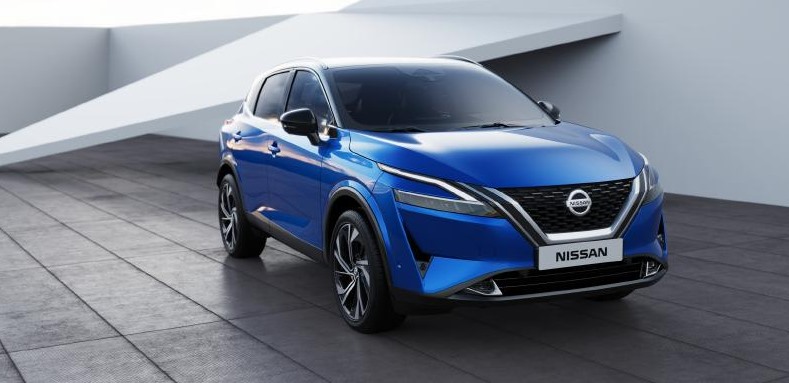
Nissan Qashqai 2026 Canada
The anticipation surrounding the Nissan Qashqai 2026 for the Canadian market points toward a significant evolution for one of the country\’s popular compact crossover SUVs.
This model year is widely expected to introduce the next generation of the vehicle, moving beyond the current iteration that has been successful since its last major update.
The 2026 model is poised to build on the Qashqai\’s reputation for urban agility and practicality while incorporating Nissan\’s latest technological advancements and design philosophy.
As the automotive landscape shifts rapidly towards electrification and enhanced connectivity, this future Qashqai will be a critical product for maintaining Nissan\’s competitive edge in a fiercely contested segment.
A complete exterior redesign is one of the most anticipated changes for the 2026 Nissan Qashqai.
Youtube Video:
Industry observers expect the vehicle to adopt a more assertive and futuristic aesthetic, drawing inspiration from Nissan\’s recent concept cars and electric models like the Ariya.
This will likely involve a reinterpretation of the signature V-motion grille, potentially evolving into a more integrated and digitally-focused front fascia, especially on electrified variants.
Sleeker LED lighting signatures at both the front and rear, more sculpted body panels, and an emphasis on aerodynamics will contribute to a modern appearance while also improving efficiency and performance.
The most transformative update for the Canadian-market Qashqai is projected to be under the hood, with the likely introduction of Nissan\’s innovative e-POWER series-hybrid powertrain.
Unlike conventional hybrids, the e-POWER system uses its gasoline engine exclusively as a generator to charge a battery, which in turn powers an electric motor that drives the wheels.
This configuration provides an electric-vehicle-like driving experience with instant torque and smooth, quiet acceleration, without the range anxiety associated with pure EVs.
For Canadian drivers, this technology offers a compelling blend of fuel efficiency and responsive performance well-suited for both city commuting and highway travel.
While e-POWER is the most probable step, discussions about a fully electric Nissan Qashqai for 2026 or soon after are also prevalent.
Aligning with Nissan\’s Ambition 2030 long-term strategy, which heavily emphasizes electrification, a Qashqai EV would be a logical progression.
Such a model would likely be built on a dedicated electric vehicle platform, possibly a variation of the CMF-EV architecture used by the Ariya.
A fully electric Qashqai would compete directly with a growing number of compact electric SUVs, offering Canadian consumers a familiar nameplate in a zero-emissions package, supported by potential government incentives.
Inside the cabin, the 2026 Qashqai is expected to undergo a technological and material revolution.
The dashboard will likely be dominated by a large, high-resolution central touchscreen infotainment system, seamlessly integrated with a fully digital instrument cluster for the driver.
Upgraded software would offer faster response times, more intuitive menus, and robust connectivity options, including wireless Apple CarPlay and Android Auto.
Furthermore, Nissan will likely focus on elevating the interior ambiance with higher-quality materials, soft-touch surfaces, and sophisticated ambient lighting to create a more premium and comfortable environment for all occupants.
Advancements in driver-assistance technology will be a cornerstone of the 2026 Nissan Qashqai\’s appeal.
The vehicle is expected to feature the next generation of Nissan\’s ProPILOT Assist system, which could offer more advanced capabilities and smoother operation.
This may include enhanced lane-centering, improved adaptive cruise control that better anticipates traffic flow, and potentially even hands-free highway driving capabilities in certain conditions.
The comprehensive suite of safety features, known as Nissan Safety Shield 360, will also be standard, incorporating more sophisticated sensors for improved automatic emergency braking, blind-spot detection, and rear cross-traffic alert.
Practicality and interior space, key tenets of the Qashqai\’s success, are set to be improved with the new generation.
A new platform could allow for a slightly longer wheelbase, which would translate directly into increased rear-seat legroom and greater overall passenger comfort.
Engineers will also focus on optimizing cargo capacity and versatility, potentially introducing clever storage solutions and a more flexible seating system.
These enhancements will ensure the 2026 Qashqai remains a top choice for young families and active individuals in Canada who require a vehicle that can adapt to their changing needs.
Within the competitive Canadian market, the 2026 Qashqai will need to be strategically positioned to stand out.
It will face stiff competition from established rivals like the Honda HR-V, Toyota Corolla Cross, Hyundai Kona, and Subaru Crosstrek, many of which will also feature hybrid or electric variants.
Nissan\’s strategy will likely involve highlighting the unique driving dynamics of the e-POWER system, the premium level of standard technology, and a design that is both stylish and functional.
Pricing will be a critical factor in ensuring the vehicle offers a compelling value proposition against its numerous competitors.
Tailoring the vehicle specifically for Canadian consumers will be essential for its success.
The 2026 Nissan Qashqai is expected to offer features that are highly valued in the Canadian climate, such as a standard heated steering wheel, heated front seats, and heated exterior mirrors across most trim levels.
Furthermore, Nissan\’s intelligent all-wheel-drive system will be a key selling point, engineered to provide confident handling and traction during harsh winter conditions.
The trim structure will likely be configured to match Canadian preferences, offering well-equipped mid-range models that provide the best balance of features and price.
While an official release date has not been announced, industry patterns suggest the 2026 Nissan Qashqai could be unveiled in late 2025, with models arriving at Canadian dealerships shortly thereafter.
Prospective buyers should anticipate a price increase over the current generation, reflecting the substantial upgrades in technology, powertrain, and design.
The final pricing strategy will depend on market conditions and the competitive landscape at the time of launch, but it will aim to position the Qashqai as a premium yet accessible option in the compact crossover segment, reinforcing its importance to Nissan\’s Canadian lineup.
Key Expectations for the 2026 Model
- Next-Generation Platform Architecture
The 2026 Qashqai is expected to be built on an advanced version of the Renault-Nissan-Mitsubishi Alliance\’s Common Module Family (CMF-C) platform.
This updated architecture is engineered to accommodate a variety of powertrains, including internal combustion, series-hybrid (e-POWER), and potentially fully electric systems.
Utilizing this modern platform will result in improved structural rigidity, enhanced safety performance, and better driving dynamics through a lower center of gravity.
Furthermore, it allows for more efficient packaging, which can lead to a more spacious interior and larger cargo area without significantly increasing the vehicle\’s exterior footprint.
- Emphasis on e-POWER Hybrid Technology
A major focal point for the Canadian market will be the introduction of the e-POWER system, a key differentiator for Nissan.
This series-hybrid technology offers a unique proposition by delivering a driving experience similar to that of an electric vehicle, characterized by smooth and instant acceleration.
The gasoline engine\’s role as a generator eliminates the need for external charging, addressing the infrastructure concerns some Canadian consumers may have.
This powertrain is designed for optimal urban efficiency, where it can operate in its most effective range, making it an ideal solution for the majority of Canadian driving habits.
- A Bold and Modern Exterior Redesign
The vehicle\’s exterior styling is set for a comprehensive overhaul, moving towards a more futuristic and sophisticated design language seen on other new Nissan models.
This will likely include a more dramatic front end, thinner and more technologically advanced lighting elements, and cleaner, more aerodynamic lines.
The goal will be to give the Qashqai a stronger road presence and a more premium feel, helping it stand out in a crowded market segment.
Design elements may also serve functional purposes, such as improving airflow to increase fuel efficiency and reduce wind noise for a quieter cabin.
- A Technologically Advanced and Premium Interior
Significant upgrades are anticipated for the cabin, focusing on connectivity, convenience, and comfort.
A new \”glass cockpit\” layout with a large digital instrument panel and a central infotainment screen will become the centerpiece of the dashboard.
This system will be powered by updated software for a more intuitive and responsive user experience.
The use of higher-grade materials, improved ergonomics, and features like ambient lighting and a panoramic sunroof will contribute to an interior that feels more spacious, modern, and aligned with the expectations of today\’s tech-savvy consumers.
- Next-Generation ProPILOT Assist Safety Suite
Safety will remain a top priority, with the 2026 Qashqai expected to feature an enhanced version of Nissan\’s ProPILOT Assist.
This advanced driver-assistance system will offer more refined control and expanded capabilities, potentially including navigation-linked assistance that can proactively adjust speed for curves or junctions.
The underlying sensor and camera systems will be upgraded for greater accuracy and reliability, improving the performance of standard features like automatic emergency braking with pedestrian detection, lane-keeping assist, and blind-spot intervention, providing greater peace of mind for drivers.
- Continued Dedication to Canadian Market Needs
Nissan understands the unique demands of the Canadian market and is expected to equip the 2026 Qashqai accordingly.
Features tailored for cold climates, such as powerful heating systems, heated seats, and a heated steering wheel, will likely be widely available across the trim lineup.
The all-wheel-drive system will be tuned to handle snow and ice, providing confidence and stability in challenging winter conditions.
This market-specific focus demonstrates Nissan\’s commitment to maintaining the Qashqai\’s status as a popular and practical choice for Canadian drivers.
- Potential for a Fully Electric Variant
In line with global automotive trends and Nissan\’s long-term electrification goals, the possibility of a fully electric Qashqai variant remains a significant point of interest.
While the e-POWER hybrid may be the initial focus, the underlying platform is being designed with full electrification in mind for the future.
An all-electric Qashqai would leverage Nissan\’s extensive experience from the Leaf and Ariya models, offering a competitive range, fast-charging capabilities, and a zero-emissions driving experience.
The introduction of such a model would be a major step in future-proofing the Qashqai nameplate in Canada.
Guidance for Prospective Buyers
- Monitor Official Nissan Canada Sources
For the most accurate and up-to-date information, it is essential to follow official channels. This includes the Nissan Canada website, its official social media pages, and press releases distributed to reputable automotive news outlets.
These sources will provide confirmed details on specifications, features, pricing, and release timelines as they become available.
Relying on official announcements helps avoid speculation and misinformation that can circulate on unofficial forums and websites, ensuring potential buyers can make informed decisions based on factual data.
- Assess the Benefits of the e-POWER System
Potential buyers should take the time to understand how the e-POWER series-hybrid system works and evaluate if it aligns with their driving needs.
This technology excels in stop-and-go city traffic, where its EV-like characteristics and efficiency are most pronounced.
Consider your typical commute and driving habits to determine if this innovative powertrain will deliver the fuel savings and driving experience you desire.
Visiting a dealership for a test drive, once available, will be the best way to experience its unique, smooth, and quiet operation firsthand.
- Consider Current-Generation Models for Value
As the launch of a new generation approaches, dealerships often offer attractive incentives and promotions on the outgoing models to clear inventory.
For buyers who prioritize value and do not require the absolute latest technology, purchasing a late-model version of the current-generation Qashqai could represent a significant saving.
These vehicles are still well-equipped, reliable, and offer many of the qualities that have made the model popular, making them a very sensible financial choice for budget-conscious consumers.
- Anticipate and Budget for Price Adjustments
A new-generation vehicle with significant upgrades in technology, safety, and powertrain will almost certainly come with a higher price tag.
Prospective buyers of the 2026 Qashqai should budget for a price increase compared to the current model. Researching the pricing of recently redesigned competitors can provide a reasonable estimate of the potential cost.
Factoring this expected increase into financial planning early on will prevent surprises and ensure a smooth purchasing process when the vehicle is officially released.
The Nissan Qashqai\’s global significance cannot be overstated, as it is often credited with pioneering the modern crossover segment upon its initial launch in Europe.
Its blend of hatchback-like driving dynamics with the practicality and higher seating position of an SUV resonated deeply with consumers worldwide.
For the 2026 model, Nissan will draw upon this rich international heritage, incorporating lessons learned from different markets to create a vehicle with broad appeal.
The Canadian version, while tailored for local needs, will benefit from the immense research and development invested into a model that sells in high volumes across multiple continents.
The Common Module Family (CMF) platform is a cornerstone of the Renault-Nissan-Mitsubishi Alliance\’s product development strategy, and its evolution is critical for models like the 2026 Qashqai.
This modular architecture allows for significant manufacturing efficiencies and flexibility by sharing components across a wide range of vehicles.
For the consumer, this translates into access to more advanced technologies at a more competitive price point.
The platform\’s ability to support diverse powertrains, from gasoline to hybrid and full EV, is what will enable Nissan to adapt the Qashqai to shifting market demands and increasingly stringent emissions regulations in Canada and beyond.
A deeper look into the e-POWER system reveals its clever engineering, designed to bridge the gap between traditional combustion engines and full electric vehicles.
By uncoupling the gasoline engine from the wheels, it can operate at its most efficient speed and load to generate electricity, reducing fuel consumption and emissions compared to a conventional setup.
This \”series hybrid\” approach is distinct from the \”parallel hybrid\” systems used by many competitors, where both the engine and motor can drive the wheels.
The result for the driver is a consistently smooth and responsive feel, as the electric motor provides all the propulsive force.
The competitive landscape that the 2026 Qashqai will enter in Canada is more crowded and advanced than ever before.
Virtually every major automaker offers a compelling product in the compact crossover segment, with many competitors already offering well-established hybrid options.
To succeed, the Qashqai must not only match but exceed rivals in key areas like interior technology, perceived quality, and standard safety features.
Its unique e-POWER system will be a major marketing point, but the overall package must present a clear and convincing argument for why it is the superior choice in a field of highly capable vehicles.
The role of the dealership network and after-sales support is a crucial component of the ownership experience in a country as vast as Canada.
Nissan Canada\’s extensive network of dealerships provides vital services, from sales and financing to maintenance and repairs.
For a vehicle introducing new technology like the e-POWER system, having well-trained technicians and readily available parts will be essential for building consumer confidence.
A positive and reliable service experience can be a deciding factor for many buyers, reinforcing brand loyalty long after the initial purchase.
Canadian federal and provincial government policies will play a significant role in shaping the powertrain offerings for the 2026 Nissan Qashqai.
The availability of incentives for zero-emission vehicles (ZEVs) and plug-in hybrids could influence whether Nissan decides to introduce a fully electric or a plug-in hybrid version of the Qashqai sooner rather than later.
Furthermore, Canada\’s increasingly strict emissions targets put pressure on all automakers to sell a higher percentage of electrified vehicles. These regulatory factors are a powerful driver behind the industry\’s shift away from traditional gasoline engines.
By 2026, expectations for in-car connectivity and digital services will have reached new heights.
The infotainment system in the new Qashqai will need to be more than just a screen for audio and navigation; it will be a central hub for the vehicle\’s functions and a gateway to connected services.
This could include over-the-air (OTA) software updates that can add new features or improve existing ones over time, as well as smartphone apps that allow for remote monitoring and control of the vehicle.
A seamless and intuitive digital experience is no longer a luxury but a fundamental expectation for new car buyers.
Sustainability in automotive production is a growing priority for both manufacturers and consumers. For the 2026 Qashqai, Nissan will likely place a greater emphasis on using sustainable and recycled materials throughout the cabin.
This could include fabrics made from recycled plastics or bio-based materials for certain interior components.
Beyond the vehicle itself, the manufacturing process will also be scrutinized, with a focus on reducing energy consumption, water usage, and waste at the assembly plant.
Communicating these efforts can enhance the brand\’s reputation and appeal to environmentally conscious Canadian buyers.
Frequently Asked Questions
John asked: \”Will the 2026 Nissan Qashqai be bigger than the current one? I find the current size perfect for city parking, but could use a little more room in the back seat.\”
Professional\’s Answer: \”That\’s an excellent question, John. While official dimensions haven\’t been released, it\’s common for new-generation models to see a modest increase in size.
We expect the 2026 Qashqai may grow slightly, particularly in its wheelbase, which is the distance between the front and rear wheels.
This would directly translate to improved rear-seat legroom, addressing your desire for more space, while aiming to keep the overall exterior dimensions compact enough to maintain its excellent maneuverability and ease of parking in urban environments.\”
Top SUVs New 2024:
 2026 Nissan Qashqai Price and Release Date